

How does electrostatic epoxy powder coating contribute to the environmental sustainability of industrial processes?
Electrostatic epoxy powder coating can support more sustainable industrial processes by applying dry powder efficiently, reducing overspray waste and avoiding the solvent emissions associated with many liquid paints. Its durable finish can also extend the service life of coated metal components, helping reduce the material and processing demands linked to frequent recoating.
Electrostatic epoxy powder coating contributes to environmental sustainability by improving material control, supporting efficient production and protecting metal components throughout their service life. Its overall environmental benefit depends on the complete process, including surface preparation, curing, energy use, packaging, transport and the eventual treatment of the coated component.
More controlled deposition: Electrostatic application charges the powder particles and attracts them to the earthed metal component. This helps the coating adhere to the intended surface rather than being distributed indiscriminately around the work area. In suitable systems, unused powder can also be managed through collection and filtration arrangements, subject to the coating specification and the equipment in use. Good gun settings, component positioning and operator control are important because poor application practice can reduce these environmental advantages.
Lower reliance on liquid coating materials: Powder is supplied as a dry formulation, so the process does not require the same liquid carrier system used by many conventional paints. This can simplify material handling and reduce the need to manage liquid residues, contaminated cleaning materials and solvent-based process inputs. The precise environmental profile still depends on the powder formulation, pretreatment chemistry and site controls, so product selection should be based on the component’s performance requirements rather than on the coating method alone.
Efficient use of energy and plant: Curing is the main energy-intensive stage of powder coating because the applied film must be heated to form its finished properties. Sustainability therefore depends on how the curing operation is designed and managed. Relevant measures include:
- grouping compatible components into suitable oven loads;
- avoiding unnecessary oven space and extended heating cycles;
- maintaining the oven so that temperature control and airflow remain consistent;
- using an appropriate cure schedule rather than applying more heat or time than the powder specification requires; and
- reducing rework through effective preparation, application and inspection.
These controls reduce avoidable energy consumption without compromising the coating’s required performance. For batch and larger industrial work, production planning can be particularly important because the number of handling, heating and transport stages affects the environmental impact of each component.
Longer intervals between major coating work: A correctly specified epoxy finish can protect metal from conditions that would otherwise lead to deterioration. This has a sustainability relevance beyond the coating booth: retaining an existing component avoids some of the raw material use, machining, fabrication and logistics associated with replacing it. The benefit should be assessed against the service environment, substrate, film thickness and maintenance regime. A coating that is unsuitable for exposure conditions may fail prematurely and remove the expected environmental advantage.
Surface preparation matters: Cleaning, degreasing, blasting and any chemical pretreatment determine how well the coating bonds to the substrate. Poor preparation can result in defects and reprocessing, while excessive preparation can consume unnecessary abrasives, water, chemicals or energy. Industrial processes should therefore use the least intensive preparation that achieves the required cleanliness and adhesion, with controls for collecting residues and managing spent materials responsibly.
Designing for the whole lifecycle: Sustainability decisions should consider how the finished part will be used, maintained and handled at end of life. Thermoset epoxy powder coatings are cured into a permanent film and cannot simply be melted and reformed like the original powder. This means recyclability of the underlying metal, separation requirements and contamination should be considered during product design. Where a component may need future stripping, refurbishment or specialist recycling, the coating choice and removal route should be discussed before production.
Practical assessment for industrial projects: A meaningful comparison should examine the full process rather than focusing only on the application stage. Useful questions include:
- What coating performance is required for the component’s operating environment?
- Can production batches be planned to use ovens, racks and transport efficiently?
- How will unused material, filters, masking materials and preparation residues be controlled?
- What energy source and curing schedule does the process use?
- Can defects be prevented through inspection at preparation, application and curing stages?
- How will the coated metal be repaired, refurbished or recycled at the end of its service life?
For businesses across the Midlands using powder coating for manufactured, fabricated, construction or automotive components, these considerations help distinguish a genuinely efficient process from one that merely changes the coating material. Electrostatic epoxy powder coating can be part of a lower-impact production strategy, but the strongest result comes from combining controlled application with efficient curing, responsible preparation, sound quality control and lifecycle-focused component design.
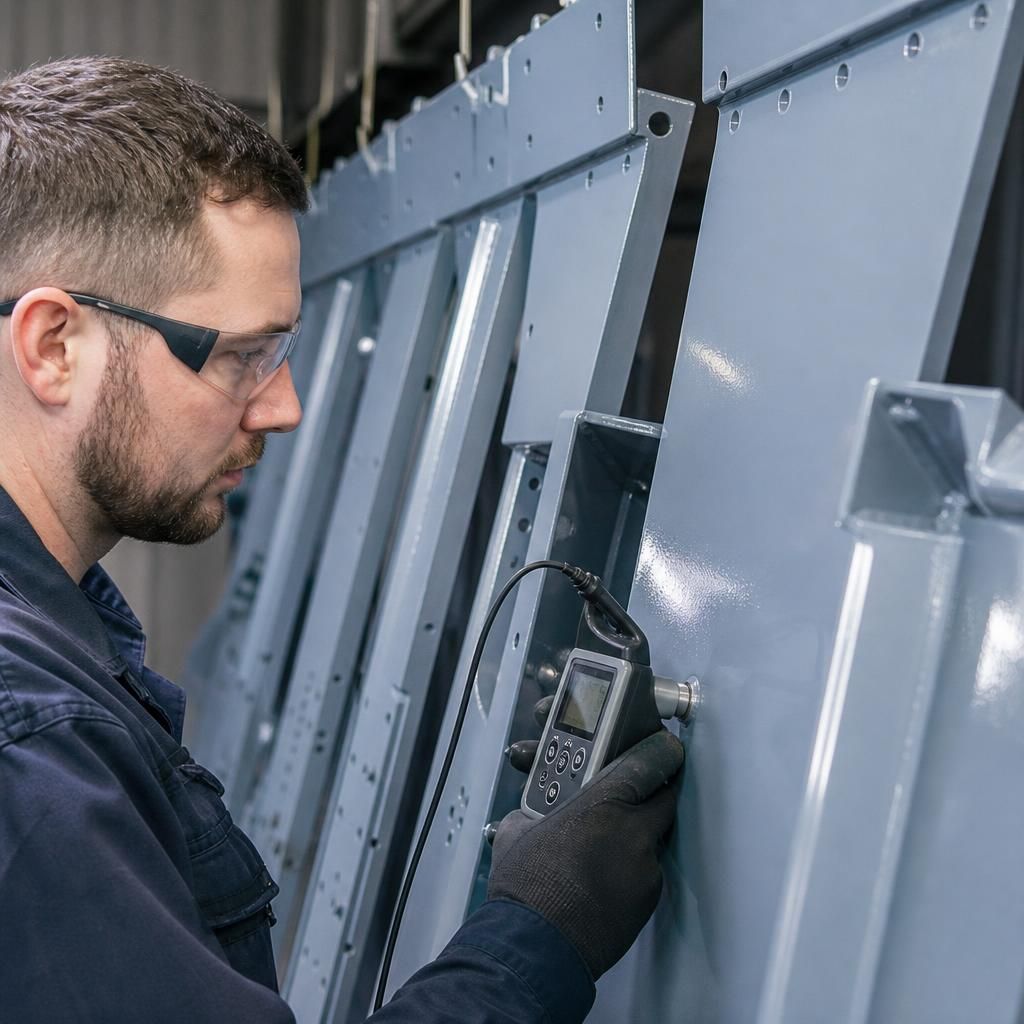
Specified film thickness is an important sustainability control. Applying more powder than the coating system requires increases material use without necessarily improving protection, while insufficient coverage can reduce service life and lead to avoidable rework. The correct thickness depends on the powder specification, substrate and operating environment.
Using suitable measurement checks after curing helps identify application drift and supports consistent results across a production batch. This combines efficient material use with the level of corrosion and wear protection needed for the component, rather than treating heavier coating as automatically more sustainable.
Assess Electrostatic Epoxy Powder Coating for Your Process
Discuss your component requirements with Powder-coatings.co.uk to assess whether electrostatic epoxy powder coating is suitable within your wider sustainability objectives. Share details of the substrate, operating environment, batch size and required finish so the coating specification and process can be considered appropriately.