

How does powder coated perforated aluminium ensure longevity and performance in harsh environmental conditions?
Powder coated perforated aluminium combines aluminium’s inherent corrosion resistance with a tough, continuous finish that helps shield the metal from moisture, UV exposure, atmospheric pollutants and surface wear. When the alloy, pretreatment and powder system are correctly specified for the environment, the coating helps preserve both the panel’s appearance and functional performance over prolonged outdoor or industrial use.
Powder coated perforated aluminium achieves long service life in harsh conditions when the aluminium grade, panel design, pretreatment, powder chemistry and curing process are matched to the environment. Performance depends on the complete coating system rather than the powder layer alone, particularly around perforations, folded edges, fixings and areas where water or contaminants could collect.
Protection begins with correct surface preparation. Aluminium naturally forms an oxide layer, but oils, fabrication residues and handling contamination can prevent a coating from bonding consistently. A suitable preparation sequence removes contaminants, conditions the surface and creates a stable base for the powder. Conversion treatment is commonly used to improve adhesion and help limit corrosion at points where the coating may be damaged. Rinsing and drying must also be controlled, as residues trapped in the perforations can affect the final finish.
The panel should normally be perforated, formed and properly cleaned before coating. Applying powder after fabrication allows the finish to cover the face, hole edges and other exposed areas together. This is important because drilling or cutting a finished panel can expose unprotected aluminium and leave local defects that are more vulnerable to corrosion.
Perforations require particular attention during application. The holes increase the total edge area and can create shadows or restricted access for the spray. Application settings, part positioning and racking need to provide even coverage without excessive powder build-up around the openings. Sharp edges should be minimised during fabrication because thin or inconsistent coating at an edge is more likely to be damaged during handling, installation or service.
Powder selection should reflect the expected exposure. An external architectural-grade polyester system may be suitable for general outdoor use, while a more highly durable exterior system may be considered where prolonged sunlight, severe weathering or appearance retention is important. Industrial locations also need consideration of airborne chemicals, cleaning agents, process dust and other pollutants. A coating intended for one environment should not automatically be assumed to perform well in another.
- Coastal or salt-laden locations: chloride deposits can make defects and poorly sealed joints more significant, so pretreatment, edge coverage and drainage require close attention.
- Industrial atmospheres: acidic or alkaline pollutants may attack an unsuitable coating or accumulate on horizontal surfaces, making chemical resistance and a cleaning plan relevant to the specification.
- High-UV exposure: colour and gloss retention depend on the resin and pigment system, not simply on the presence of a powder coating.
- Areas subject to impact or abrasion: handling methods, sheet thickness, panel support and the selected coating’s mechanical properties all influence whether the finish remains intact.
Panel design can either support or undermine durability. Perforated aluminium should be arranged so that rainwater can drain rather than remain in recesses, overlaps or horizontal ledges. Fixings and brackets should be compatible with aluminium and the coating system. Where dissimilar metals are joined, suitable isolation may be needed to reduce the risk of galvanic corrosion. Allowance for movement between the panel, frame and fixings is also important where temperature changes could place stress on the finished surface.
Curing is another decisive stage. The powder must reach the specified cure condition throughout the component, including areas with greater mass and the edges around perforations. Under-curing can reduce adhesion and resistance to chemicals or moisture, while excessive heat may affect the finish or the aluminium substrate. Process control should therefore take account of the actual metal temperature rather than relying only on oven air temperature.
Long-term performance is supported by inspection and appropriate cleaning. Installation teams should check for scratches, impact marks, exposed edges, blocked perforations and trapped debris before the panels enter service. During use, cleaning with a compatible method removes deposits that could hold moisture or aggressive substances against the coating. Abrasive pads, harsh solvents and unsuitable chemicals can damage the finish even when the original coating was correctly specified.
For industrial projects, the coating specification should record the exposure conditions, required appearance, substrate and alloy, pretreatment, powder system, cure requirements and any restrictions on cleaning products. Samples or test panels can help assess colour, gloss, edge coverage and compatibility with the proposed fixings before a production batch is released. This approach makes the expected performance measurable and reduces the risk of treating a demanding environment as standard external use.
Powder coated perforated aluminium is therefore most reliable when fabrication, coating and installation are considered as one system. Correct preparation and cure establish the foundation, while suitable design, compatible components and sensible maintenance help preserve the panel’s protective and functional performance in demanding environments.
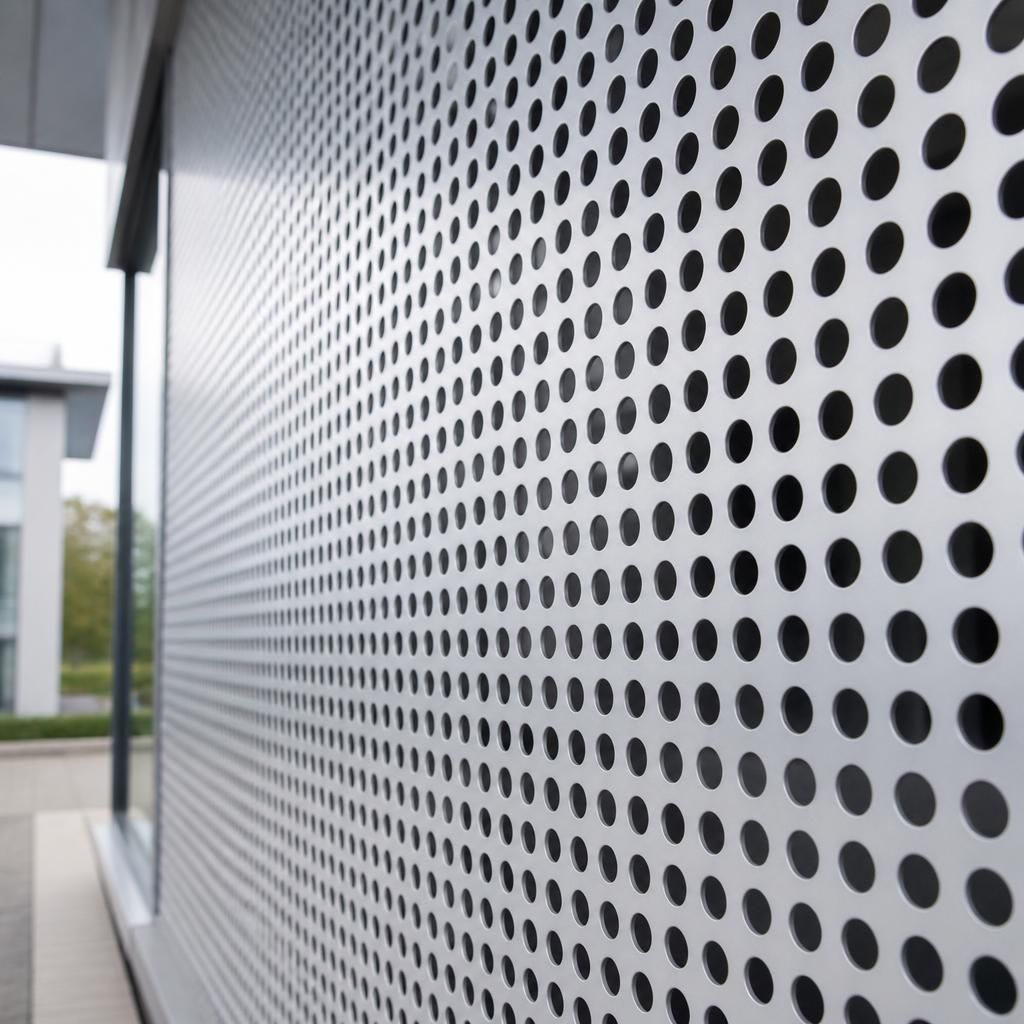
The perforated design also influences how a panel performs in severe weather. Open areas allow air to pass through the sheet, which can reduce the uninterrupted surface exposed to wind pressure compared with a solid panel. However, the pattern, hole size, open area, sheet thickness, panel span and support arrangement must be assessed together. A panel that is insufficiently supported may flex under wind or handling loads, placing stress on the coating around perforations and fixings.
For this reason, durability is not determined by the coating specification alone. The perforation layout should be coordinated with the panel’s structural requirements so that the finished component remains stable in service. Avoiding excessive deflection helps limit rubbing, impact and local coating strain, supporting the long-term appearance and protective function of the aluminium in exposed installations.
Discuss your powder coated perforated aluminium requirements
Discuss your powder coated perforated aluminium requirements with the team, providing panel drawings, material details and the intended environmental conditions for review. This helps establish a coating specification suited to the component’s expected service conditions.