

What factors should be considered when selecting between matte clear and white powder coatings for aluminium sheet metal?
Selecting between matte clear and white powder coatings for aluminium sheet metal depends on the required appearance, colour consistency, UV and corrosion protection, surface preparation, end use and maintenance expectations. Matte clear preserves more of the aluminium’s natural character, while white provides an opaque, uniform finish, so the choice should reflect both design requirements and the conditions the sheet will face.
The choice between matte clear and white powder coating for aluminium sheet should be based on the required visual specification, the condition and finish of the underlying metal, fabrication tolerances, batch requirements and the performance conditions defined for the finished part. A matte clear coating leaves more of the aluminium’s own appearance visible, whereas white creates a separate, opaque surface; this difference affects inspection, colour control and how design changes are managed.
Assess the appearance of the aluminium before choosing a clear finish. Matte clear does not conceal variations in rolling marks, sanding, weld repairs, handling scratches, oxide staining or differences between sheets. These features may become part of the visible finish. If the aluminium has a consistent, deliberately specified surface, this can be an advantage. If it contains mixed textures or blemishes, an opaque white coating may provide a more uniform visual result. The sample should therefore be made from the same grade, preparation method and type of sheet as the production parts, rather than relying only on a colour card.
Consider how the sheet will be fabricated and inspected. Powder coating is normally specified in relation to the final component, so cutting, drilling, folding, punching and welding should be planned before coating wherever possible. Fabrication after coating can damage the film at cut edges, create visible marks and affect dimensional fit. Confirm bend radii, holes, folded returns, joint positions and mating surfaces in advance. For parts that must be assembled tightly, the coating thickness on contact faces may need to be allowed for in the design.
Review edges, corners and concealed areas. Sheet metal may include sharp edges, narrow returns, recessed sections and areas that are difficult to coat evenly. These features can affect coverage and the visual continuity of either finish. Define which surfaces require coating, which must remain bare for assembly or electrical contact, and where masking is needed. A clear finish can make inconsistent edge preparation especially noticeable, while white may make overspray, missed areas or contamination easier to identify against the specified colour.
Set measurable acceptance criteria before production. The specification should identify the intended colour reference for white, the required level of mattness, acceptable visual variation, coating coverage, adhesion and any film-thickness range required by the component’s function. It should also state the viewing conditions for appearance checks, since a finish can look different under changing light angles. For repeat work, retain an approved reference panel or sample and agree how variations between batches will be assessed.
Check compatibility with the complete system. The coating is only one part of the finished assembly. Confirm that the proposed pretreatment, powder system, sealants, gaskets, adhesives, fasteners and cleaning products are suitable for use together on aluminium. Particular attention is needed where the sheet will contact other metals, be exposed to standing moisture, or include joints that can trap contaminants. The specification should also distinguish between decorative requirements and areas where additional protective performance is essential.
Compare maintenance and replacement implications. A white finish may be easier to reproduce as an opaque design colour when replacement panels are required, provided the same specification is retained. A matte clear finish may require closer control of the aluminium substrate and preparation method to achieve a consistent appearance across replacement parts. Consider how visible fingerprints, dust, handling marks and local repairs will be on the installed sheet, and ensure the proposed cleaning method will not polish or otherwise alter the matt surface.
Consider the scale and repeatability of the order. Large sheets, multiple panel sizes and repeated production batches require consistent racking, handling and process control. Parts should be presented so that important visible faces are not marked during coating or transport. Where components are supplied over several production runs, document the substrate, preparation, coating specification and approved sample so that a later batch is judged against the same criteria rather than an informal description such as “clear matt” or “white”.
A practical selection process is to compare representative samples against the actual lighting, surrounding materials and assembly details, then record the decision in the technical drawing or coating schedule. The final choice should identify the visible face, substrate preparation, colour or clear-finish reference, mattness requirement, masking points, inspection criteria and any special environmental or assembly conditions. This turns the choice from a purely visual preference into a coating specification that can be applied consistently to the aluminium sheet.
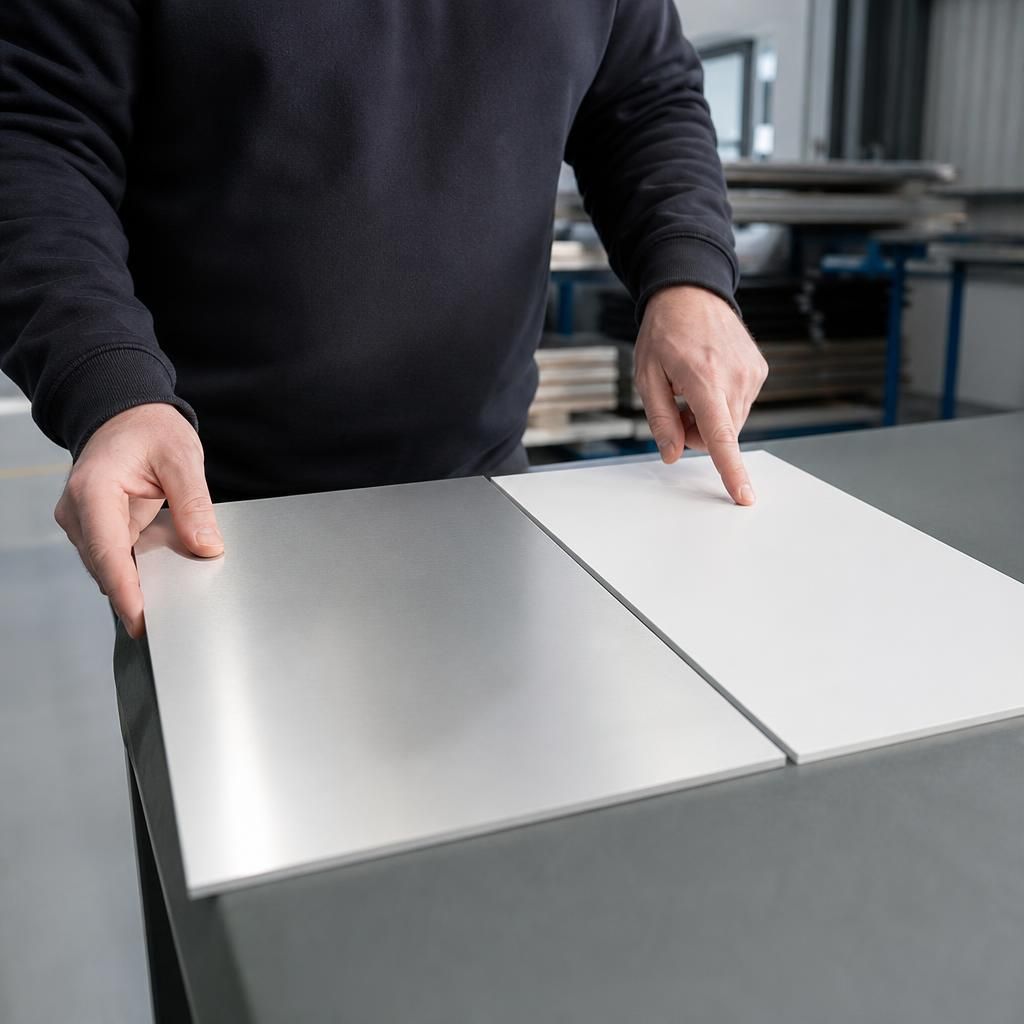
Light behaviour is another factor when selecting between matte clear and white powder coating for aluminium sheet. A matte clear finish retains the visual character of the metal while reducing the sharp reflections associated with a brighter surface. White provides a more uniform, opaque appearance and can make a panel appear lighter within an interior or exterior scheme, but its reflectance and visual brightness will depend on the specified powder and surrounding conditions.
Consider how the coated sheet will look under its actual lighting, viewing angles and adjacent materials. This is particularly important for screens, cladding panels, enclosures and equipment covers, where glare, contrast and perceived colour can affect the finished design. If solar exposure or surface temperature is relevant, obtain performance information for the specific coating system rather than assuming that all clear or white finishes behave alike. Comparing sample panels in representative conditions can help confirm that the selected finish meets both the visual and functional requirements.
Discuss Your Matte Clear or White Powder Coating Requirements
Discuss your aluminium sheet metal requirements with the powder-coating team, including the intended finish, component use and project specification. They can help you assess whether matte clear or white powder coating is the more suitable option for your application.