

What factors should be considered when selecting powder coated aluminium frames and parts for industrial applications?
When selecting powder coated aluminium frames and parts for industrial applications, assess the operating environment, required corrosion and wear resistance, component design, coating specification, colour and texture, dimensional tolerances, and the coater’s ability to process the required size and batch volume. The choice should match the aluminium grade, end use, exposure conditions and performance requirements rather than being based on appearance alone.
Selecting powder coated aluminium frames and parts for industrial use requires more than choosing a colour. The specification should define the component’s service conditions, substrate, preparation, assembly requirements, inspection criteria and expected maintenance regime, then confirm that the proposed coating system can meet those conditions consistently.
Start with the aluminium substrate
Identify the aluminium alloy, temper and surface condition before specifying the coating. Extrusions, castings, sheet and machined parts can present different surface characteristics, including extrusion lines, casting porosity, lubricant residues, oxide layers or machining marks. These features may affect pretreatment, coating appearance and adhesion.
Parts should arrive free from cutting fluids, grease, sealants, adhesive residues and temporary corrosion inhibitors unless the coating provider has confirmed that they can be removed as part of the agreed preparation process. Existing anodising, paint or other finishes also need to be declared. Coating over an unsuitable or poorly prepared surface can compromise the finished system regardless of the powder selected.
Define the actual service conditions
Describe where the frames or parts will be installed and what they will encounter. Relevant information may include indoor or outdoor exposure, moisture, condensation, cleaning chemicals, industrial pollutants, handling, impact, abrasion and contact with other materials. The application may also involve temperature changes, ultraviolet exposure or proximity to coastal conditions.
This information allows the coating system and pretreatment requirements to be assessed against the application rather than selected on appearance alone. If a component will be cleaned regularly, for example, the cleaning method and chemicals should be known before the specification is finalised. The same applies where coated parts will be exposed to oils, solvents or process fluids.
Check component geometry and processing constraints
Aluminium frames and parts should be reviewed for features that affect coating access and finish consistency. Deep recesses, narrow channels, enclosed sections, sharp transitions, overlapping joints and areas that trap liquid can create preparation, drainage or curing challenges. Vent and drain provisions may be needed for hollow sections to support safe and consistent processing.
Consider how each part will be suspended during coating. Contact points are required to hold the component and may leave small uncoated marks that need to be positioned in concealed or non-critical areas. If the part has visible faces on several sides, specify which surfaces are critical and agree how they will be supported and inspected.
Parts that will be cut, drilled, tapped, welded or machined after coating need particular consideration. Post-coating work can expose bare aluminium and damage adjacent areas. Where possible, define all fabrication before coating. If later modification is unavoidable, establish how exposed edges and repaired areas will be treated.
Account for assembly and interfaces
Powder coating adds a defined layer to mating surfaces, threads, bores and locating features. Tolerances that are acceptable before coating may not be suitable afterwards, especially where components slide together, locate precisely or rely on electrical contact. Identify all areas that must remain free of coating, such as earth points, threaded holes, bearing seats, sealing faces and close-fit interfaces.
Masking requirements should be shown on drawings or agreed in a written schedule. Also consider galvanic contact between coated aluminium and other metals. If the coating is damaged at a joint, trapped moisture or direct contact between dissimilar materials may create a corrosion risk. Suitable washers, isolating materials, sealants or joint designs may therefore be part of the overall specification.
Set measurable finish and inspection requirements
A useful specification distinguishes between appearance and performance. Define the required colour reference, gloss or surface effect, acceptable visual variation, areas that are viewed critically and permissible coating defects. The inspection lighting, viewing distance and orientation should be agreed for visible architectural or equipment-facing surfaces.
Other acceptance criteria may include adhesion, coating coverage, cure condition, edge coverage and coating thickness. These requirements should be appropriate to the component and its use rather than copied from an unrelated product specification. If testing or inspection records are required, agree the method, sampling approach and documentation before production begins.
Where several aluminium components are assembled into one frame, consider colour and finish consistency across the complete set. Powder batches, part orientation, substrate differences and processing conditions can influence appearance. Components that need to match should be identified and, where practical, processed under controlled and agreed conditions.
Review curing and heat-sensitive details
Powder coating is cured using controlled heat, so the part’s dimensions, mass and construction should be reviewed for compatibility with the process. Assemblies containing seals, plastics, adhesives, bearings or other heat-sensitive items may need to be dismantled or specified differently. Trapped oils, moisture or residues can also affect the result during curing.
Large or unusually shaped parts need to be assessed for handling, oven access and support. Provide accurate overall dimensions, weights, drawings and photographs where useful. These details help establish whether the complete assembly can be processed or whether it should be supplied as separate components.
Consider quantity, repeatability and future supply
The order quantity and expected repeat work influence how the coating process should be planned. For one-off components, the emphasis may be on clear drawings, preparation and inspection. For repeat batches, document the powder specification, masking positions, racking points, finish requirements and approval standard so that later production can be compared with the original sample.
Parts should be packaged and transported in a way that protects corners, edges and finished faces from rubbing or impact. Packaging requirements are particularly important where components will be stored before assembly or moved between sites. Collection and delivery arrangements can be incorporated into the production plan for businesses sending work to a regional coating specialist across the Midlands and surrounding areas.
Provide complete technical information
A coating enquiry should normally include drawings, material details, part dimensions, weights, quantities, photographs, intended use, critical surfaces, masking requirements, required finish and any relevant inspection or packaging instructions. State whether the parts are new, previously coated, welded, machined or contaminated with process residues.
The most suitable choice is the one supported by a clear technical specification and a process review. Confirming these details before production reduces the risk of unsuitable preparation, inaccessible surfaces, interference at assembly points, inconsistent appearance or rework after coating.
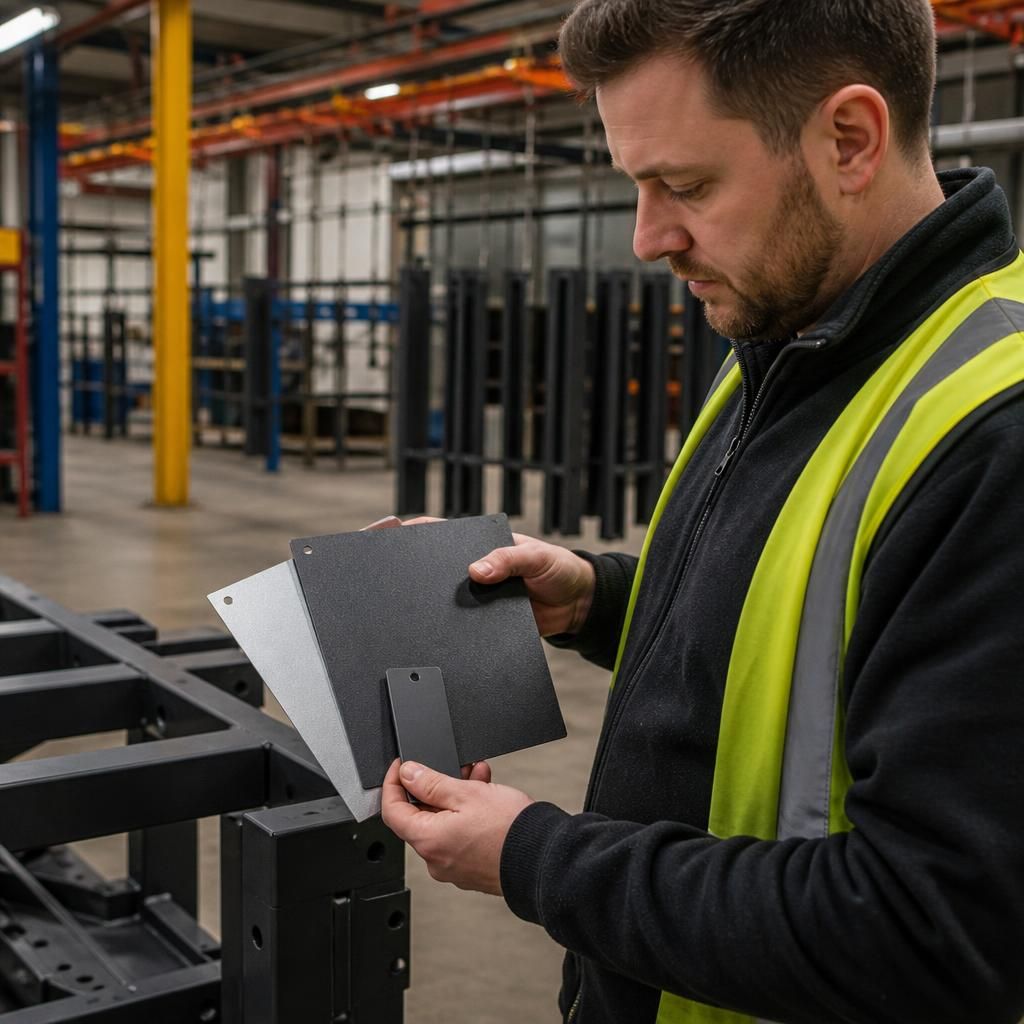
Consider future repair and replacement requirements. The selection of powder coated aluminium frames and parts should account for how damaged or replacement components will be handled throughout the service life of the installation. Record the powder reference, colour, gloss level, texture and approved finish sample so that future work can be specified consistently.
Agree the repair approach before production, particularly where parts may be exposed to impact, handling or site modification. Touch-up materials may not reproduce the exact texture or gloss of a factory-applied powder coating, so applications with demanding appearance requirements may benefit from replaceable components or a defined refurbishment plan.