

How does the polyester powder coating process on aluminium ensure consistent finish quality across different projects?
Polyester powder coating on aluminium delivers a consistent finish when each project follows controlled preparation, powder application and curing stages. Consistent pre-treatment, suitable coating specification, calibrated equipment and checks for coverage, colour and cure help maintain the required appearance and performance across different batches and component designs.
Consistent finish quality on aluminium is achieved by controlling the variables that can change from one project to another, while adapting the process to each component’s alloy, shape, surface condition and performance requirements. A clear coating specification, repeatable work instructions, suitable fixturing and documented inspection criteria allow different batches to be assessed against the same standard.
Aluminium components are not all identical. Extrusions, castings, folded sections and machined parts can present different levels of porosity, sharp edges, recesses and surface variation. The coating specification should therefore identify the component material, required appearance, intended environment, colour, gloss or texture, masking areas and acceptable tolerance for visual imperfections. Recording these details before production reduces the risk of one project being judged against assumptions made for another.
Component preparation also needs to account for the condition in which parts arrive. Oil, handling marks, oxidation, weld residues and machining debris can affect adhesion and appearance if they are not addressed appropriately. Consistent preparation removes relevant contaminants and creates a suitable surface for the polyester coating. Where the design includes deep recesses, narrow returns or complex profiles, the process should be reviewed to make sure these areas can receive a suitable and even finish.
Fixturing has a direct effect on repeatability. Parts must be supported securely without damaging visible faces or creating avoidable contact marks. The position and spacing of components can influence access to edges, internal corners and recessed sections. Using repeatable racking arrangements helps maintain similar exposure from batch to batch and makes it easier to identify whether a variation is caused by the part design, its position or the coating process.
Colour and appearance require more than checking whether the coating looks broadly correct. Relevant checks can include:
- comparison with the agreed colour or reference sample;
- assessment of gloss, texture and visual uniformity under suitable lighting;
- inspection of visible faces, edges, corners, recesses and masked areas;
- checking for defects such as contamination, runs, pinholes, bare areas or excessive build; and
- confirmation that the finish is suitable for the specified end use rather than judged on colour alone.
For repeat projects, retaining an approved reference sample or clearly documented acceptance standard provides a consistent point of comparison. This is particularly useful where several components form one assembly, where replacement parts may be coated at a later date, or where different component shapes need to present a visually matched finish.
Process records support consistency by linking each batch to its job specification, material details, equipment settings, inspection results and any agreed deviations. These records make it possible to investigate differences between batches and refine the method for future work. They also help distinguish a genuine coating issue from variation in the aluminium itself, such as a substrate mark that remains visible beneath a uniform finish.
Handling after coating is another important control. Finished aluminium should be protected from abrasion, impact, moisture and contamination during inspection, packing, storage and transport. Suitable separation between parts reduces the chance that a consistent coating is marked after production. Collection and delivery arrangements for businesses across the Midlands and surrounding areas can be considered as part of the project specification where finished components need controlled movement between sites.
The most reliable results come from treating each new project as a defined specification rather than assuming that the settings used for a previous component will transfer unchanged. Standardised controls provide repeatability, while technical review of the aluminium, geometry, appearance requirements and end use ensures that the polyester powder coating remains appropriate for the particular job.
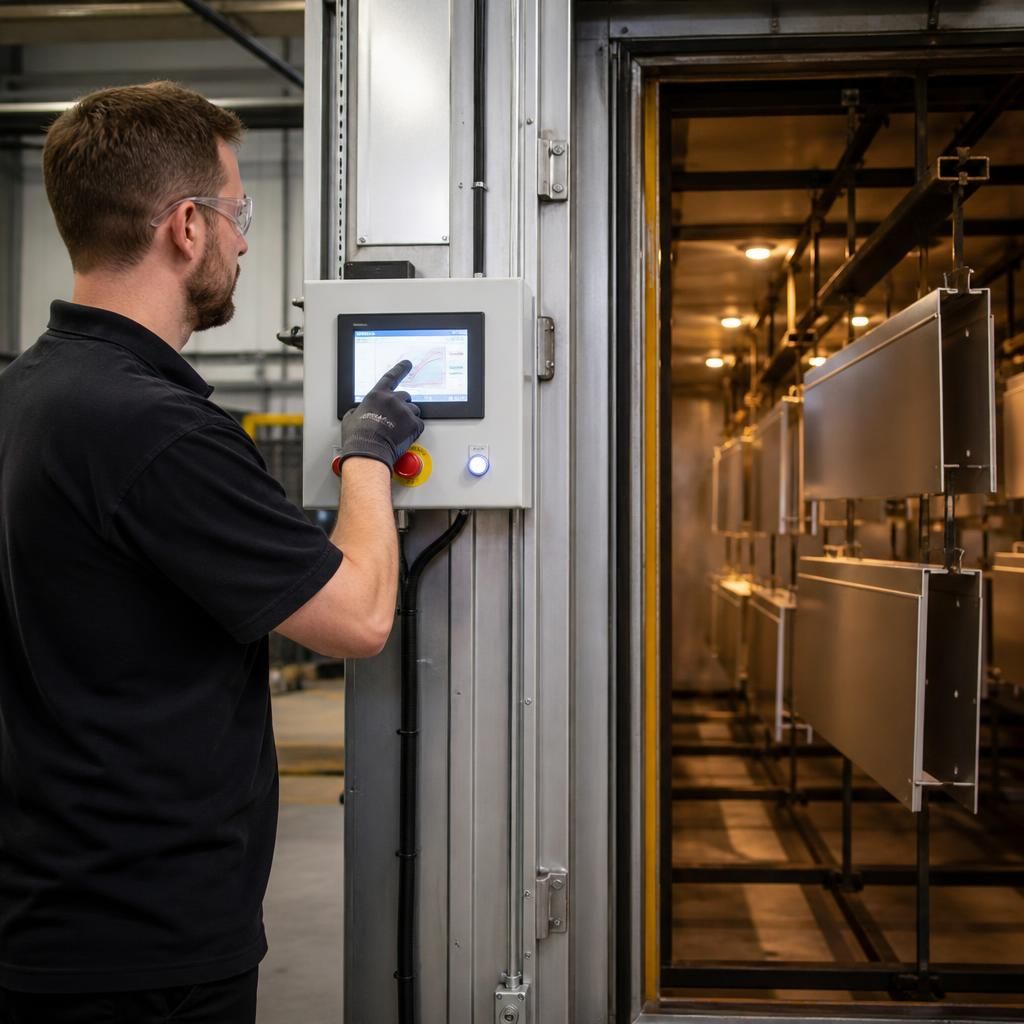
Curing control is a key factor in producing a consistent polyester powder coating on aluminium. The coating must reach the specified cure condition across the component, not merely experience the correct oven air temperature. Aluminium thickness, component geometry, loading arrangement and oven airflow can affect how heat reaches different areas, so the process should be assessed for the actual part and batch configuration.
Controlled oven settings, suitable loading and verification of the curing cycle help prevent variations such as inadequate cure, excessive cure or differences between thick and thin sections. These conditions influence the coating’s adhesion, hardness, appearance and resistance to the intended environment. For repeat work, recording the established curing parameters and checking them when the component design or batch arrangement changes helps transfer the same finish standard between projects.