

How does the electrostatic aluminium powder spray process contribute to environmental sustainability?
Electrostatic aluminium powder spray supports environmental sustainability by applying dry, solvent-free powder to electrically charged metal surfaces, which avoids many volatile organic compound (VOC) emissions associated with liquid paint. The cured coating is durable, helping extend component service life and reduce the material and energy demands of premature recoating or replacement.
Electrostatic aluminium powder spray contributes to environmental sustainability by using material efficiently, limiting coating waste and supporting a controlled production process. The environmental benefit does not come from the spray application alone: powder recovery, curing efficiency, surface preparation, waste management and the eventual recycling route for the aluminium component all influence the overall result.
During application, the powder particles are electrically charged while the aluminium component is earthed. This creates an attraction between the powder and the surface, helping the coating reach faces and edges that might otherwise require additional passes. Powder that does not initially adhere can fall into a recovery system rather than becoming uncontrolled overspray. Where the equipment and process controls permit, recovered powder may be returned to the application process.
Recovery has to be managed carefully. Powder from different colours, coating types or production runs cannot always be mixed, and contaminated material may not be suitable for reuse. Effective separation, filtration and housekeeping are therefore important. A responsible coating process treats recovered powder as a controlled material stream, not as automatically reusable waste.
The dry nature of powder also changes how waste is handled. There is no liquid coating medium to drain, evaporate or leave behind as wet paint residue. Unused powder, filter deposits, contaminated material and preparation waste still require appropriate handling, but these streams can be identified and managed separately. This helps a coater monitor material use and identify avoidable losses such as excessive application, poor gun settings or unnecessary colour changes.
Energy use is another part of the assessment. Powder-coated aluminium normally passes through a heated curing oven so that the coating particles melt, flow and form a continuous film. The environmental performance of this stage depends on oven design, insulation, temperature control, loading patterns and the curing schedule specified for the powder. Efficient production planning can prevent the oven from being operated for small or poorly grouped batches, while correct cure control avoids repeating work because of under-cured or over-processed components.
Surface preparation should also be considered rather than treated as a separate environmental issue. Cleaning and pretreatment improve adhesion and coating performance, but they may involve water, detergents or conversion chemicals. A well-controlled process limits chemical consumption, manages rinse water where applicable and prevents residues from entering general waste or drainage systems. The selected pretreatment should match the aluminium alloy, intended service conditions and powder system, since unnecessary processing can add environmental burden without improving the finished component.
Powder coating can support a more resource-efficient product life when the specification is correct. A coating that remains fit for purpose reduces the likelihood of avoidable stripping, reprocessing and replacement. This benefit depends on choosing suitable pretreatment, film thickness, cure conditions and resistance properties for the component’s operating environment; sustainability is not achieved by applying more coating than the specification requires.
Aluminium’s established recyclability is relevant at the end of a component’s useful life. Parts should be assessed according to the customer’s recycling route and any requirements concerning mixed materials, inserts or coating removal. A coating specification should therefore consider the complete component, not only the appearance immediately after spraying.
For a meaningful environmental assessment, a business specifying electrostatic aluminium powder spray can ask a coating provider:
- How is overspray collected, separated and assessed for reuse?
- How are unusable powder, used filters and pretreatment residues handled?
- How is oven energy controlled for the component size and batch arrangement?
- Which preparation chemicals and rinsing stages are required for the aluminium alloy?
- What film thickness and curing conditions are specified, and how are they checked?
- Will the coating and any associated treatments fit the component’s intended end-of-life recycling route?
These controls distinguish a genuinely considered electrostatic aluminium powder spray process from a simple change of coating material. The strongest environmental approach combines efficient powder application with measured energy use, controlled preparation, responsible waste handling and a coating specification suited to the component’s full service and recycling lifecycle.
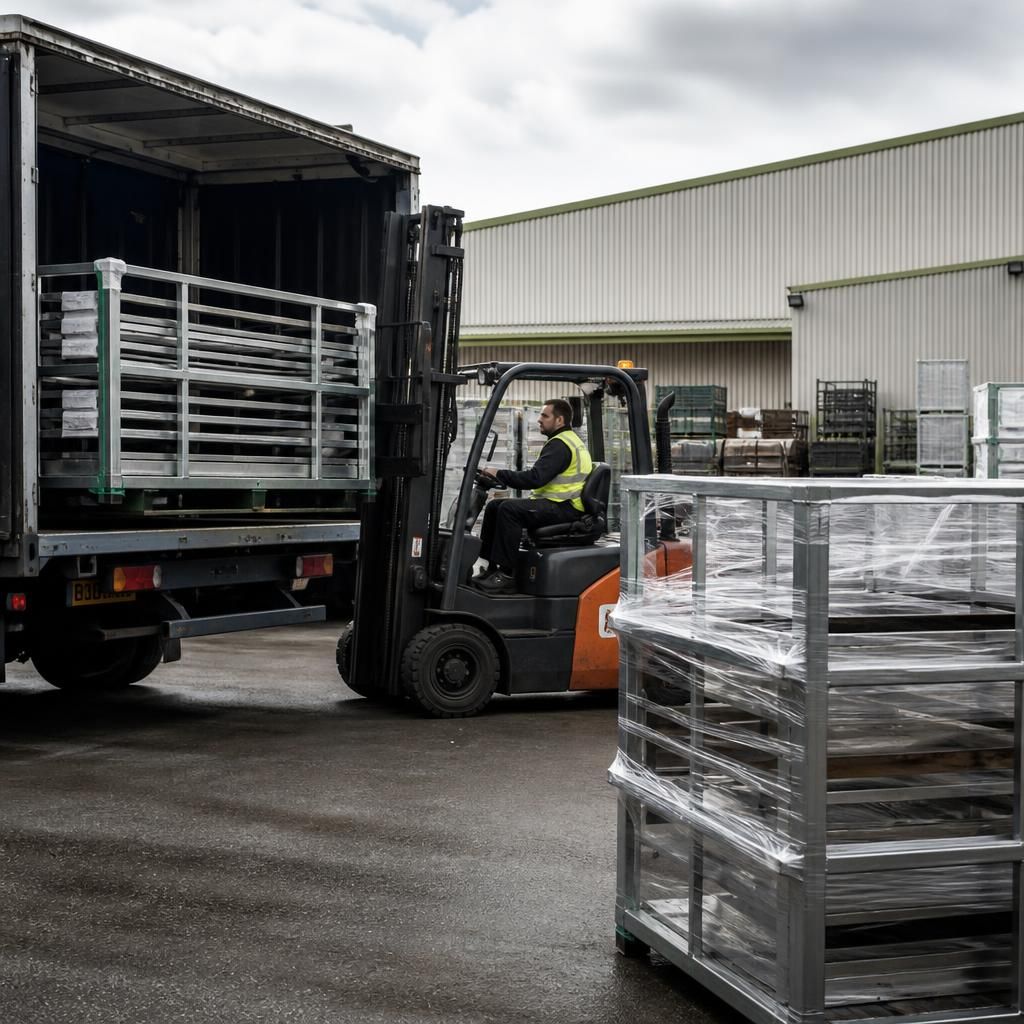
The environmental impact of electrostatic aluminium powder spray also includes the transport and packaging associated with moving components through the coating process. Consolidating suitable consignments, using reusable stillages where practical and protecting parts with appropriately sized packaging can reduce avoidable material use and transport movements. These measures do not replace good powder recovery or energy control, but they form part of a more complete assessment of the coating process. Businesses evaluating a coating supplier should therefore ask how components are packed for collection and delivery, whether packaging can be returned or reused, and how transport is organised for repeat or batch work.