

How can automated powder coating lines be customised to meet specific operational needs and challenges?
Automated powder coating lines can be customised around component dimensions, batch volumes, handling requirements and the available floor space. The configuration may include tailored conveyor layouts, loading and unloading arrangements, powder application equipment, curing capacity and control systems to address specific coating specifications, production constraints and repair workflows.
Automated powder coating lines are customised by matching each stage of the process to the parts, coating specification, production method and control requirements. Effective customisation goes beyond selecting a conveyor or spray booth; it considers how components are prepared, coated, cured, inspected, recorded and moved through the operation without creating avoidable handling or quality problems.
Start with the coating specification. The required finish determines much of the line design. The assessment should establish the powder type, required film build, colour range, gloss level, texture, corrosion protection and any masking or coverage restrictions. Components with recesses, sharp edges, threaded holes or concealed faces may require different spray access, earthing arrangements or manual touch-in points from simple open profiles. Where a part has critical contact surfaces, the line can incorporate defined masking, plugging and inspection procedures so that coating is applied only where permitted.
Adapt preparation to the substrate. Steel, galvanised metal, aluminium and previously coated components do not necessarily require the same preparation. A tailored pre-treatment sequence may include cleaning, rinsing, chemical conversion or other surface preparation appropriate to the substrate and the required durability. The design should also account for drainage, drying and the risk of trapped chemical residues. If preparation is inconsistent, a well-controlled powder application stage cannot compensate for poor adhesion or contamination.
Design for colour and product changeovers. The number of colours, powder types and component families affects how the coating area should be arranged. A line handling frequent changes may need accessible booth surfaces, defined cleaning points, suitable powder recovery arrangements and a clear procedure for preventing cross-contamination. For a more consistent product mix, the priority may instead be repeatable settings and minimal intervention. The appropriate arrangement depends on whether the main operational challenge is flexibility, repeatability, cleaning time or control of powder usage.
Build in quality control rather than relying only on final inspection. Useful control points can include checks on surface cleanliness, earthing, powder application, film thickness, cure conditions and the finished appearance. Cure monitoring is particularly important because the powder must reach the specified metal temperature for the required process conditions; oven air temperature alone may not confirm that heavier or differently shaped parts are properly cured. Inspection records can be linked to product batches, powder references and process settings where traceability is required.
Integrate the line with existing operations. A customised system should fit the surrounding workflow, including storage, preparation, repair assessment, inspection, packing and dispatch. Interfaces with existing extraction, electrical supplies, compressed air, pre-treatment equipment and site controls need to be reviewed before installation. The line should also allow safe access for cleaning, inspection and maintenance, rather than maximising equipment density at the expense of practical operation.
Account for repair and variable-condition work. Repair operations often involve mixed components, uncertain coating history and parts that need additional inspection before processing. A suitable arrangement may therefore include controlled bypasses, hold points, manual intervention areas or alternative process routes for items that cannot follow the standard sequence. Previously coated or repaired metal may require separate assessment because unknown residues, corrosion or incompatible coatings can affect preparation and adhesion.
Use controls that reflect the required level of repeatability. Automated recipes can record settings for recurring component groups and help reduce variation between operators. Access permissions, alarms, interlocks and fault messages should be configured around the risks and skills present on site. Data collection may cover powder reference, coating settings, oven conditions, inspection results and maintenance actions. The purpose is not to collect information for its own sake, but to make deviations easier to identify and investigate.
Plan for maintenance and future changes. Filters, guns, hoses, booth surfaces, sensors, earthing points and oven equipment all influence coating quality. Their location and accessibility should be considered during the design stage. A line may also need spare capacity or modular elements if the operation is expected to introduce new products, finishes or process requirements later. This is more practical than designing a system that meets today’s process but makes every future alteration disruptive.
A sound customisation process normally follows a structured review:
- Define the substrates, coating specifications, component mix and quality requirements.
- Map the complete process, including preparation, coating, curing, inspection, rework and dispatch.
- Identify constraints such as utilities, access, safe working arrangements, cleaning requirements and integration with existing equipment.
- Separate standard production routes from exceptional, damaged or repair items that need manual assessment.
- Specify control, traceability, maintenance and changeover requirements before equipment is selected.
- Validate the proposed configuration using representative components and agreed acceptance checks.
For a Midlands manufacturer, fabricator, construction business or automotive operation, this approach helps distinguish a genuinely suitable automated powder coating line from a standard arrangement with minor alterations. The most effective design is the one that addresses the actual sources of variation—surface condition, product mix, finish requirements, changeovers, inspection and maintenance—while remaining practical for the people who operate and service it.
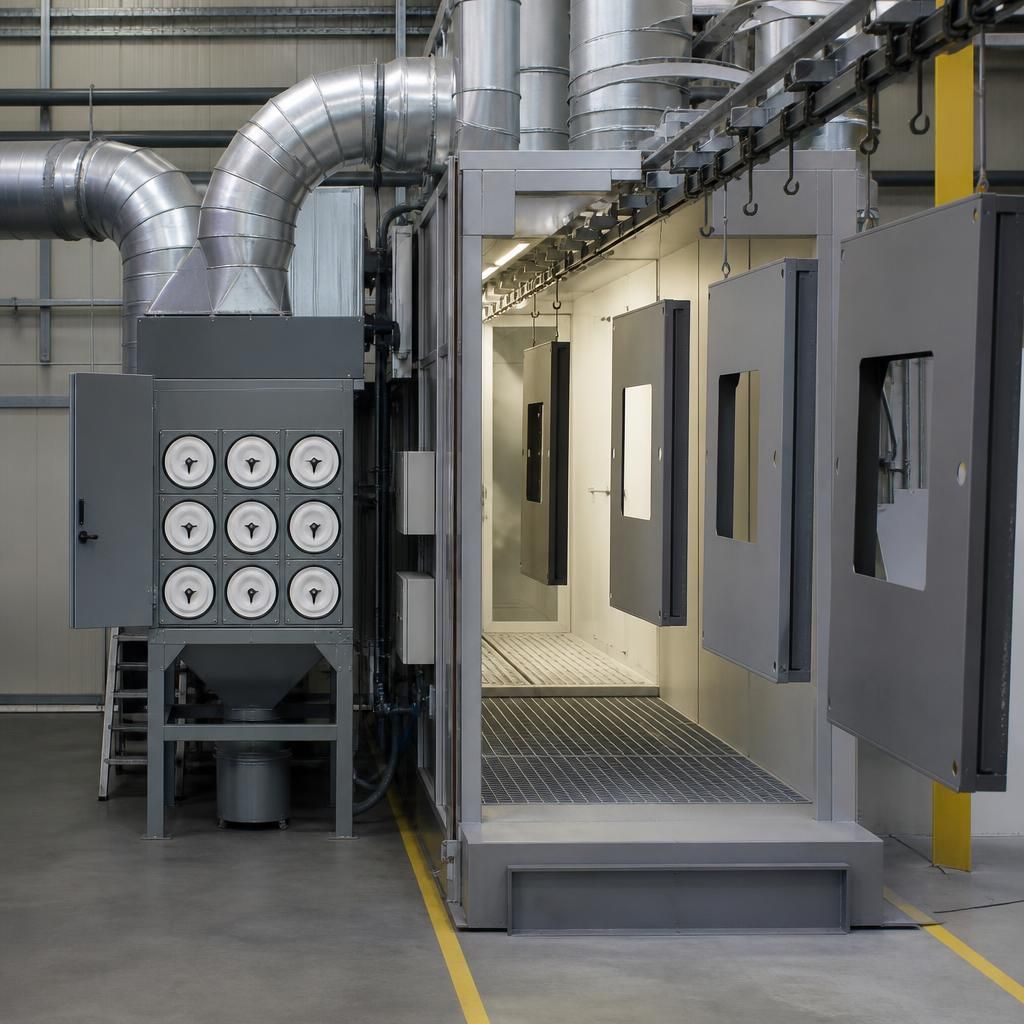
Ventilation and powder containment should be customised to the booth layout, application method and powder-handling arrangements. Extraction must support consistent spray conditions while directing airborne powder towards the intended filtration and recovery equipment, without creating unnecessary build-up around the booth or adjacent work areas.
The design should also provide practical access to filters, ducting and internal surfaces so deposits can be removed without dismantling major sections of the line. This is particularly important where the operation handles several coating materials, as the containment and cleaning arrangements need to support controlled changeovers and prevent unwanted carry-over between products.
Discuss your automated powder coating line requirements
Discuss your automated powder coating line requirements with our team to assess the most suitable configuration for your operation. We can review your proposed application and the challenges the line needs to address before the next stage is defined.