

How does sandblasting compare to other surface preparation methods in terms of effectiveness for powder coating repairs?
Sandblasting is usually the most effective preparation method for powder coating repairs where existing coating, rust or contamination must be removed and the metal needs a consistent profile for adhesion. Hand sanding, wire brushing, chemical stripping and pressure washing can suit lighter contamination or sensitive components, but they may be less consistent or leave residues, so the best option depends on the substrate, condition and repair requirements.
For most powder coating repairs involving failed coating, corrosion or firmly bonded contamination, abrasive blasting is the most comprehensive preparation method because it can remove the defective layer and leave a controlled surface for the replacement coating. It is not automatically the best choice for every component, however. Effectiveness depends on the metal, the condition of the part, the geometry of the repair and the level of control required over the finished surface.
Surface preparation should be assessed against several outcomes rather than removal alone. A suitable method must produce a clean surface, provide an appropriate key for the powder coating, avoid damaging the substrate and prevent contamination before coating. It should also reach recessed areas and complex profiles without creating defects that become visible after curing.
Abrasive blasting: Blasting uses a propelled abrasive media to break down old powder coating, rust, mill scale and other firmly attached deposits. It can treat the whole component consistently, including edges, recesses and irregular profiles that are difficult to prepare by hand. The impact also creates a mechanical key, provided the abrasive, pressure and technique are matched to the substrate. This makes blasting particularly effective where a repair needs more than a lightly abraded edge.
Its limitations need to be controlled. Excessive pressure or an unsuitable abrasive can remove too much base metal, distort thin sections, round sharp details or damage threads and machined faces. Blasting can also drive abrasive into crevices or leave dust on the surface if cleaning is inadequate. Sensitive areas therefore need masking, and the blasted component should be inspected and protected from handling contamination before powder is applied.
Hand sanding and mechanical abrasion: Sandpaper, abrasive pads, orbital sanders and similar tools provide good local control. They are useful for feathering the edge of a damaged coating, smoothing a small transition or preparing a component that cannot tolerate aggressive impact. Operators can work around fine details and limit preparation to the repair zone.
The main disadvantage is consistency. Manual abrasion may leave differences in roughness across the part, and it is difficult to reach internal corners or narrow recesses. It can also polish rather than key a surface if the abrasive or technique is unsuitable. For a small, accessible repair it may be effective; for widespread corrosion or a complete recoating, it is generally more dependent on operator technique than blasting.
Wire brushing and scraping: These methods can remove loose rust, flaking coating and soft deposits with relatively little impact on the underlying metal. They are practical for preliminary cleaning or isolated areas where preserving the original surface is important.
They are less effective against tightly bonded powder coating, embedded corrosion or contamination in pits. A wire brush may burnish the metal and leave a comparatively weak key, while scraping can miss material in profiles and leave sharp coating edges. They should not be treated as equivalent to full abrasive preparation where long-term adhesion depends on removing all unsound material.
Chemical stripping: Chemical removers can dissolve or soften existing coatings without mechanically impacting the substrate. This can be valuable for delicate parts, thin sections or components with intricate shapes. It may also avoid the surface deformation associated with aggressive blasting.
However, chemical stripping does not by itself create the surface profile needed for powder coating. After stripping, the component usually requires thorough rinsing, neutralisation or another specified cleaning stage, followed by drying and suitable preparation of the bare metal. Trapped chemical residues in seams, joints and recesses can interfere with adhesion or contribute to later corrosion. The process therefore has more cleaning and waste-control requirements than its initial removal stage suggests.
Pressure washing or aqueous cleaning: Water-based cleaning is effective for removing loose dirt, salts, water-soluble residues and some surface contamination. It can be a useful part of a preparation sequence, particularly when the coating itself is sound and the issue is contamination rather than widespread failure.
Water and detergent will not normally remove firmly adhered powder coating, heavy rust or a substantial surface profile. Drying is also critical, especially around joints, folds and hollow sections. If moisture or cleaning chemicals remain, the subsequent coating process may be compromised. Pressure washing is therefore commonly a cleaning step rather than a complete substitute for coating removal and profiling.
Thermal removal: Controlled heating can break down some existing coatings before the residue is removed mechanically. It may be considered for suitable robust components, but temperature control is essential. Heat can affect the properties, dimensions or protective treatment of the metal, and it may be unsuitable for assemblies containing seals, bearings, adhesives or heat-sensitive parts. It is not a universal repair method and must be selected with the complete component in mind.
The comparison changes according to the repair objective:
- Localised edge repair: controlled sanding or mechanical abrasion may be sufficient when the surrounding coating is firmly bonded and only a small area is being prepared.
- Widespread coating failure: blasting is usually more effective because it removes unsound material across the component and provides a more uniform preparation standard.
- Heavy corrosion or mill scale: abrasive preparation is generally better suited than brushing, washing or light sanding, provided the metal thickness and condition are assessed first.
- Delicate or thin components: chemical stripping or a carefully controlled low-impact method may reduce the risk of distortion, followed by a separate process to establish the required key.
- Complex profiles: blasting can reach areas that hand tools cannot, but masking and media selection become especially important around precision features.
- Contamination without coating damage: an appropriate cleaning process may be preferable to removing an otherwise sound coating.
For powder coating repairs, the most effective approach is often a staged one rather than reliance on a single technique. A component may first be stripped or blasted to remove the failed coating, then cleaned to eliminate abrasive dust, salts and residues, with masking or light hand finishing used around protected features. The prepared surface should be checked for remaining corrosion, sharp coating boundaries, embedded media and areas that were not adequately reached before powder application.
In practical terms, blasting offers the strongest combination of removal capability, surface access and repeatability for substantial repairs, while hand, chemical, washing and thermal methods each have defined situations where they are safer or more appropriate. A professional coating assessment should therefore select the preparation method from the condition and construction of the component, not simply from the type of coating being applied. For businesses across the Midlands, a specialist powder coating provider can assess the part, specify the preparation sequence and arrange collection and delivery where required.
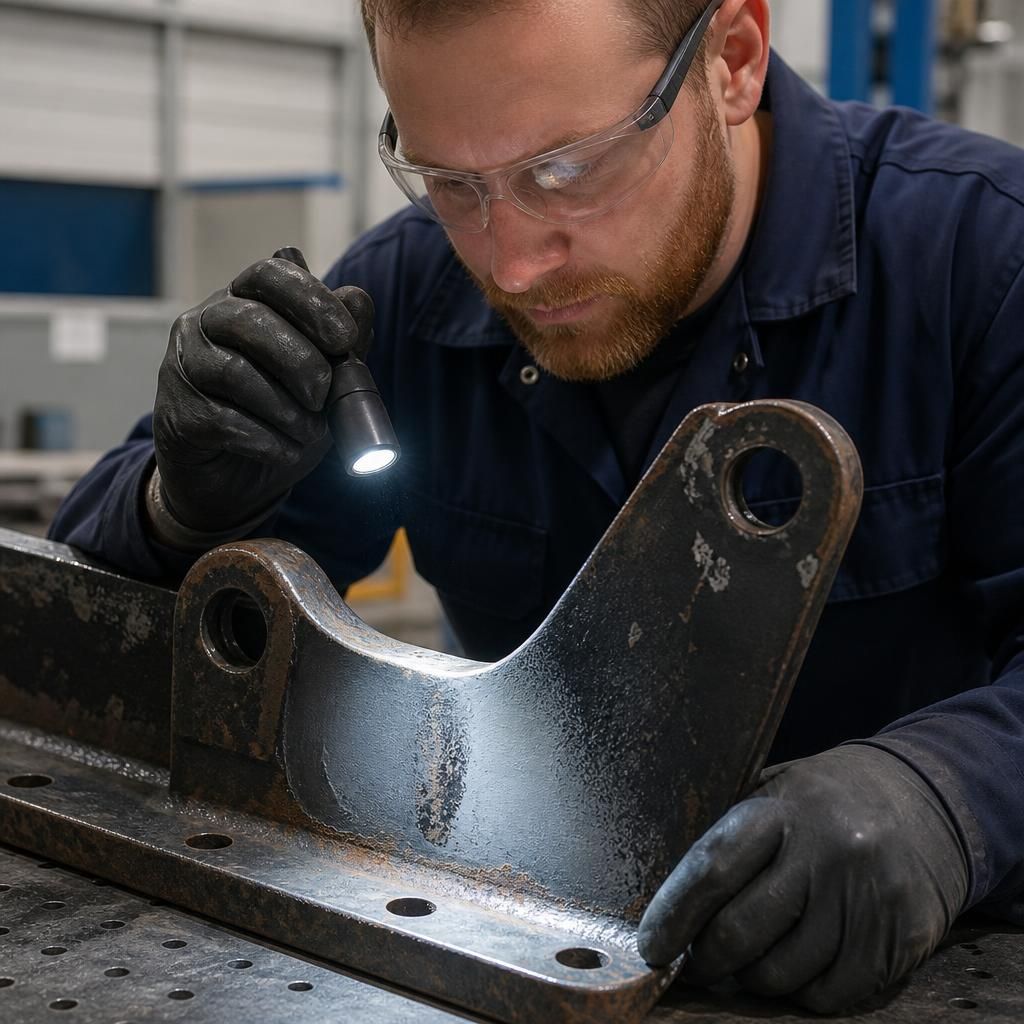
Effectiveness is also measured by how clearly preparation reveals the condition of the metal beneath the failed coating. Abrasive blasting can expose pitting, underfilm corrosion and uneven weld areas, helping determine whether a local repair is suitable or whether the component needs more extensive preparation. This diagnostic benefit is important because a clean-looking surface is not necessarily sound enough to receive new powder coating.
Other methods may remove a specific contaminant with less impact, but they can provide less consistent access to concealed defects or difficult profiles. The preferred method is therefore the one that gives the coater enough information to define the repair boundary accurately while leaving the substrate suitable for the replacement finish.