

How does the choice of powder coating thickness impact the longevity and performance of galvanised steel in different industrial applications?
Powder coating thickness affects how well galvanised steel resists corrosion, impact and wear: an insufficient film may provide inadequate protection, while excessive thickness can increase the risk of defects, brittleness or adhesion problems. The appropriate thickness should therefore be specified for the application’s exposure conditions, handling demands and required finish, alongside suitable surface preparation.
Powder coating thickness affects galvanised steel by changing the continuity, mechanical resilience and service behaviour of the finished coating system. The correct film build is therefore a controlled specification rather than a decision to apply the greatest possible amount of powder. It should be selected in relation to the galvanising condition, powder chemistry, exposure environment, component geometry and the way the part will be handled in service.
Film thickness and protective performance
A cured powder film acts as a barrier between the galvanised surface and the surrounding environment. Its performance depends on forming a continuous, well-cured layer across broad faces, corners, edges, weld areas and recessed features. If the film is uneven, localised weak points can develop even when the average thickness appears acceptable. These areas may include sharp edges, holes, brackets and areas partly shielded from the spray pattern.
On galvanised steel, the powder coating works alongside the zinc layer rather than replacing it. The zinc provides underlying sacrificial protection, while the powder film limits the movement of moisture, salts and contaminants towards the substrate. A well-controlled thickness helps maintain this combined protection over the expected service life. However, increasing the powder build cannot compensate for damaged galvanising, contamination, poor cleaning or an unsuitable pretreatment.
How application conditions influence the specification
The appropriate thickness varies between industrial applications:
- Internal components: Parts used in dry indoor conditions may require less protective film than equipment exposed to condensation, wash-down processes or industrial pollutants.
- External structures: Outdoor steelwork needs a coating system capable of coping with rain, humidity, temperature changes and airborne contamination. Consistent coverage on edges and joints is particularly important.
- Fabricated and construction components: Rails, frames, brackets and enclosures may be exposed to impact during transport or installation. The specification must balance protective coverage with the dimensional requirements of mating parts, fixings and moving sections.
- Automotive and industrial parts: Components subject to abrasion, repeated handling, chemicals or elevated operating temperatures need a powder grade and film build suited to those stresses. Thickness alone does not determine resistance; cure and powder formulation are equally significant.
Where a component has close-fitting interfaces, threaded holes or sliding surfaces, excessive build can affect assembly even if the visible finish is acceptable. Masking, hanging orientation and the planned coating allowance should be considered before production, not after the part has been coated.
Why average thickness can be misleading
A single thickness reading does not describe the whole component. Powder can accumulate on lower edges, corners and areas facing directly towards the spray guns, while recesses or shielded faces receive less material. Galvanised steel can also have a variable surface profile because of the zinc coating and the original fabrication. That profile influences how the powder covers the surface and how measurements should be interpreted.
Thickness should therefore be checked at representative locations using a suitable cured-film gauge. Readings should cover flat faces, edges, corners and difficult features, with the results compared with the agreed specification. A range is generally more useful than relying on one nominal value, because it identifies both local under-build and excessive accumulation. Test pieces or sample components can help establish a repeatable setting before a larger batch is processed.
Relationship between thickness, curing and finish quality
Film build must be considered together with the powder manufacturer’s curing requirements. The coating is cured according to the temperature reached by the metal, not simply the temperature displayed by the oven. A heavier deposit may respond differently from a lighter one, particularly on large or thermally variable components. Parts should be arranged so that all surfaces receive a consistent powder application and reach the required cure schedule.
On galvanised substrates, heating can also release gases or moisture from the zinc surface or from areas of the fabrication. The result may be visible as pinholing, bubbling or other surface irregularities. Controlling the deposit, allowing suitable preparation and using an appropriate powder system can reduce the risk. If additional build is being considered to hide surface variation, it is preferable to address the underlying preparation or application issue rather than simply adding more powder.
Specifying thickness for long-term service
A practical specification should record the intended environment, powder type, acceptable film-build range, required appearance, critical dimensions and inspection method. It should also identify whether the part will be exposed to abrasion, chemicals, moisture, salts, impact or elevated temperatures. These details allow the coating system to be judged on service performance rather than appearance alone.
The finished thickness is only one part of the result. Degreasing, removal of unsuitable residues, preparation of the galvanised surface, correct powder application, grounding and controlled curing all influence whether the specified film performs as intended. For production work, the coater and fabricator should agree where measurements will be taken and which areas are functionally critical before coating begins. This approach produces a more reliable relationship between powder thickness, galvanised-steel protection and the demands of the finished component.
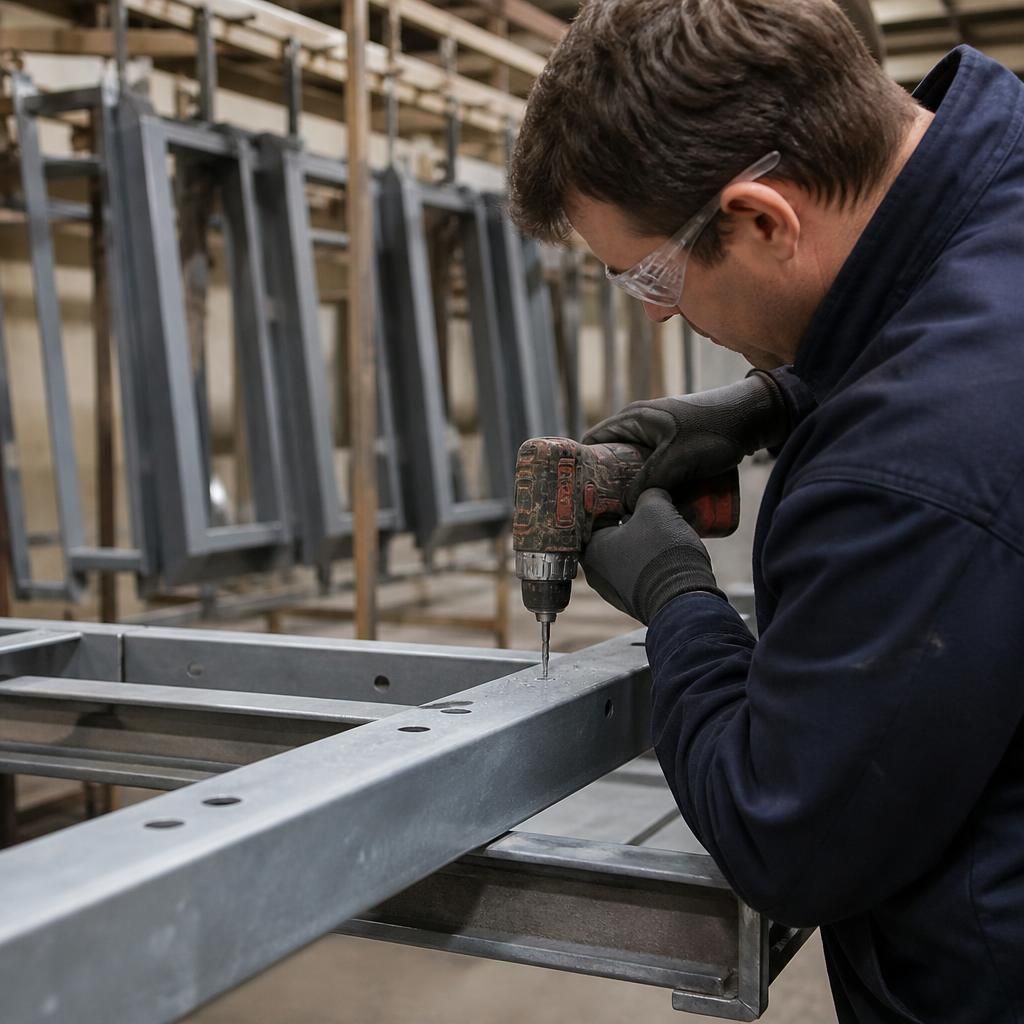
The practical value of powder-coating thickness is often revealed when a galvanised component is scratched, drilled or cut during installation. A sound film limits moisture reaching the zinc, while a local break exposes the galvanising to the environment. The zinc can provide sacrificial protection at that point, but prolonged exposure may produce corrosion products that lift or undermine the surrounding powder film. This makes careful handling and suitable repair of damaged areas important to preserving the coating system.
For components likely to be modified on site, the specification should identify how exposed edges, drilled holes and installation damage will be treated. A thicker coating does not remove the need for compatible touch-up materials or properly prepared repair areas. Considering these likely damage points alongside the required film build gives a more realistic assessment of long-term performance than judging durability from the coating thickness on undisturbed flat surfaces alone.