

What types of powder coatings are best suited for galvanised steel in high-temperature applications?
For galvanised steel used at high temperatures, silicone-based or silicone-modified polyester powder coatings are generally the most suitable because they retain their finish and protective properties better than standard architectural powders. The correct choice depends on the operating temperature, exposure conditions and required finish, with surface preparation and the coating manufacturer’s cure specification remaining essential for adhesion and durability.
Silicone-resin and silicone-modified polyester powder coatings are usually the best options for galvanised steel exposed to sustained or repeated high temperatures. They are formulated to retain adhesion, colour stability and protective performance more effectively than conventional architectural polyester powders. The right selection still depends on the actual service temperature, whether the heat is continuous or intermittent, the surrounding atmosphere and the appearance required.
Silicone-resin powder coatings are intended for applications where heat resistance is the primary requirement. Their resin chemistry is better suited to elevated temperatures than standard polyester, making them appropriate for components such as industrial housings, heat shields, ductwork, exhaust-related parts and equipment enclosures, subject to the coating manufacturer’s specified limits. They can be supplied in finishes designed for functional protection rather than purely decorative use.
Silicone-modified polyester powders provide a compromise between heat resistance and the appearance normally expected from polyester powder coating. They may be suitable where the galvanised steel must withstand significant heat but still requires a consistent colour, smooth finish and reasonable resistance to general environmental exposure. The proportion and type of silicone modification vary between formulations, so the product’s technical data sheet should be checked rather than relying on the word “silicone” alone.
Specialist high-temperature powder formulations should be considered where the component will experience severe thermal cycling, prolonged exposure or contact with hot gases. These products are engineered for particular operating conditions and may have different application, curing and handling requirements from general-purpose powders. They are not interchangeable with ordinary polyester simply because both are applied as dry powder.
Conventional polyester powder coating is often a good choice for external galvanised steel at normal service temperatures, but it is not automatically suitable for high-temperature work. Excessive heat can lead to colour change, loss of gloss, embrittlement, blistering or deterioration of the resin. It may also accelerate the effects of thermal expansion and contraction between the steel, zinc layer and coating. Epoxy-based powders can offer strong chemical and corrosion resistance in suitable environments, but they are generally selected cautiously for exposed high-temperature applications because their long-term performance depends heavily on the heat and ultraviolet exposure involved.
Temperature suitability should be assessed using more than a single maximum-temperature figure. Ask whether the stated limit applies to continuous exposure, short-term peaks or both. A component operating below the quoted limit may still suffer premature failure if it repeatedly heats and cools, experiences local hot spots or is exposed to steam, oils, solvents, salt or corrosive gases. The coating should therefore be matched to the complete service environment, not just the highest temperature recorded at one point.
- Continuous operating temperature: the temperature maintained during normal use.
- Peak temperature: the highest short-term temperature reached during start-up, shutdown or a fault condition.
- Thermal cycling: repeated expansion and contraction, which can place stress on the coating and the galvanised surface.
- Atmospheric exposure: moisture, chemicals, salt, fumes and ultraviolet light can change which resin system is most appropriate.
- Appearance requirements: heat-resistant powders may have a narrower range of colours, gloss levels or textures than decorative architectural powders.
The galvanised substrate also affects the choice. Zinc-coated steel can release gases during heating if moisture, oils, treatment residues or trapped air remain in the surface or in the zinc layer. A coating selected for high temperature cannot compensate for unsuitable preparation. Cleaning, controlled surface profiling and the use of a compatible primer or tie coat may be necessary, depending on the condition of the galvanising and the coating system specified. Any pretreatment must be compatible with both the zinc surface and the chosen high-temperature powder.
Curing is particularly important. High-temperature powders may have a different cure schedule from standard polyester, and the required cure relates to the metal temperature rather than simply the time the component spends in the oven. Thick sections, complex fabrications and recessed areas may heat at different rates. Under-curing can reduce durability, while excessive heating can affect the galvanised layer, distort the component or damage the finish. The applicator should follow the powder manufacturer’s cure requirements and verify that the complete part reaches the specified metal temperature.
For most projects, the practical shortlist is a silicone-resin powder for the greatest heat demand, a silicone-modified polyester where heat resistance and appearance both matter, or a specialist high-temperature formulation for demanding thermal cycles or aggressive atmospheres. The final specification should record the operating conditions, substrate condition, preparation method, coating build, cure schedule and required finish. Testing a representative galvanised sample is advisable where the service conditions are severe or the consequences of coating failure are significant.
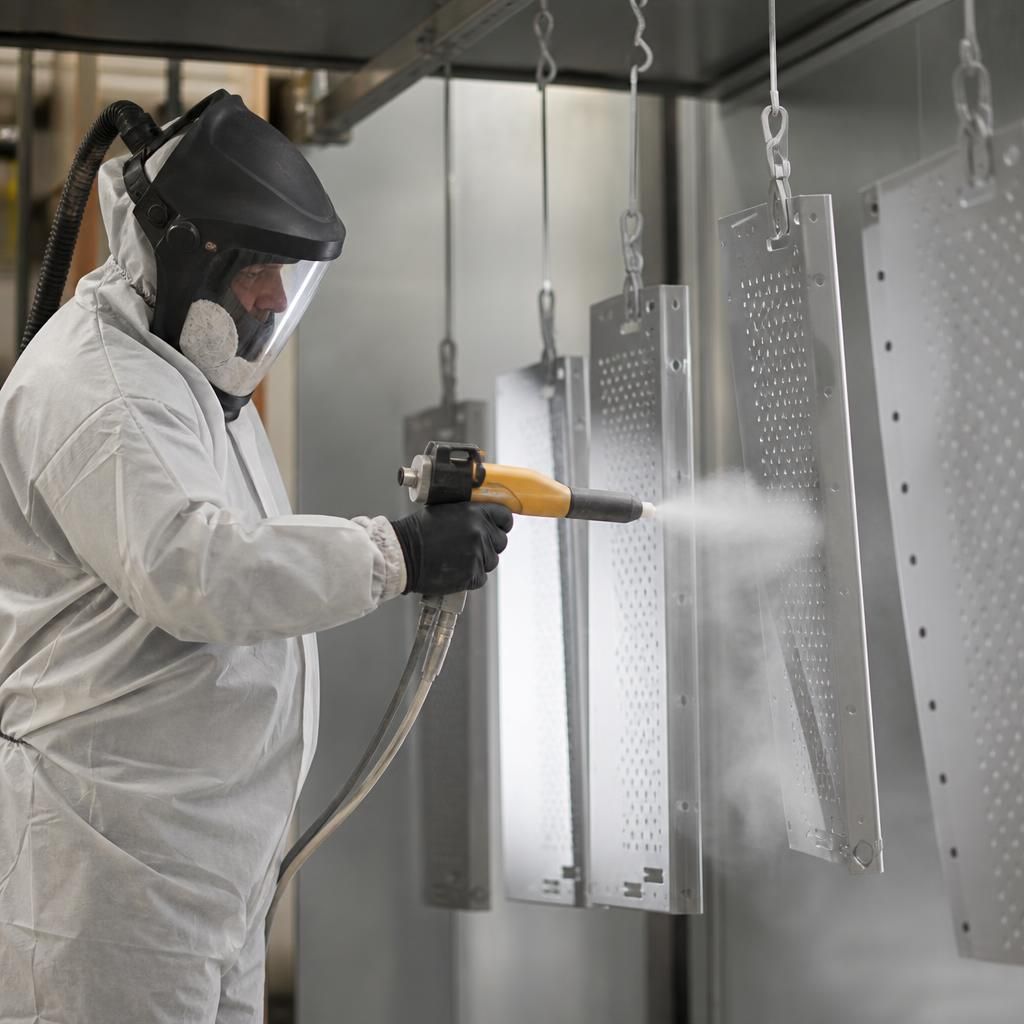
The temperature rating for a powder coating refers to the conditions the finished coating can withstand in service; it is not the same as the oven temperature used during curing. A powder may require a relatively high cure temperature but still be unsuitable for prolonged exposure to heat, so both the cure schedule and the in-service rating must be checked separately.
When comparing products for galvanised steel, review the technical data for continuous-use temperature, short-term peak exposure and any restrictions on colour, gloss or coating thickness. The most suitable formulation is the one whose tested performance matches the component’s actual operating conditions, including repeated heating and cooling, rather than simply the product with the highest quoted temperature.
Discuss the Best Powder Coating for Galvanised Steel in High-Temperature Applications
Discuss your galvanised steel component with our coating specialists to assess the operating conditions and identify a suitable high-temperature powder coating system. Providing details of the substrate, heat exposure and required finish will help establish the appropriate preparation and application requirements.