

What measures are in place to ensure the safe and secure transportation of our metal components during the powder coating logistics process?
Our powder coating logistics process protects metal components through suitable packaging, careful handling, secure load restraint and planned collection and delivery arrangements. Components are kept organised during transport to reduce the risk of movement, contact damage or loss before and after coating.
Safe and secure transportation depends on controlled identification, condition checks, suitable vehicle planning and documented handover at each stage. The logistics process is arranged around the characteristics of the metal components, their condition before coating and the protection required once the finished coating has been applied.
Before collection, component details and any handling instructions are checked so that items can be matched to the correct powder coating work. Information such as component size, weight, shape, surface condition and any vulnerable features helps determine how the items should be loaded and transported. Customers should also identify areas that must not be marked, coated or exposed to contact during transit.
- Identification: components are kept clearly associated with the relevant job details to reduce the risk of misplacement or mix-ups between batches.
- Condition checks: the condition of items can be reviewed at the relevant stages, helping distinguish pre-existing marks or damage from issues that may occur after collection.
- Segregation: parts with different finishes, specifications or handling requirements are kept distinct where necessary.
- Vehicle suitability: transport planning takes account of the dimensions, weight and form of the load, including whether components require additional protection from weather or external contamination.
- Handover records: collection and delivery information provides a clear record of what has been moved and where it is in the logistics process.
Particular care is required after powder coating because the finished surface must not be compromised before the components reach the customer. Finished parts are therefore managed to limit unnecessary contact with other items and to prevent pressure being applied to vulnerable edges, faces, hooks, apertures or machined areas. Where components are irregular, heavy or awkwardly shaped, their position within the load is considered so that they remain stable without placing force on coated surfaces.
Security also involves maintaining control of the consignment between collection and delivery. Loads are handled as defined consignments rather than as unidentified loose items, and delivery details are checked against the job information. If the quantity, condition or identity of a component does not match the accompanying information, the discrepancy can be investigated before the items are accepted into the next stage of the process.
For businesses sending repeat batches or specialist components, providing consistent instructions is particularly useful. Details of preferred orientation, separation requirements, lifting points, prohibited contact areas and any inspection requirements can be incorporated into the handling process. This gives the logistics team practical information for protecting the components and helps maintain the same approach across future collections and deliveries.
These measures are intended to protect both the physical condition and the traceability of metal components throughout the powder coating logistics process, from receipt through to return delivery.
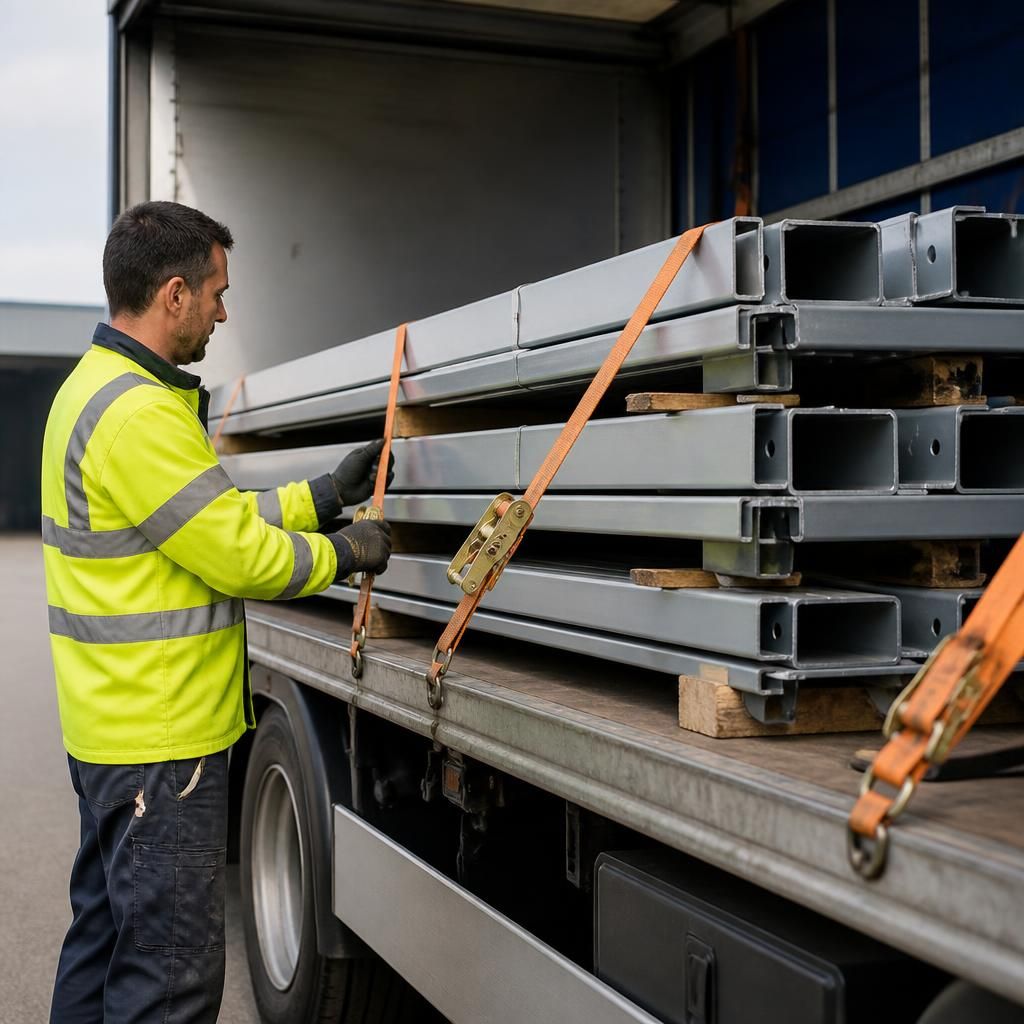
A key safety measure is controlled load planning: components are positioned so the vehicle load remains balanced and stable throughout the journey, rather than relying on restraint alone. Weight distribution, centre of gravity, stacking limits and suitable restraint points are considered when arranging the consignment.
This is particularly important for long, narrow, heavy or unevenly shaped metal parts. Separating incompatible items and avoiding excessive pressure between layers helps prevent movement caused by braking, cornering or changes in road conditions. The loading arrangement must also allow components to be removed in the correct sequence, reducing unnecessary repositioning and handling at delivery.