

How can I accurately estimate the total cost of my powder coating project?
Estimate the total cost by assessing each stage separately: surface preparation, powder and specialist materials, coating labour, masking or finishing requirements, packaging, collection or delivery, and any applicable taxes. Base the estimate on accurate component dimensions, weight, quantity, condition and finish specification, then confirm the assumptions with your coater before treating it as a final project cost.
An accurate powder coating cost estimate is built from the way the job will be processed, not from a single price per part or kilogram. The most reliable method is to define the production basis, identify non-recurring charges, allocate batch costs correctly and record every assumption that could alter the final invoice.
Start with the commercial basis. Establish whether the estimate is for one-off work, repeat production or a scheduled batch. A one-off component may carry preparation, handling or setup costs that can be spread across more parts in a larger run. Conversely, a large batch may require additional stages of handling, storage or packaging. Ask the coater whether the price is calculated per item, per batch, by weight, by surface area, by rack load or by processing time. This makes different quotations easier to compare.
Separate recurring and one-off charges. Some costs relate to the initial job rather than every component. These can include preparing a new masking approach, agreeing a colour or finish specification, creating handling arrangements, or setting up a repeatable process for an unusual component. Show these as separate lines in your working estimate. If the job will be repeated, calculate the first run separately from the expected cost of subsequent runs rather than averaging them together.
Account for the component’s process complexity. Two items with similar dimensions can have very different coating costs. A part with enclosed areas, recesses, threaded holes, sharp transitions or difficult access may require more preparation, careful hanging or additional masking. Parts that need to retain bare contact points, mating faces or tight tolerances should be identified before pricing. These requirements can affect both the amount of manual work and the usable coating area.
Allow for condition and preparation risk. A quote based on clean, coating-ready metal is not equivalent to one involving existing paint, rust, oil, weld residue, mill scale or other contamination. Ask what condition the parts must be in when received and what happens if the actual condition differs from the assumption. Where the existing coating is uncertain, obtain a conditional estimate with a clearly described preparation allowance rather than treating an unknown surface as standard.
Define the finish precisely. Record the required colour, gloss level, texture, coating type and performance requirements. A standard finish may be priced differently from a specialist protective or nylon coating because the materials and processing requirements differ. State whether the finish is required for appearance only or must meet a particular resistance, durability or end-use requirement. If colour matching or approval samples are involved, include the associated review and potential rework assumptions in the estimate.
Calculate batch utilisation rather than multiplying blindly. The number of components is not always the main driver of cost. Rack capacity, part orientation, contact points and the need to prevent items touching during processing can determine how many pieces are handled in each load. Estimate the number of loads or processing cycles where this information is available. For repeat work, use the expected batch size and frequency, since a quotation based on a different load configuration may not represent the cost of your actual production pattern.
Include quality and inspection requirements. If the finished parts need visual inspection, thickness checks, adhesion testing, masking verification or documented quality records, state this before the quotation is prepared. Inspection standards should also define what counts as an acceptable finish, including permissible marks, coverage at difficult areas and treatment of contact points. Otherwise, a low initial estimate may exclude the additional checking or rework needed to meet your internal specification.
Build logistics into the same calculation. Decide who is responsible for preparing the parts for transport, loading and unloading them, protecting finished surfaces and checking quantities at handover. Include the number of movements required, the packaging standard and whether return packaging is needed. Collection and delivery charges should be shown separately where possible, so that a change in shipment size or route does not obscure the underlying coating cost.
Use an assumptions and exclusions sheet. Alongside the estimated total, record:
- the quantity and batch arrangement used for the calculation;
- the assumed condition of the metal and preparation requirement;
- the agreed coating specification and colour;
- masking, bare-metal areas and dimensional constraints;
- inspection, testing and acceptance requirements;
- packaging, transport and responsibility for loading or unloading;
- any minimum charge, setup charge, storage charge or possible additional-work rate; and
- whether the figures include or exclude applicable tax.
This list turns an indicative estimate into a controlled cost model. It also shows exactly which change would require the estimate to be revised.
Test the estimate against alternative scenarios. Prepare at least two versions where the job is sensitive to batch size or specification: for example, the planned production quantity and a smaller first run, or a standard finish and a specialist finish. Comparing the scenarios reveals whether the total is mainly affected by preparation, processing capacity, coating material, logistics or a fixed initial charge. It can also prevent a per-part figure from being used outside the production conditions for which it was calculated.
Finally, request a written quotation that follows the same structure as your estimate. Check that the supplier has understood the component drawings, finish specification, acceptance criteria and logistics arrangement, and ask them to identify any assumption they cannot confirm from the information provided. The final project cost should be treated as confirmed only when the scope, exclusions and pricing basis are aligned in writing.
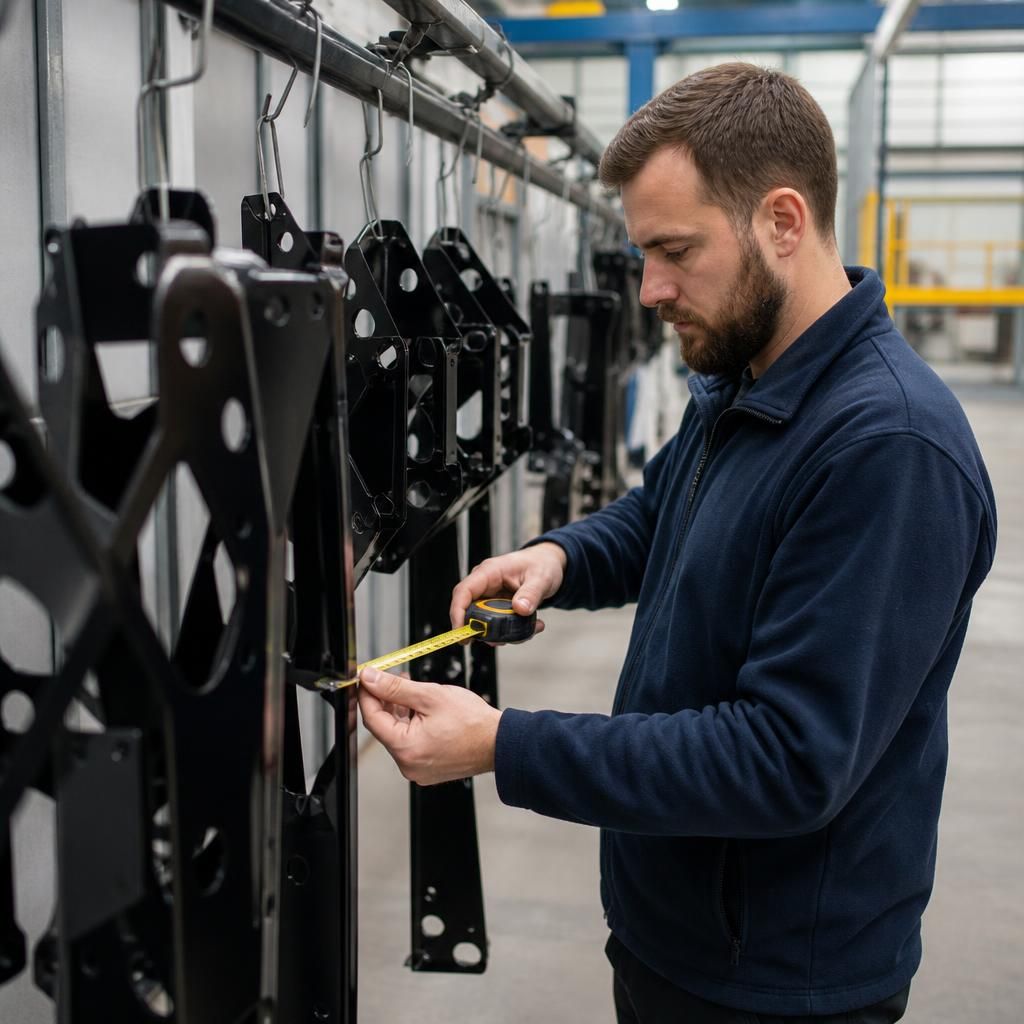
Estimate powder material from the area to be coated and the specified film thickness, rather than assuming that heavier components require proportionally more powder. Hollow sections, recesses and complex profiles can increase the coated area without adding much to the component’s weight, while masking and uncoated contact points reduce the area that actually receives material.
Ask the coater to confirm the material allowance used in the estimate, including the powder specification, colour or texture and any process-related waste or consumables. This gives you a clearer basis for checking whether a quoted material charge reflects the component’s finish requirements, rather than comparing powder costs solely by part weight.