

How does the choice of powder coating technique impact the efficiency and quality of the coating process?
The chosen powder coating technique affects how efficiently powder is applied, how evenly it covers the component and how well the cured finish meets the required performance standard. Factors such as the application method, component geometry, powder type and curing conditions influence transfer efficiency, film thickness, appearance and durability.
Powder coating technique determines how powder is deposited on the component, how much material is retained during application and how effectively the finished coating can be formed. The most suitable method depends on the metal substrate, component geometry, required coating specification, production volume and the powder formulation. Selecting the right combination can reduce rework and material waste while producing a more uniform, durable finish.
Electrostatic spray is the most widely adaptable technique for industrial components. Powder particles are electrically charged as they pass through the spray equipment, while the earthed metal component attracts and holds the powder. This allows coating to be applied without direct contact between the equipment and every surface. It is suitable for many fabricated parts, frames, enclosures and batch-work items, particularly where the component has a varied shape or requires a controlled decorative or protective finish.
Within electrostatic spraying, the choice between manual and automated application affects both throughput and repeatability. Manual spraying allows an operator to adjust the gun position, angle and deposition pattern around unusual shapes, recesses and small batches. Automated guns can provide a more repeatable application path for repeat production, especially when components have consistent dimensions. A combined approach may be appropriate where a machine coats the main faces and an operator reaches areas that are difficult to access.
Corona charging is a common electrostatic method in which a high-voltage electrode gives the powder its charge. It provides a controllable application process and works with a broad range of standard powder systems. However, gun distance, charge settings and the position of the component must be managed carefully. Excessive charge can contribute to back-ionisation, in which electrical effects interfere with the powder layer and create surface defects. The application settings therefore need to be matched to the component and powder rather than treated as fixed for every job.
Tribo charging charges powder through friction as it passes through a specially designed passage in the spray gun. It does not use the same electrode arrangement as corona equipment and can be useful for particular geometries or coating requirements. Its performance depends on the powder formulation, equipment condition and consistency of the application process. It is not automatically a better alternative to corona spraying; its value lies in whether its charging characteristics suit the component and the required finish.
Fluidised-bed coating uses a container of powder that is aerated so the material behaves in a fluid-like way. A preheated metal component is immersed in the powder, causing the material to melt and form a coating on contact. This method can apply a relatively substantial protective layer in a single immersion and is useful for components that can be heated safely and immersed without trapping excessive powder. It is less flexible for very large items, intricate assemblies or parts containing materials that cannot tolerate the required heat.
Fluidised-bed application also requires careful control of component temperature, immersion time and powder condition. If the part is not hot enough, the powder may not flow and fuse correctly. If it is too hot, the coating may become excessively thick, lose its intended appearance or develop other defects. The technique is therefore often selected for its protective performance rather than simply for speed, and the component design must be considered before processing.
Component geometry is a major influence on technique selection. Flat faces are generally straightforward to coat, whereas deep recesses, internal corners, narrow channels, perforations and closely spaced surfaces can create areas that receive less powder. The Faraday cage effect can make it difficult for charged powder to reach recessed areas because the powder is preferentially attracted to more exposed edges. Spray angle, gun movement, charge settings and, where appropriate, a different application method can help address this issue. Design features such as sharp edges, welds and inaccessible internal surfaces should be identified before production begins.
Masking and fixturing also affect process efficiency and finish quality. Threads, contact points, machined faces and other areas that must remain free from coating need suitable protection. Fixtures must provide reliable electrical contact for electrostatic spraying without creating excessive contact marks or shadowed areas. Poorly planned hanging positions can lead to uneven access, visible marks or additional handling. Reviewing how a component is presented to the equipment can therefore be as important as choosing the spray technology itself.
Powder recovery and handling influence material efficiency. In an automated spray line, unused powder may be collected and, where the powder system and process controls permit, managed for further use. Recovered material must not be allowed to compromise colour, texture or performance through contamination or uncontrolled mixing. Manual batch application may be more appropriate where colour changes are frequent or quantities are limited, because cleaning and recovery requirements can otherwise reduce the practical efficiency of the process.
The technique must also be compatible with the curing stage. After application, the component is heated according to the powder manufacturer’s specified curing conditions so that the resin flows, cross-links and develops its intended properties. Component mass, wall thickness and the way parts are loaded into the oven affect heat penetration. A surface that appears cured may not indicate that the complete coating has received the necessary thermal treatment. Process planning should therefore consider the part’s thermal behaviour, not just the powder deposition method.
Quality control should be adapted to the chosen technique. Relevant checks can include visual inspection under suitable lighting, dry-film thickness measurements, adhesion assessment and confirmation that the powder has been cured correctly. The exact checks depend on the specification and the component’s intended use. Test pieces or representative samples can help establish suitable settings before a larger batch is processed, reducing the risk of discovering application or curing problems after all parts have been coated.
In practice, the most efficient technique is not necessarily the one with the fastest individual application. A method that gives rapid deposition but requires extensive masking, rework or manual correction may be less efficient overall than a more controlled process. Industrial powder coating specialists therefore assess the component, batch requirements, powder type, finish specification and handling arrangements together. For manufacturers and fabricators, providing accurate drawings, material details, required coating areas and performance requirements helps ensure that the application technique is selected for both consistent quality and practical production efficiency.
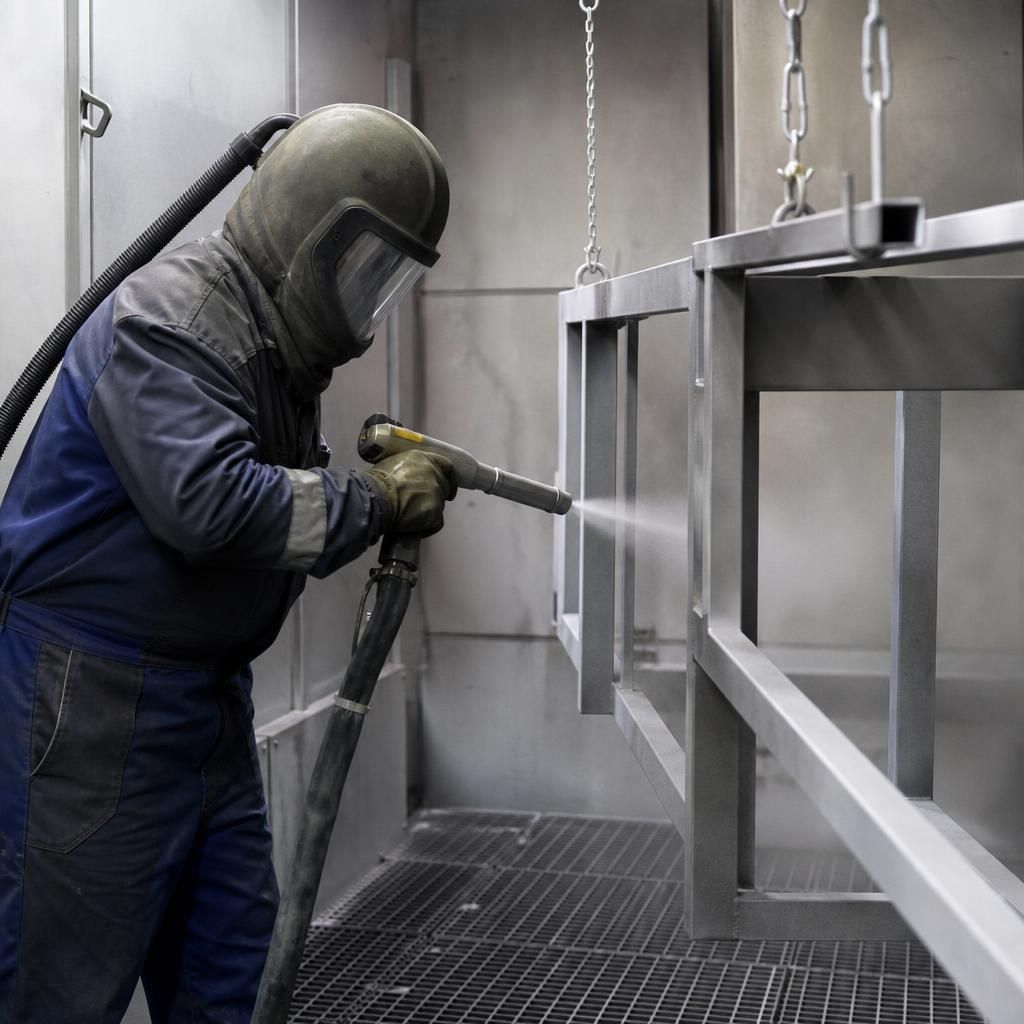
The chosen powder coating technique can only perform effectively when the metal surface is prepared to suit the coating system. Oil, rust, scale and residues can interfere with powder adhesion, so surface preparation should be considered alongside the application method rather than treated as a separate decision.
Different components may require different preparation approaches, particularly where welded areas, formed sections or existing finishes are present. A technique that applies powder evenly cannot correct contamination or an unsuitable surface profile. Checking the substrate condition before processing helps prevent adhesion defects, premature corrosion and unnecessary rework, allowing the selected application method to deliver the required finish more reliably.
Discuss the right powder coating technique for your components
Discuss your components, coating specification and production requirements with the powder coating team to identify a suitable application technique. Providing drawings or representative samples can help support an informed assessment before processing begins.