

What preparation processes are necessary to ensure the highest quality powder coating results for metal components?
High-quality powder coating depends on thorough surface preparation, including degreasing, removal of rust, scale and existing coatings, abrasive blasting or suitable mechanical preparation, and the correct chemical pre-treatment for the metal. Components should then be dried, checked for contamination and damage, and masked where coating must not be applied before powder is sprayed.
The highest quality powder coating results depend on preparing the component for the complete coating system, not simply making the surface look clean. Preparation should account for the base metal, the component’s design, its intended environment, the chosen powder and the way it will be handled during coating. These factors determine whether the coating can form a consistent film and remain properly bonded in service.
Confirm the substrate and service requirements first
Different metals and surface conditions require different preparation routes. Mild steel, aluminium, galvanised steel, stainless steel and cast components do not behave identically during pre-treatment or curing. The specification should identify the substrate, expected exposure to moisture or chemicals, operating temperature, required appearance and any areas that must remain uncoated.
This information helps establish a suitable preparation and coating system. A finish intended for an internal machine guard may have different requirements from one used on external architectural, construction or automotive components. Where more than one metal is present, each material should be considered separately so that the preparation method is compatible with all surfaces.
Complete fabrication before coating
Powder coating is not a substitute for correcting manufacturing defects. Cutting, drilling, welding, grinding and forming should be completed before the component is prepared. Weld spatter, burrs, sharp projections, deep scratches, uneven weld profiles and excessive grinding marks can remain visible through the finished coating or create thin areas at edges.
Welds and joints should be continuous and properly finished where the component needs protection from moisture or corrosion. Crevices, lap joints and partially sealed areas can trap pre-treatment chemicals or moisture, leading to blistering, corrosion or poor adhesion later. Any repair work should therefore be carried out before the final preparation stage.
Design hollow and enclosed sections for coating
Hollow sections, box assemblies and fabricated enclosures need particular attention. Suitable drain and vent openings allow air, liquid and moisture to move through the component during preparation and curing. Without appropriate openings, liquid can remain trapped in internal spaces, while expanding air during heating can cause pinholes, bubbles or other defects in the powder film.
Drainage should be considered during design rather than added as an afterthought. The position and size of openings must allow the component to be processed and supported safely without creating unwanted weak points or visible marks in important areas.
Control residues from fabrication and handling
Fabrication materials can interfere with coating adhesion if they are not suitable for the process. Cutting fluids, drawing compounds, adhesive residues, temporary corrosion inhibitors, marking products, silicone-based materials and handling deposits should be avoided or removed using a method compatible with the substrate and pre-treatment system.
Storage and transport before coating also matter. Components should be protected from rain, condensation, salt contamination and contact with materials that can transfer oils or other residues. Parts should be handled with clean, suitable equipment after preparation so that the prepared surface is not compromised before powder application.
Give edges, welds and difficult features specific attention
Edges and corners influence coating coverage because powder can build up on sharp profiles or become thinner around prominent edges. Where the design allows, sharp edges should be eased and burrs removed. This produces a more uniform coating profile and reduces points at which mechanical damage or corrosion can begin.
Weld seams, recesses, threads, folds and close-fitting interfaces should be reviewed individually. A component may have an acceptable overall surface while still containing areas that are difficult for the powder to reach or that could collect moisture. Identifying these features before processing allows the preparation and application method to be planned around them.
Allow for castings and porous materials
Cast aluminium, cast iron and other porous components can contain gases, oils or moisture within their structure. When the part is heated, these substances may escape through the uncured powder and produce pinholes, bubbling or small craters. Castings may therefore need additional preparation or a controlled preheating stage appropriate to the material and coating specification.
The condition of the casting should also be assessed for blowholes, inclusions and surface porosity. Powder coating will follow the underlying profile rather than conceal substantial defects, so filling or mechanical repair may be necessary before the coating process begins.
Use compatible preparation for galvanised and previously coated parts
Galvanised steel and components with an existing coating require a process suited to the particular surface. The condition, age and composition of the zinc layer or previous finish should be established before selecting the preparation route. Inadequate preparation can leave an unstable layer beneath the powder, while overly aggressive treatment may damage the underlying substrate.
Previously coated components should not be assumed suitable for recoating simply because the existing finish appears intact. The old coating must be assessed for adhesion, compatibility and thickness, with removal or additional treatment considered where it could compromise the new system.
Plan racking and contact points
Components must be supported securely during preparation, spraying and curing. Contact points should be chosen with the final appearance and electrical requirements in mind. Powder application relies on an appropriate electrostatic charge, so reliable contact with the component is important for consistent deposition.
Racking should also minimise shadowed areas and allow the component to drain, dry and receive an even coating. For repeat batches, consistent positioning helps produce repeatable results, particularly where parts have complex geometry or several visible faces.
Use a documented, repeatable process
For batch and production work, preparation should be defined rather than left to individual judgement. Useful records include the substrate, pre-treatment route, powder specification, masking requirements, rack arrangement and any areas requiring special attention. Repeatable preparation makes it easier to identify the cause of defects and maintain consistency between batches.
Before processing, the component drawing or specification should be checked against the physical part. This confirms that holes, threads, mating faces, tolerances and appearance-critical surfaces have been considered. A well-prepared component gives the powder system a stable foundation and reduces the risk of adhesion problems, visual defects, corrosion at vulnerable areas and rework.
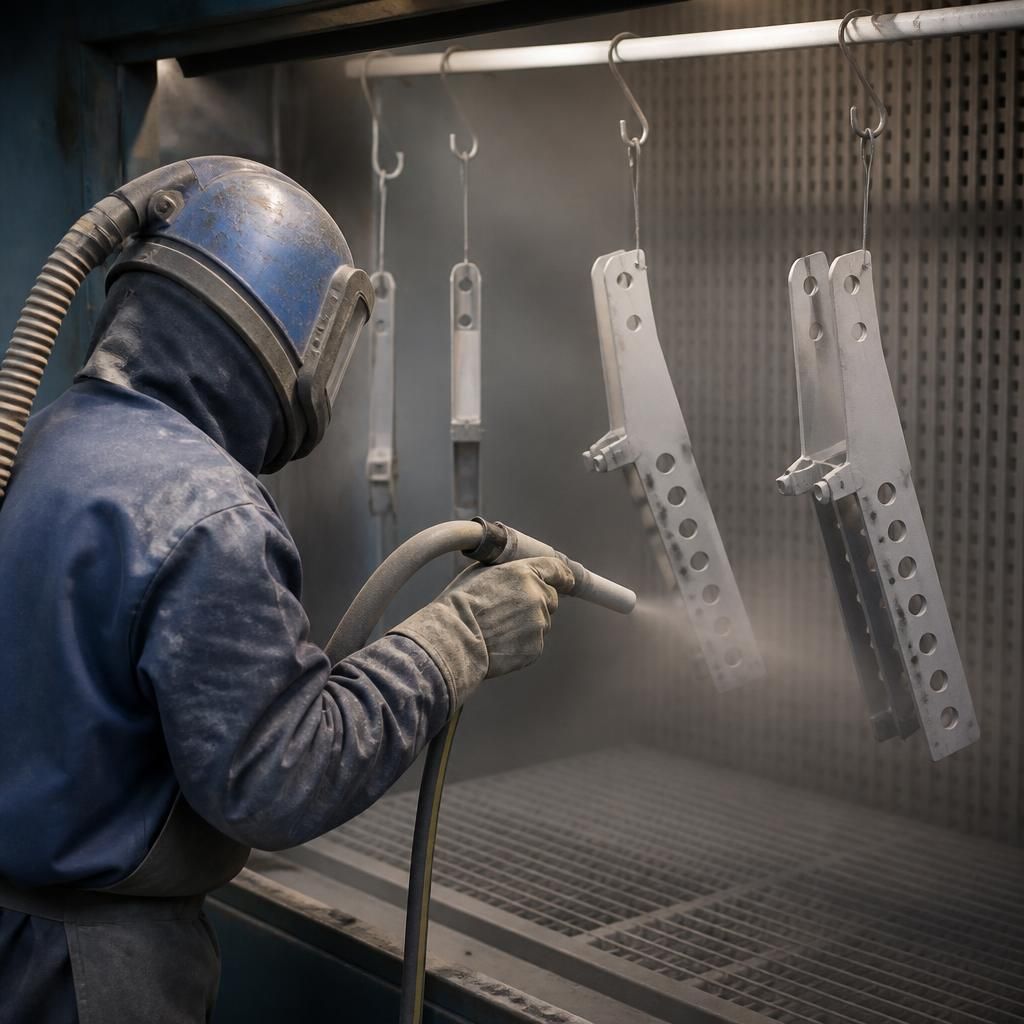
Abrasive preparation must create a clean, consistent surface profile without damaging the metal. The blast media, pressure and technique should be suitable for the substrate and component geometry: excessive treatment can distort thin sections or round edges, while insufficient treatment may leave corrosion products, mill scale or an inadequate key for adhesion.
After blasting, residual dust and abrasive particles should be removed and the surface inspected under suitable lighting before any chemical pre-treatment or powder application. Prepared metal should not be touched with bare hands, as fingerprints and transferred oils can create local adhesion or appearance defects.