

What specific contaminants should be addressed during surface clean pretreatment for optimal powder coating results?
Surface clean pretreatment should address oils, grease, dirt, dust, salts, rust, mill scale, oxides and residues from fabrication or handling. Removing these contaminants gives the powder coating a clean, stable surface for consistent adhesion, coverage and long-term finish performance.
The contaminants requiring attention before powder coating are not limited to visible grime. A sound surface-clean pretreatment identifies and removes organic films, chemical carryover, fine particulate matter and residues introduced during forming, welding, storage or handling. Each can interfere with wetting, adhesion, curing or the appearance of the finished coating, even when the metal looks clean to the eye.
Organic films and processing compounds
Machining and fabrication can leave cutting fluid, drawing compound, stamping lubricant, wax, polish, silicone, adhesive or protective film on the component. Silicone is particularly problematic because small amounts can cause cratering, fisheyes or areas where the powder pulls away during curing. Wax and polishing compounds may produce a smooth-looking surface while preventing the pretreatment chemistry from contacting the metal evenly. These materials need to be removed rather than simply spread across the component by wiping or inadequate washing.
Marking products also deserve attention. Permanent marker, layout dye, ink, masking adhesive and labels can leave organic residues that become visible through a light-coloured finish or create local adhesion defects. Weld anti-spatter products may contain silicone or other release agents, so their use and removal should be considered before the cleaning stage.
Fine particles and embedded debris
Abrasive media, metal filings, grinding dust and loose welding debris can remain in corners, holes, seams and around brackets. Larger particles may create raised points beneath the powder, while finer material can become trapped between the substrate and coating. Weld spatter and sharp burrs are not simply cleaning issues: if they are firmly attached, mechanical preparation may be needed before chemical cleaning can produce a suitable surface.
Particular care is required with folded sections, threaded holes, joints and enclosed profiles. These areas can retain debris or wash solution and later release it during coating or curing. Components should therefore be inspected for trapped material and arranged so that cleaning and rinsing fluids can drain properly.
Chemical residues and water-soluble contamination
Cleaning is not complete if the original contaminant has been replaced by process chemicals. Excess alkaline cleaner, acid residues, conversion-treatment chemicals or poorly rinsed process solution can remain on the surface. They may lead to staining, powder adhesion problems, blistering or premature corrosion beneath the finish.
Water quality also matters. Dissolved minerals and residual salts can dry as deposits, particularly where rinse water collects. Chloride and sulphate contamination is a concern because these ions can support corrosion under a coating if they remain on the metal. Effective rinsing, drainage and drying are therefore part of contamination control, not separate cosmetic steps.
Contamination from storage and handling
Components can acquire fingerprints, hand cream, packaging fibres, warehouse dust, moisture marks and residues from timber, cardboard or plastic packaging after fabrication. Contact with rusty racks or dirty lifting equipment can transfer unwanted material back onto a cleaned part. Clean gloves, suitable handling equipment and controlled storage help prevent recontamination between pretreatment and powder application.
How contamination is assessed
- Visual inspection identifies staining, attached particles, remaining films, corrosion products and residues in difficult-to-reach areas.
- A solvent-wipe assessment can indicate whether an oily or organic film is still being removed from the surface.
- Water-break behaviour provides a practical indication of whether the surface is uniformly wettable; beading or separated patches can signal residual contamination.
- Surface cleanliness checks can help identify soluble ionic contamination where the application requires tighter control.
- Inspection after rinsing and drying confirms that no cleaner marks, deposits or trapped liquid remain.
The appropriate response depends on the contaminant, substrate and intended coating system. Organic films may require a suitable degreasing stage, firmly attached particles may need mechanical preparation, and chemical carryover is controlled through appropriate rinsing and drying. Removing the cause rather than relying on the powder to conceal it gives the pretreatment process a stable basis for consistent coating performance.
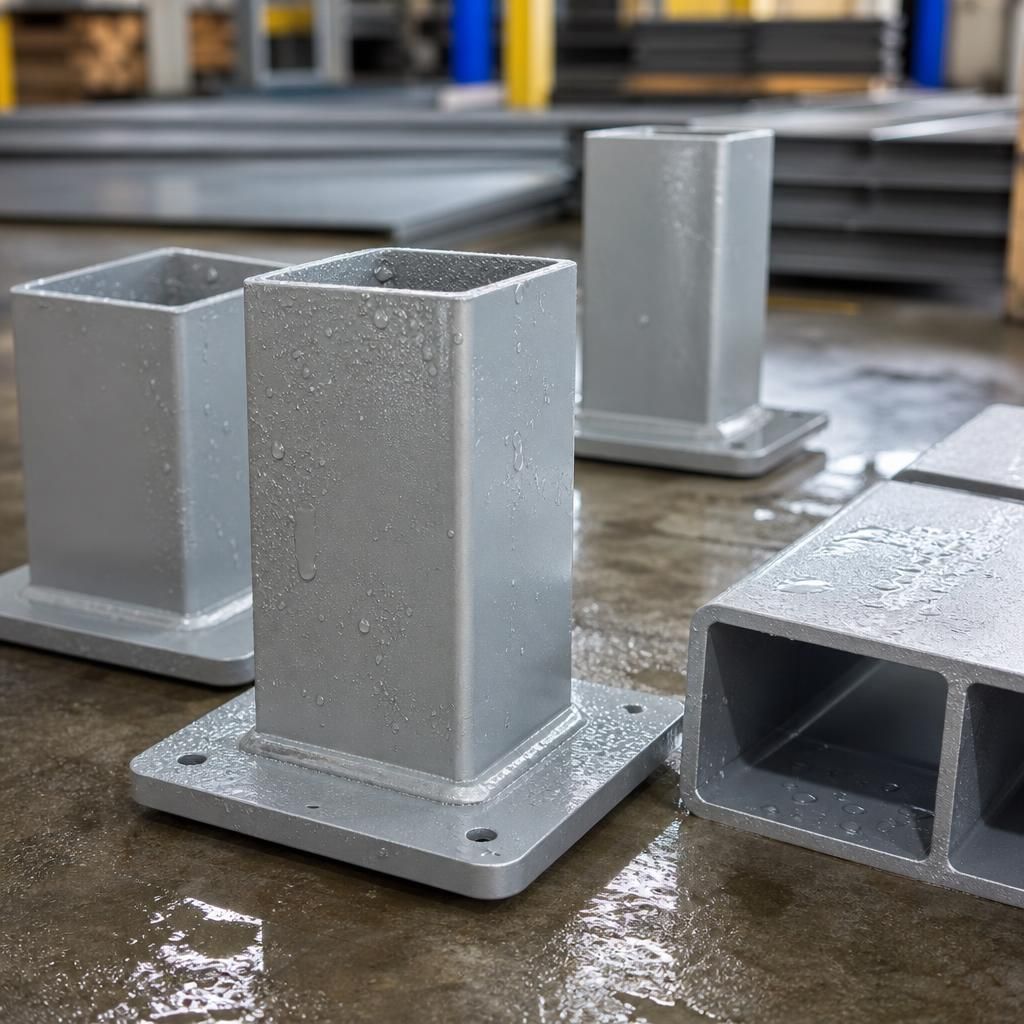
Retained moisture is an important contaminant to address before powder coating, particularly in hollow sections, folded metal, lap joints, threaded holes and porous castings. Water left in these areas can release vapour during oven curing, contributing to pinholes, blistering or local loss of adhesion. Damp surfaces can also react with soluble residues and encourage corrosion beneath the coating.
Effective control involves allowing rinse water to drain fully, positioning components so enclosed areas do not act as reservoirs, and drying recesses before coating. Where compressed air is used, it should be clean and free from oil or water so that the drying process does not introduce another film. A final inspection should confirm that concealed areas are dry as well as visibly clean.