

What key benefits does chromate powder coating pretreatment offer for metal components in harsh environments?
Chromate powder coating pretreatment helps metal components withstand harsh environments by improving corrosion resistance and creating a stronger bond between the metal surface and powder coating. This enhanced interface reduces the risk of coating failure from moisture, salts and other corrosive conditions, supporting longer-lasting protection.
Chromate powder coating pretreatment provides a chemically converted surface between the metal component and the powder coating system. In harsh environments, its principal benefit is that it helps the finished coating system remain continuous and stable when exposed to repeated wetting, salts, industrial contaminants, temperature changes and mechanical handling.
Its benefits for demanding applications include:
- Better protection at small coating imperfections: A conversion layer can reduce the effect of minor pores, scratches or local defects in the powder film. This helps limit the spread of deterioration from an exposed area across the surrounding surface.
- Reduced risk of underfilm deterioration: Moisture and contaminants can travel beneath a damaged or poorly supported coating. Chromate conversion treatment helps stabilise the metal surface beneath the powder layer, reducing the likelihood of blistering, flaking and progressive loss of finish.
- Greater resistance to cyclic exposure: Components used outdoors or in industrial settings may repeatedly move between dry, damp, warm and cold conditions. A properly prepared conversion layer helps the coating system tolerate these changes without losing continuity at the metal interface.
- More consistent performance around edges and details: Corners, apertures, joints and folded sections are often more vulnerable than broad, flat faces. Correct pretreatment improves the consistency of the overall system in these areas, although component design and powder coverage remain important.
- Improved suitability for contaminated atmospheres: Industrial dust, airborne salts, humidity and certain chemical residues can accelerate deterioration of unprotected metal. Pretreatment adds a further controlled layer of protection before the powder is applied, which is valuable for equipment exposed to challenging atmospheres.
- Support for longer service intervals: By helping the coating system resist local breakdown, chromate pretreatment can reduce the frequency of remedial preparation and recoating. The actual service life still depends on the metal, pretreatment chemistry, powder specification, film thickness, component design and severity of exposure.
The result is not determined by pretreatment alone. Cleaning must remove oil, dirt, oxidation and other contaminants, and the conversion process must be controlled so that the treated surface is uniform. Powder application and curing must also match the coating manufacturer’s requirements. If any of these stages is inadequate, the benefits of the pretreatment may be reduced.
Suitability should therefore be assessed against the complete service environment. Coastal salt, immersion, chemical contact, road deposits, abrasion and elevated temperatures place different demands on a coating system. The metal type is also significant: aluminium, galvanised steel and other substrates may require different cleaning and conversion stages. A specification should identify the substrate, expected exposure, appearance requirements, areas subject to impact or wear, and any regulatory restrictions applying to the pretreatment chemistry.
Chromate systems also require controlled handling because some chromate chemistries raise significant health and environmental concerns. The applicable process should comply with current UK requirements, waste controls and the end user’s specification. Where conventional chromate chemistry is unsuitable, an alternative conversion treatment may be considered, but its performance must be evaluated as part of the complete powder coating system rather than assumed to be equivalent in every environment.
For manufacturers, fabricators and other industrial users, the practical benefit is a more robust multi-stage protection system rather than a standalone treatment. When the substrate, pretreatment, powder and curing process are correctly matched, chromate pretreatment can help components retain their protective finish under the combined effects of moisture, contamination, temperature cycling and everyday service damage.
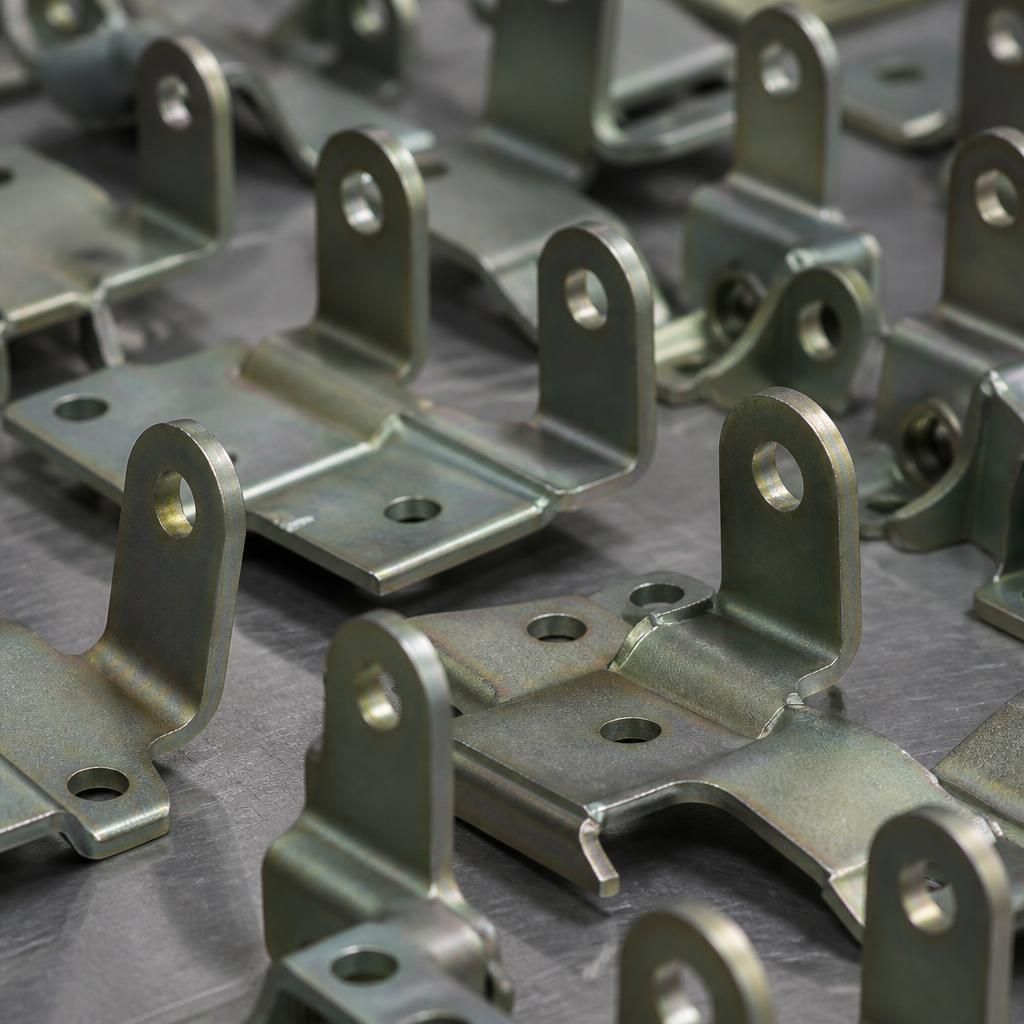
Chromate conversion pretreatment forms a very thin protective layer, so it can add chemical protection without materially changing the dimensions or geometry of a metal component. This is useful for parts with close-fitting interfaces, apertures, folded sections or detailed profiles where a thicker protective layer could affect assembly or operation.
Maintaining the original geometry helps preserve the function of components exposed to moisture, salts and industrial contamination. However, powder film thickness, masking requirements and drainage design still need to be considered, particularly around threaded features, mating surfaces and joints.