

What specific types of pretreatment chemicals should I consider for different metal substrates used in powder coating?
Choose pretreatment chemicals according to the substrate: alkaline cleaners and iron or zinc phosphate systems are commonly used for steel, while aluminium typically requires a dedicated conversion treatment, such as a chromate-free zirconium or titanium-based process. Galvanised steel and other zinc-coated surfaces need chemistry formulated for zinc, often following careful cleaning and activation to remove passivation or surface contaminants without attacking the coating.
The appropriate pretreatment chemicals depend on the metal’s composition, surface condition and intended service environment. Steel, stainless steel, aluminium alloys, castings, zinc-coated materials, copper and brass can all require different cleaning, activation and conversion stages because their oxide layers and reactions with treatment chemistry are not the same.
Carbon and low-alloy steel: The main objectives are to remove oil, grease, mill scale, rust and handling residues, then create a chemically receptive surface. The exact system may involve a strongly alkaline cleaner, an acid stage for oxide or rust removal, and a phosphate or alternative conversion treatment. Heavier contamination may require a more intensive cleaning stage, while lightly soiled components may need a less aggressive formulation. The treatment should be matched to the steel grade and the amount of scale present; excessive acidity can roughen the surface or leave residues that interfere with powder application.
Stainless steel: Stainless steel has a chromium-rich passive oxide layer that provides corrosion resistance but can also make the surface less receptive to coating if it is contaminated or insufficiently activated. A suitable process commonly starts with low-residue degreasing, followed by a carefully controlled activation or conversion stage. The chemistry must remove fabrication oils, weld discolouration and embedded contaminants without unnecessarily damaging the passive surface. Stainless components may need a different treatment from mild steel even when they have been manufactured in the same workshop.
Aluminium alloys: Aluminium forms an oxide layer rapidly, and different alloys can respond differently to pretreatment. Cleaners should remove lubricants and dirt without excessively attacking the substrate. An activation or deoxidising step can help provide a consistent surface before a non-chromate conversion treatment, such as a zirconium- or titanium-based system. Cast aluminium may also contain mould-release residues, porosity or higher levels of alloying elements, so a treatment selected for sheet aluminium should not automatically be assumed to suit cast components.
Cast iron and ductile iron: These materials can present graphite, porous areas, casting sand, machining fluids and tightly held oxides. The pretreatment must be capable of reaching irregular surfaces and removing contamination from recesses. Alkaline cleaning is often considered first, with a compatible activation or conversion stage selected according to the iron grade and the condition of the casting. Acid treatment requires particular control because porous or rough castings can retain liquid and later release it during drying or curing, creating coating defects.
Galvanised and zinc-coated steel: Zinc surfaces are more chemically sensitive than bare steel. The process should remove oil, dirt and storage residues while limiting attack on the zinc layer. Some galvanised products have passivation films or protective treatments that need to be removed or suitably activated before conversion. A chemistry designed for bare steel may be too aggressive, causing excessive zinc loss, uneven appearance or poor coating performance. The condition of the zinc coating, including white corrosion products and storage stains, should be assessed before the chemical sequence is chosen.
Zinc die castings: Die-cast zinc can contain release agents, surface oxides and areas of porosity. It generally requires a controlled clean and activation stage rather than a highly aggressive acid treatment. The process should be validated on the actual alloy and casting design, particularly where thin sections, sharp edges or recessed features could retain treatment solution. Rinsing and drying are important because trapped residues can lead to blistering or local adhesion problems after powder coating.
Copper and brass: Copper-based substrates can carry tarnish, oxides, polishing compounds and fingerprints. Mild alkaline cleaning may remove organic contamination, while a controlled acid or proprietary activation stage may address oxide or tarnish. The chemistry must avoid excessive etching, staining or redeposition of copper onto the surface. Brass also varies in composition, so a formulation suitable for one component may not give the same result on a leaded, high-zinc or heavily machined grade.
Mixed-metal assemblies: Components combining steel, aluminium or zinc require special care because one chemical sequence may benefit one substrate while attacking another. In these cases, the pretreatment should be tested on every exposed metal, not just the dominant material. Selective masking, separate processing or a chemistry designed for multi-metal compatibility may be appropriate. Crevices between dissimilar metals also need attention because retained cleaner, acid or rinse water can cause corrosion beneath the coating.
When comparing products, consider more than the substrate name. The specification should take account of:
- the precise alloy or grade, rather than simply identifying the component as steel or aluminium;
- the type and severity of contamination, including oils, waxes, rust, mill scale, weld residue and storage corrosion;
- whether the surface is bare, plated, galvanised, anodised, passivated or previously treated;
- the required corrosion resistance, appearance and service exposure of the finished part;
- the available application method, such as immersion, spray or a multi-stage line;
- rinse-water quality, bath control and the risk of chemical carry-over between stages; and
- the powder manufacturer’s requirements for surface cleanliness and conversion coating compatibility.
A practical selection process starts with representative samples from production rather than clean laboratory coupons. Examine the parts before treatment, identify the contaminants and record the metal grades. After pretreatment, check for uniform wetting, staining, visible residue and areas that remain contaminated. Coated test panels or sample components can then be assessed for adhesion and finish consistency. If a part contains welds, folds, recesses or mixed substrates, those features should be included in the trial because they often expose weaknesses that are not visible on a flat test piece.
The final choice is therefore a complete chemical sequence, not a single cleaner chosen from the metal name alone. A correctly matched system removes the relevant contamination, conditions the substrate without unnecessary attack, leaves a compatible conversion layer where required and can be rinsed and dried consistently before powder application.
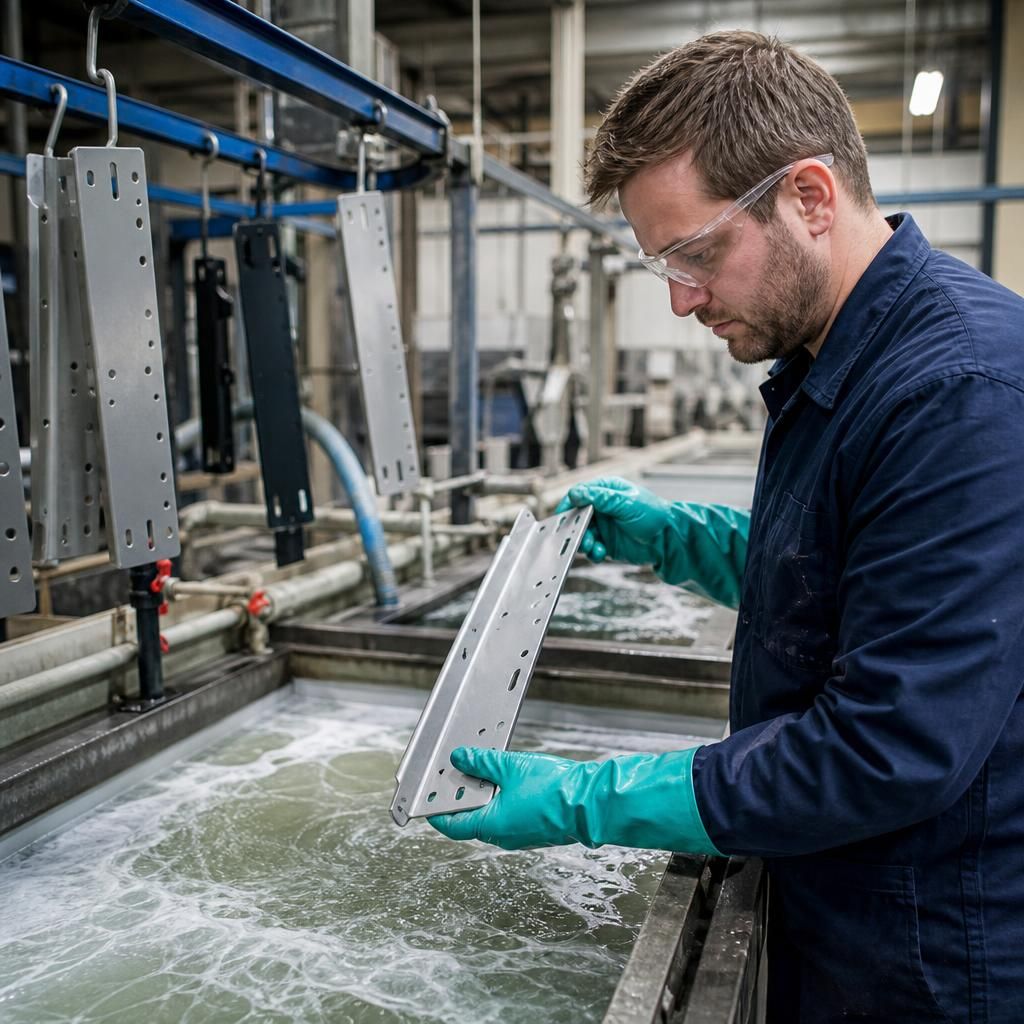
The selected pretreatment chemistry must be considered alongside the time and conditions between treatment and powder application. A correctly treated surface can be compromised by dust, fingerprints, moisture or renewed oxidation if components are left exposed or handled with contaminated equipment. This is particularly relevant to freshly cleaned steel, aluminium and zinc-coated surfaces, which may react with humidity or storage conditions.
After the final rinse, components should be drained and dried thoroughly, with attention to joints, folded edges, blind holes and other areas where liquid can remain trapped. Clean handling and controlled transfer to powder application help preserve the condition created by the chemical process and reduce the risk of residues, staining or local coating defects.
Discuss Your Metal Substrate Pretreatment Requirements
Discuss your metal substrate pretreatment requirements with our team, providing details of the alloy, component design, contamination and intended service conditions. This allows the proposed chemical sequence to be considered against the parts that require powder coating.