

What are the key factors to consider when selecting shot blasting media for different metal surfaces?
When selecting shot blasting media for different metal surfaces, assess the substrate, existing coating or contamination, required surface profile, desired finish and the risk of distortion or embedment. Media hardness, particle size and shape should then be matched to the component’s condition and the preparation required before powder coating or another finish.
The most reliable media choice is the one that suits the complete blasting process, not just the metal being treated. In addition to the component’s material and the required preparation, consider the blasting equipment, operating conditions, component geometry, contamination controls, media recovery system, downstream coating requirements and the cost of managing the process.
Equipment compatibility should be checked first. Pressure blast cabinets, suction systems, wheel blast machines and automated lines place different demands on the media. The chosen abrasive must flow consistently through the hoses, metering valves, nozzles or turbine equipment without causing blockages or excessive wear. A media that performs well in a manual cabinet may be unsuitable for a wheel-blast system, particularly if its density, shape or durability affects how it is accelerated and recycled.
Also assess the condition of the equipment. Worn nozzles, inconsistent air pressure, damaged seals and inaccurate media metering can make an appropriate abrasive appear ineffective. Before changing media, confirm that the machine is delivering the intended air volume, impact energy and coverage. Selection should be based on the actual operating range of the equipment rather than a nominal specification alone.
Component geometry is another important consideration. Deep recesses, narrow channels, drilled holes, folded sections and weld details may require a media that reaches confined areas without excessive ricochet or accumulation. Large flat panels may be easier to treat, but they can show uneven preparation if the operator moves the blast stream inconsistently. For complex fabrications, consider how easily the media can be removed from cavities before coating and whether it could remain trapped in joints or hollow sections.
The cleanliness of the workpiece before blasting affects media performance and process control. Heavy oil, grease, cutting fluid, adhesive residue or loose scale can contaminate the abrasive and reduce its useful life. Degreasing or other preliminary cleaning may therefore be necessary. This is particularly relevant where the same media is reused: contaminated abrasive can transfer residues between batches and compromise subsequent coating preparation.
Media durability and breakdown behaviour should be assessed over the full production cycle. Some abrasives fracture relatively quickly, creating dust and fine particles; others retain their working characteristics for longer. Breakdown changes the balance of particle sizes in the machine, which can alter cleaning action, machine loading and the consistency of preparation. A suitable choice should remain controllable between scheduled media changes, with fines removed through effective extraction and classification.
Where abrasive is recovered, the recycling and separation system is part of the selection decision. Check whether the media can be separated from removed coating, rust, scale and dust using the available cyclone, screen or air-wash equipment. If spent material cannot be removed reliably, the machine may gradually contain an unsuitable mixture, making results less predictable. The media’s reclaim potential should be compared with disposal requirements rather than judged only by its purchase price.
Operating settings must be considered alongside the abrasive. Pressure, wheel speed, nozzle distance, blast angle, traverse speed and exposure time all affect the amount of work performed on a surface. A change to media may require a corresponding adjustment to these settings. For example, a dense abrasive may deliver greater impact at the same machine setting than a less dense one, while a fine abrasive may need different metering and coverage to achieve uniform preparation. Settings should be recorded so that successful trials can be repeated across batches.
Pay attention to edge and weld behaviour. Sharp edges, corners and weld toes can receive more direct impact than broad faces. Excessive treatment in these areas may create an inconsistent surface or make the component less suitable for the intended coating system. A practical trial should inspect edges, recesses, welds and other vulnerable features separately rather than relying on a visual check of the largest surface.
Powder coating compatibility extends beyond the visible appearance immediately after blasting. The prepared component must be clean, dry and free from loose abrasive and dust before powder is applied. Media residue, embedded contamination or poorly removed fines can interfere with coating adhesion and appearance. Establish how the blasted parts will be blown down, vacuumed, washed or otherwise cleaned, and ensure that this method is compatible with the metal and the powder coating process.
For components requiring a controlled result, use a trial panel or representative sample before committing to a full production run. The sample should reflect the actual component, including its geometry, welds, previous condition and planned cleaning steps. Review the result using the project’s agreed inspection method, which may include visual examination, surface cleanliness checks, profile measurement, coating adhesion testing or a specified industry standard. A trial is especially valuable when changing media, equipment or powder coating system at the same time.
Health, environmental and housekeeping requirements also influence the decision. Consider airborne dust, extraction capacity, operator exposure, spent-abrasive handling and the route for waste disposal. Media that generates substantial fines may require stronger extraction and more frequent cleaning. The correct choice is one that the site can use safely and manage responsibly within its existing controls; technical performance alone is not sufficient.
Finally, compare the total operating cost, not simply the price per bag or delivery. Include consumption, machine wear, nozzle replacement, energy for extraction and recovery, labour for cleaning, media disposal, changeover time and the cost of rejected or reworked components. A higher-priced abrasive may be more economical if it provides stable performance, lasts longer in the equipment and reduces contamination or process variation. Conversely, a technically effective media may be impractical where the required recovery or extraction arrangements are not available.
A sound selection process therefore combines a technical review, equipment check, representative trial and documented operating settings. The chosen media should provide consistent preparation across the complete component, remain manageable within the blasting system and support the cleaning and powder coating stages that follow.
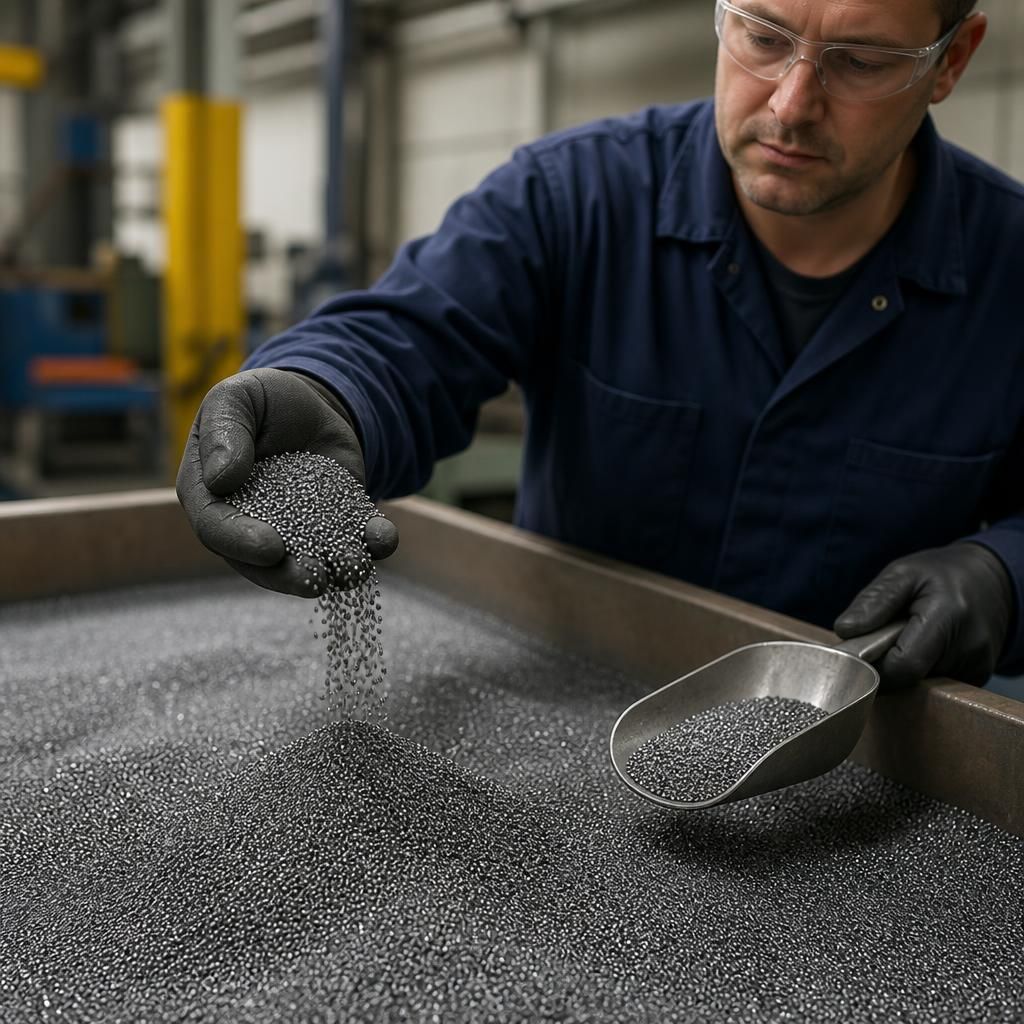
Media chemistry is a key selection factor when blasting non-ferrous or corrosion-sensitive metals. Steel shot or other ferrous abrasives can leave embedded particles in aluminium, zinc-coated steel and stainless steel, creating discolouration or later corrosion. Where this risk matters, select a clean, non-ferrous abrasive and keep it separate from media previously used on carbon steel.
Cross-contamination can also affect powder coating preparation. Abrasive residue, iron particles and remnants of previously removed coatings may interfere with the appearance or adhesion of the new finish, even when the surface looks uniform. Review the media’s composition, cleanliness and previous use, then verify the result on a representative sample before processing the full batch.
Discuss the Right Shot Blasting Media for Your Metal Components
Discuss your component material, existing finish and required coating preparation with Powder-coatings.co.uk to identify a suitable shot blasting approach. A representative assessment can help confirm the media choice before full-scale processing.