

What are the key factors to consider when choosing a powder coating provider for industrial applications?
Key factors include the provider’s surface-preparation methods, coating expertise, quality controls, capacity for your batch sizes, ability to meet the required finish and performance specification, and approach to inspection, traceability and delivery. Assess whether they understand your industry, materials and compliance requirements before comparing quotations.
Choosing a powder coating provider for industrial applications means matching the coater’s technical approach, equipment and working methods to the component’s operating environment, dimensional requirements and place in your production process. The lowest quotation is not necessarily the most suitable option if it excludes masking, packaging, testing, transport or other work needed to make the finished parts usable.
Start with the component’s service conditions
Identify what the coated part will encounter after installation or assembly. Outdoor exposure, moisture, salt, chemicals, abrasion, heat and ultraviolet light can all affect the appropriate powder coating system. Components used indoors may have different needs from architectural, construction or automotive parts exposed to changing weather. A suitable provider should be able to discuss whether the proposed system is appropriate for the intended environment rather than selecting a finish solely by colour or gloss level.
Also consider how the coating will interact with other materials. Contact with rubber, sealants, oils, cleaning products or dissimilar metals can influence the specification. Providing the coater with information about the end use helps avoid selecting a visually suitable finish that is unsuitable in service.
Check how the provider handles part design
Industrial components often include threaded holes, tight-fitting faces, welds, recesses, sharp edges and areas that must remain uncoated. Ask how these features will be supported, masked and protected. Masking requirements should be agreed before production, including acceptable overspray, coating exclusion zones and any surfaces that require electrical or mechanical contact.
Coating adds thickness, so the effect on threads, press fits, sliding surfaces and assembly tolerances should be considered. A provider that understands these constraints can identify potential problems before parts enter production. It may also be useful to confirm whether parts need special racking or orientation to limit visible contact marks and allow powder to reach the required surfaces.
Examine coating and colour management
For repeat production, establish how colour, texture and gloss will be controlled between orders. A reference panel, agreed sample or defined colour standard gives both parties a practical basis for approval. This is particularly important where components are installed alongside existing coated parts or where several batches are produced at different times.
Clarify how the provider deals with changes to the powder specification, colour, texture or required appearance. A clear approval process reduces the risk of parts being coated to an obsolete drawing or an unsuitable finish. It is also worth asking whether the provider can distinguish between cosmetic acceptance criteria and functional requirements, since a minor visual variation may be acceptable in one application but not another.
Understand curing and process limitations
Powder must be cured according to the coating manufacturer’s requirements, with the metal itself reaching the necessary temperature for the required period. This matters when parts have heavy sections, variable wall thicknesses or heat-sensitive components attached to them. Discuss the largest and heaviest items, unusual geometries and any materials that may require a different approach.
Some assemblies cannot be coated as a complete unit because seals, bearings, electronics or other components may not tolerate the curing process. Confirm whether parts should be supplied individually, whether components need to be stripped before coating and which areas must remain free from powder for later assembly.
Compare quotations on the same basis
A useful quotation should make clear what is included. Compare whether prices cover preparation, masking, hanging, coating, curing, packing, handling and transport. Check how the provider charges for small batches, unusually shaped parts, colour changes, urgent alterations to an order, rework or parts that arrive contaminated or damaged.
Ask what information is needed to price accurately, such as drawings, dimensions, weights, photographs, material details and the number of components. A quotation based on incomplete information may change once the parts are inspected. Clear assumptions make competing quotations easier to compare and reduce disagreement later.
Assess production integration
The right provider should fit into your manufacturing workflow. Discuss how purchase orders, drawings, revisions and special instructions will be supplied, and how changes are communicated once an order has been placed. For repeat work, agree how batches will be identified and how finished parts will be separated to prevent mix-ups.
Packaging is another practical consideration. Coated surfaces can be damaged by metal-to-metal contact, unsuitable wrapping or careless stacking. Confirm how components will be protected during handling and transport, particularly where edges, machined faces or decorative surfaces must remain free from damage.
Look for clear handling of problems
Ask what happens if parts arrive with oil, rust, weld spatter, silicone contamination or previous coatings that affect the result. Establish who decides whether a component can proceed, needs additional preparation or should be returned for correction. It is sensible to agree how visible defects, missed masking, damage and colour concerns will be assessed, including the information required to investigate them.
Before appointing a provider, request a sample or first-off assessment where the application is critical. Use it to confirm appearance, masking, assembly fit and suitability for the intended use. A structured comparison covering technical fit, commercial inclusions, communication, packaging and repeat-order control will usually provide a more reliable basis for selection than price alone.
For businesses requiring industrial batch work or specialist finishes, a provider such as Powder-coatings.co.uk can be considered alongside these criteria. The key is to supply complete component information and judge the service against the demands of the finished product, not simply the coating’s appearance when it leaves the coating line.
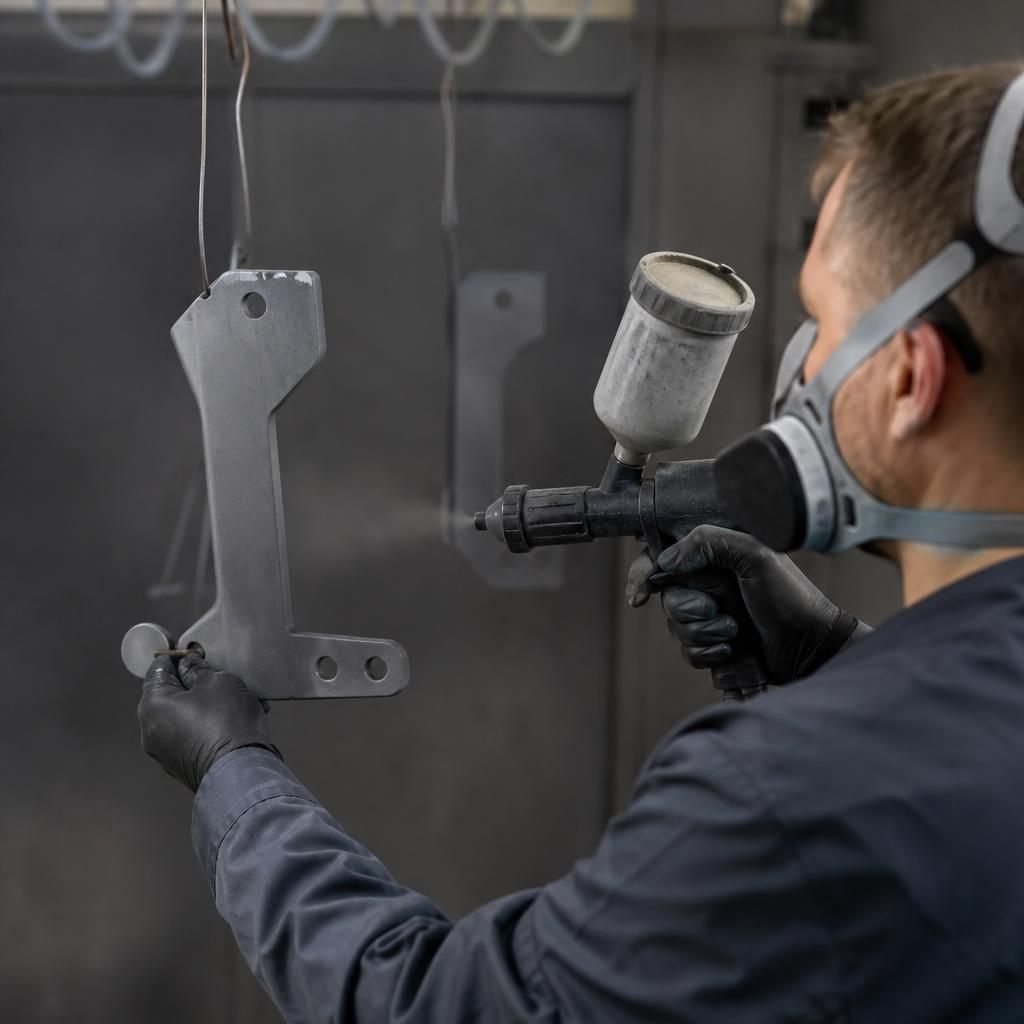
A provider’s approach to repairs and recoating is an important selection factor for industrial components. Powder coating damage can expose the substrate to corrosion or affect assembly, while an unsuitable touch-up may create a visible or technically weak repair. The correct method depends on the coating system, substrate, damage and service environment.
Before appointing a provider, ask how they handle transit damage, installation marks, rejected parts and future refurbishment. Clarify whether local repair is acceptable, when a component must be stripped and recoated, and how repaired areas will be assessed. This is particularly relevant for parts that are difficult to remove from an installed assembly or where a consistent appearance must be maintained across replacement batches.