

What environmental conditions can affect the performance of stainless steel electrostatic coatings?
Moisture, corrosive chemicals, prolonged heat, ultraviolet exposure and abrasive conditions can gradually affect the adhesion, colour, gloss and protective performance of stainless steel electrostatic coatings. Selecting a suitable powder, preparing the surface correctly and matching the coating system to the component’s environment helps maintain performance in service.
Environmental conditions affect stainless steel electrostatic coatings by placing stress on the cured powder film, the bond between the film and the stainless steel, and any exposed edges, joints or fixing points. The same coating may perform well indoors but require a different specification when the component is exposed to temperature cycling, condensation, immersion, pollutants, cleaning chemicals or contact with other materials.
Temperature variation is often more significant than a consistently warm or cool environment. Stainless steel and the coating expand and contract at different rates as conditions change. Repeated cycling can gradually create stress at the interface, particularly on large panels, thin sections, sharp corners and assemblies containing materials with different expansion characteristics. Rapid changes can also promote microcracking or loss of flexibility in a coating that is not suited to the service temperature. Components exposed to freezing conditions may face additional stress when water enters a small defect and expands during freezing.
High humidity and condensation can affect performance even where a component is not directly exposed to rain or standing water. Condensation may form inside enclosures, beneath overhangs or on metal brought from a cold area into a warmer one. If moisture remains trapped at an edge, joint or fixing point, it can undermine the coating locally and provide a route for corrosion beneath the film. Designs that allow drainage and ventilation generally create a less demanding environment than enclosed areas where damp air is retained.
Immersion and intermittent wetting require separate consideration from ordinary atmospheric exposure. A part that is regularly splashed, washed or partly submerged may experience prolonged contact with water at its lower sections, while the upper sections undergo drying and re-wetting. This uneven exposure can produce different levels of stress across one component. Water quality also matters: dissolved salts, cleaning residues and process contaminants can make a wet environment more aggressive than clean water alone.
Chemical conditions should be assessed by identifying the actual substances, their concentration, temperature, contact time and method of exposure. Occasional contact with a diluted substance is not equivalent to continuous immersion or repeated cleaning. Solvents, alkaline cleaners, acids, oils, fuels and disinfectants can affect the coating in different ways, including softening, swelling, staining, loss of surface integrity or reduced resistance to later exposure. A powder selected for general industrial use should not automatically be assumed suitable for a process area with frequent chemical contact.
Atmospheric contamination can also influence service performance. Industrial gases, airborne particles and deposited salts may combine with condensation to create a conductive, corrosive layer on the surface. Deposits are particularly important on horizontal faces, ledges, recessed details and areas that are difficult to wash down. A coating specification should therefore consider not only the surrounding air but also where contaminants are likely to collect and how the finished component will be cleaned.
Ultraviolet exposure is relevant where the finish is installed outdoors or close to strong artificial sources of ultraviolet radiation. Weathering may gradually change the appearance of the surface, with some colours and gloss levels being more susceptible than others. The choice of powder chemistry and colour should take account of whether maintaining appearance is as important as maintaining physical protection. An exterior component may also experience wind-borne particles, rain impact and repeated wetting, which can increase the overall weathering load.
Mechanical conditions often interact with environmental exposure. Movement, vibration, impact from handling, contact between components and rubbing at hinges or fasteners can damage the film. Once a local defect exposes the substrate, moisture and contaminants have a more direct route to the stainless steel. Edges, drilled holes, weld zones, corners and cut-outs deserve particular attention because they are more difficult to coat uniformly and are more likely to receive mechanical damage in service.
Contact with dissimilar metals is another consideration. If stainless steel, coated steel, aluminium or other metals are joined in the presence of an electrically conductive liquid, galvanic effects may develop at the contact area. The coating can reduce direct contact, but a damaged edge, fastener hole or poorly sealed joint may still become a local weakness. Isolation methods, suitable fasteners and a design that prevents water retention can reduce this risk.
The environment during application and curing also affects the final coating, not only the environment in which the component will operate. Contamination, unsuitable substrate temperature or uncontrolled curing can reduce the development of the intended film properties. This is why the coating system needs to be matched to both the manufacturing process and the finished component’s service conditions. The required performance may also vary across one assembly if some parts are sheltered while others are exposed.
A practical environmental assessment should consider:
- whether the component is indoors, outdoors, sheltered, enclosed, immersed or frequently washed;
- the range and rate of temperature changes, including freezing or heat from nearby equipment;
- the presence, concentration and duration of chemical contact;
- airborne salts, industrial pollutants, dust and deposits likely to collect on the part;
- the frequency of cleaning and the equipment or chemicals used for cleaning;
- movement, vibration, impact, friction and contact with other materials; and
- the geometry of edges, joints, drainage points, fixings and areas that are difficult to inspect.
Where conditions are mixed, the most severe credible exposure should guide the specification rather than the average environment. A suitable powder type, colour and finish can then be considered alongside component design, drainage, joint protection and the intended inspection regime. For stainless steel parts used by manufacturers, fabricators, construction firms or automotive businesses, providing these service details before coating helps ensure that the electrostatic coating is assessed against its actual operating environment rather than a generic indoor or outdoor category.
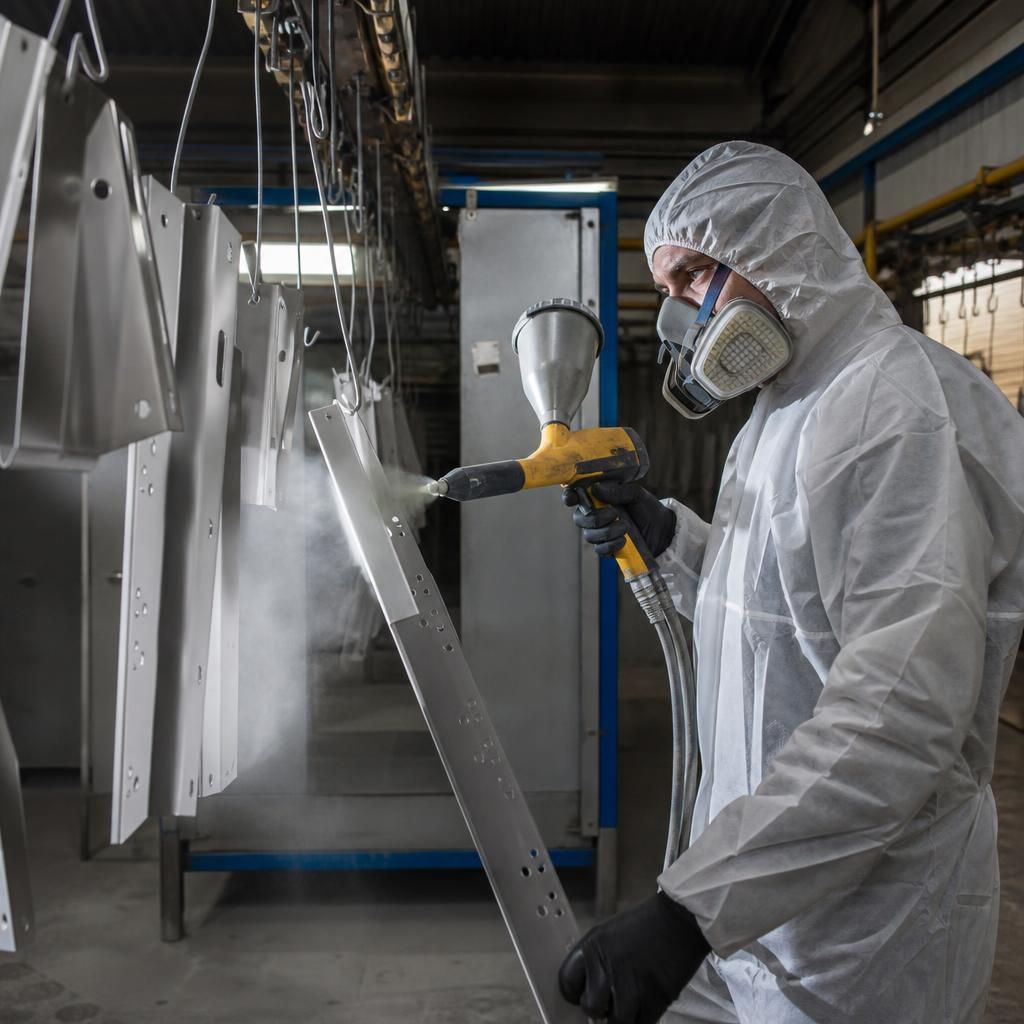
Environmental control during application and curing is as important as the conditions the stainless steel component will face in service. The substrate should be clean and dry before powder application, because residual moisture or contamination can interfere with adhesion. During curing, the actual temperature reached by the metal is more important than the oven air temperature alone; thick sections and complex assemblies may heat at different rates from thin sections. If the powder is under-cured, the film may not develop its intended hardness and chemical resistance, while excessive heat can affect appearance or the properties of the finish. Application records should therefore relate the coating system and curing cycle to the component’s material thickness, geometry and intended environment.
Assess your stainless steel coating requirements
Discuss your stainless steel components with Powder-coatings.co.uk and provide details of their expected environmental exposure, including temperature, moisture and chemical contact. This will help establish a coating specification suited to their intended service conditions.