

What are the specific steps involved in the wrought iron sandblasting preparation process?
Wrought iron sandblasting preparation typically involves inspecting the component, removing contaminants, protecting areas that must remain untreated, and selecting a suitable abrasive and blasting pressure. The surface is then blasted to remove rust, old coatings and scale, cleaned of abrasive residue and dust, inspected for an even profile, and transferred promptly to the next coating stage.
Wrought iron sandblasting preparation is a controlled sequence that takes the component from assessment and setup to a consistent, coating-ready surface. The important stages are planning access to the metal, separating or protecting attached parts, carrying out the blast in a controlled pattern, checking difficult areas such as joints and edges, and preventing contamination before the next finish is applied.
- Confirm the required finish and substrate condition. Before work begins, the operator establishes whether the component will receive powder coating, paint or another protective system. This affects the required surface profile and the degree of preparation needed. Wrought iron may contain sound original metal alongside corrosion, previous repairs, welds or heavily layered coating, so the preparation plan must account for variations across the same component.
- Prepare the component for access. Removable fittings, hinges, handles, brackets and other ancillary parts are separated where practical. This allows the abrasive stream to reach the metal consistently and reduces the risk of damaging parts that require a different treatment. Sections that cannot be removed are positioned so that recesses, returns and internal corners are accessible.
- Identify areas requiring protection. Threads, precision faces, bearing surfaces, drain paths and other areas that must retain their dimensions are masked or plugged using suitable materials. Masking must be secure enough to withstand the abrasive stream without lifting, while still allowing the surrounding wrought iron to be treated properly. The operator also considers whether blasting could expose gaps or weak points in old assemblies.
- Set up the blasting equipment. The equipment is configured for the component’s size, geometry and condition. The abrasive type, nozzle arrangement, working distance and air pressure are selected as a combination rather than independently. Excessive force can deform thin sections, round sharp details or damage fragile areas; insufficient force can leave tightly bonded coating and corrosion behind.
- Blast in a consistent sequence. Large, accessible faces are normally treated in an organised pattern before the operator works around profiles, returns and smaller details. Keeping the nozzle moving helps avoid concentrated abrasion in one location. Overlapping passes provide a more uniform result, while changes in angle help reach textured surfaces and intricate wrought ironwork.
- Give special attention to joints and recesses. Rust and old coating often remain in welds, riveted areas, scrollwork, pierced sections and internal corners. These locations are checked throughout the operation rather than assumed to be clean because the surrounding flat metal is sound. However, the operator must avoid directing excessive abrasive into gaps where it could become trapped or cause unnecessary erosion.
- Deal with corrosion-related surface irregularities. Blasting removes loose corrosion products and exposes the underlying condition of the metal, but it does not rebuild areas that have already been lost to corrosion. Once exposed, deep pitting, thin sections or failed repairs may require a decision about further metalwork before coating. Applying a finish over structurally unsound or contaminated areas does not correct the underlying defect.
- Remove residual abrasive and dust. After blasting, loose media and dust are removed from faces, cavities, holes and concealed sections. Particular care is needed with hollow or assembled components, where residue can remain inside and later escape onto the coating. The cleaning method must not introduce moisture, grease or other contaminants to the prepared surface.
- Carry out a detailed preparation check. The finished surface is reviewed under suitable lighting for missed coating, remaining corrosion, embedded abrasive, uneven preparation and damage to protected areas. Edges, underside sections, fixings and decorative details receive the same attention as the most visible faces. If the result is inconsistent, the affected areas are treated again rather than relying on the coating to disguise them.
- Maintain the prepared condition until coating. Clean wrought iron should not be handled with bare, contaminated gloves or placed on dirty supports. It is kept away from workshop dust, moisture and contact with oils or other substances. Masking is checked again before the next stage, and any residue created during handling is removed. Prompt transfer to coating is important because freshly prepared steel surfaces can begin to oxidise if exposed to unsuitable conditions.
For batch work, the same sequence is applied consistently across every component, with attention to variations in size, shape and corrosion level. A clear preparation record can also identify the abrasive system and settings used, areas requiring additional treatment, and any defects that were present before coating. This helps the coating team understand the condition of the wrought iron and reduces the risk of inconsistent preparation between individual parts.
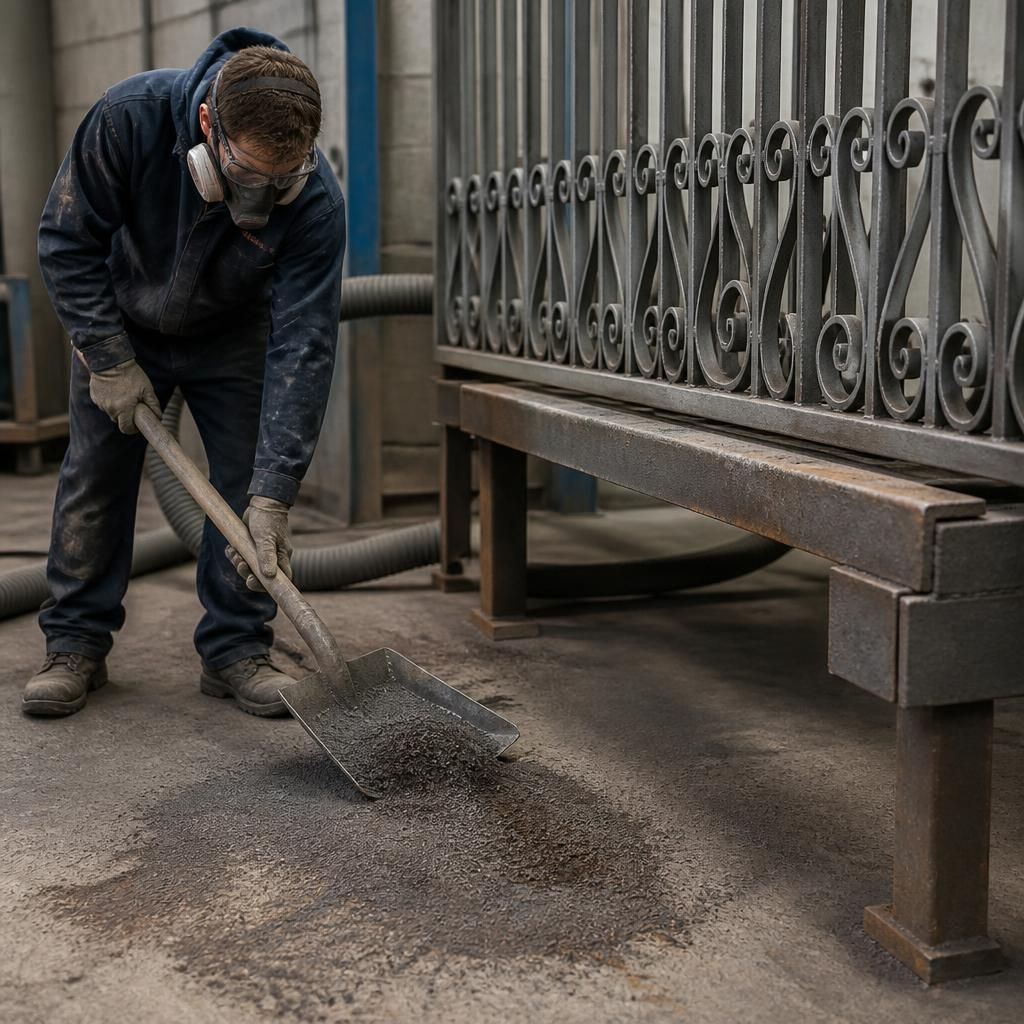
Spent abrasive and removed coating are also managed as part of the wrought iron sandblasting preparation process. The material collected from the work area can contain rust, old paint and other residues, so it should be kept separate from clean abrasive and handled according to the applicable waste requirements.
Good housekeeping prevents recovered debris from being redistributed onto prepared metal or contaminating nearby coating work. The blasting area, supports and collection equipment are checked after preparation, with usable media only returned to service where its condition remains suitable for the required finish.