

What factors determine the success of a metal shot blasting process?
The success of a metal shot blasting process depends on selecting suitable abrasive media, preparing the component correctly, and controlling equipment settings such as blast pressure, distance and coverage. Consistent technique, appropriate surface inspection and careful handling after blasting are also essential for achieving the required cleanliness and profile for the next coating stage.
The success of metal shot blasting is determined by how consistently the process produces the specified surface condition without damaging the component. In addition to abrasive selection and machine settings, the result depends on a clear finish specification, suitable equipment, controlled working conditions, component geometry, operator control and quality records that allow each batch to be reproduced.
The required surface standard must be defined before processing begins. A component may need loose scale removed, an existing coating stripped, corrosion eliminated or a particular surface profile created for a subsequent coating. These requirements are not interchangeable. If the acceptance criteria are unclear, a surface can appear clean while still being unsuitable for the next manufacturing stage, or it may be blasted more aggressively than the component requires.
Component design and condition also affect the outcome. Flat, accessible areas are generally easier to treat evenly than recesses, internal corners, narrow slots, weld transitions and assemblies with overlapping parts. Profiles that shield one another can receive less exposure, while edges and thin sections may be more vulnerable to excessive impact. Components should therefore be presented so that critical surfaces are accessible and so that the blast stream can reach them without creating uneven treatment.
Equipment condition is a major factor in repeatability. Blast cabinets, wheels, nozzles, hoses, seals, recovery systems and extraction equipment need to operate correctly. Worn or partially blocked components can alter the distribution of abrasive and create inconsistent coverage. Effective separation and recovery of used media are equally important because broken-down or contaminated material can affect the working mix and the quality of the finish.
Control of the working environment helps prevent contamination and variation. Dust, oil, moisture and residue from handling can interfere with the final surface, particularly where the blasted metal will receive a protective coating. The condition of the blast equipment and surrounding work area should be managed so that freshly treated parts are not exposed to avoidable contaminants before the next process.
Operator technique influences areas that machine settings alone cannot resolve. The operator must account for the shape of each component, maintain a consistent movement pattern and recognise areas that require additional attention without overworking surfaces that are already acceptable. Correct loading and spacing are also important: tightly packed parts can shield one another and lead to different results within the same batch.
Batch control and process repeatability matter when components are supplied regularly or form part of an assembly. Parts should be grouped according to material, geometry and required finish where practical. Recording the agreed specification, equipment configuration, media condition and any adjustments made during processing gives the coating or manufacturing team a basis for comparing batches and investigating deviations.
Quality assurance should continue beyond visual appearance. A suitable review considers cleanliness, uniformity, remaining residues, areas that may have been missed and whether the surface is appropriate for its intended next stage. Where a coating will follow, the blasted condition should be assessed against the coating system’s requirements rather than judged solely by colour or texture. Clear acceptance criteria reduce disputes between the blasting contractor, fabricator and coating provider.
Protection of the processed component is part of process success. Freshly blasted metal should be handled using clean methods and kept away from sources of contamination. The interval and conditions between blasting and coating should be agreed as part of the production plan, since a correctly blasted surface can be compromised by unsuitable storage or handling.
For manufacturers, fabricators, construction firms and automotive businesses, these factors are normally addressed through a documented specification and a repeatable production method. Specialist powder-coating providers serving businesses across the Midlands may also coordinate shot blasting as part of preparing metal components for a durable coating system, with collection and delivery options available where required.
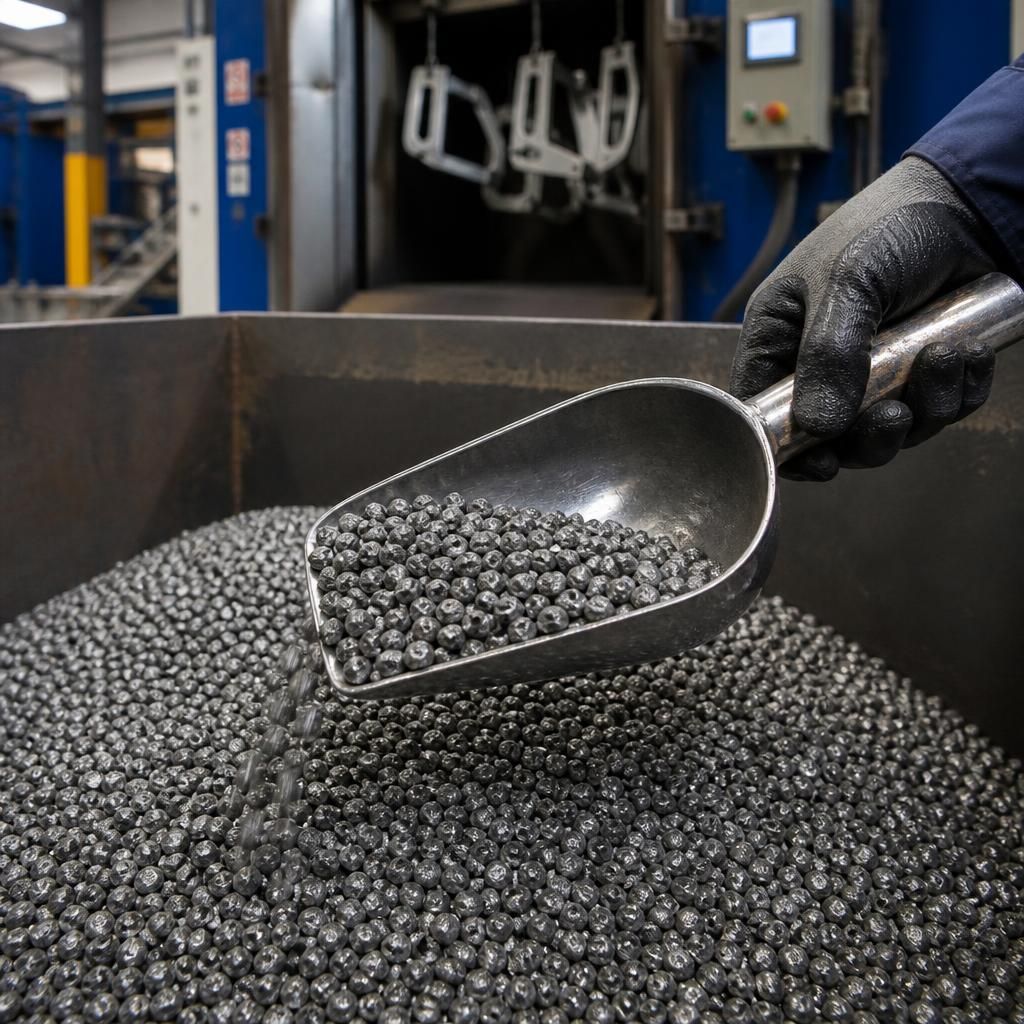
Abrasive media must be matched to both the metal substrate and the required surface condition. Media size, shape, hardness and condition influence the impact delivered to the component: finer or smaller particles can reach more restricted areas, while larger or harder media may provide more aggressive cleaning but require tighter control on thinner or more delicate sections. The correct choice removes the specified contamination without unnecessarily altering the underlying metal.
The abrasive working mix also affects consistency throughout a run. Repeated impacts gradually change the media, so its condition should be monitored rather than assuming that the original charge will perform identically indefinitely. A controlled mix helps maintain predictable cleaning and surface profile, particularly when components are processed in batches or must meet a coating specification.
Media selection should therefore be based on the component material, its thickness and geometry, the contamination being removed and the requirements of the following process. Treating abrasive choice as a defined part of the specification makes the result easier to assess and reproduce.
Discuss your metal shot blasting requirements
Discuss your metal shot blasting requirements with the team, including the component material, geometry, existing surface condition and finish required for the next process. This information will help establish a suitable preparation approach for your parts or batch.