

What are the key benefits of phosphate steel treatment in powder coating preparation?
Phosphate steel treatment improves powder coating preparation by creating a chemically receptive surface that supports stronger adhesion and more consistent coverage. It also helps protect the steel against corrosion beneath the coating, contributing to a more durable finished component.
The key benefits of phosphate steel treatment in powder coating preparation include more even coating results, improved surface uniformity, better control of the finishing process and reduced risk of defects caused by residual contamination. A phosphate conversion treatment forms a thin, structured layer on prepared steel before powder application, giving the coating system a more consistent foundation than bare or inadequately prepared metal.
More consistent surface performance is one of the main practical advantages. Steel components can vary in texture, handling history and exposure to manufacturing contaminants. Phosphate treatment helps standardise the surface condition across a batch, so the powder coating process is less dependent on minor differences between individual parts. This is particularly useful for fabricated assemblies, repeat production and components that must have a consistent specification.
The treatment can also support more uniform visual results. Variations in the steel surface may contribute to differences in gloss, texture or the apparent coverage of the powder film. When cleaning, rinsing and phosphating are properly controlled, the resulting conversion layer provides a more predictable base for the powder coating. This can help reduce visible inconsistencies such as patchy appearance, localised finish variation and defects associated with uneven preparation.
- Improved coating uniformity: a controlled pre-treatment helps the powder film develop consistently across the component.
- Better batch-to-batch repeatability: standardised preparation makes it easier to reproduce an agreed finish on recurring orders.
- Reduced preparation-related rework: consistent treatment can lower the likelihood of defects that require stripping, re-preparation or recoating.
- Greater process control: treatment stages can be monitored through factors such as solution condition, contact time, temperature, rinsing and drying.
- Improved suitability for demanding components: the process can be incorporated into preparation systems for fabricated, formed and manufactured steel parts.
Phosphate treatment is also valuable because it creates a controlled interface between the steel and the powder coating system. This interface can help reduce the effect of small variations in the substrate that might otherwise become visible in the finished surface. The benefit is not limited to appearance: a controlled interface supports predictable performance when components are subjected to handling, installation and normal service conditions.
Another advantage is greater tolerance of routine handling between preparation and coating. Prepared steel may need to be moved through a production line, inspected or positioned before powder is applied. A correctly formed phosphate layer provides an additional conversion coating on the metal during this stage. It should not be treated as a substitute for prompt, controlled coating or as permanent protection, but it can make the prepared surface less dependent on remaining completely untreated during every movement.
For manufacturers and fabricators, phosphate treatment can simplify quality assurance and fault investigation. The treatment process has identifiable stages and operating conditions that can be recorded and checked. If a defect appears, the preparation sequence can be reviewed alongside powder application and curing conditions. This makes it easier to distinguish problems caused by cleaning, rinsing, phosphate coverage, drying, powder application or oven curing, rather than treating every coating fault as an application issue.
The benefits depend on the treatment being matched to the steel and the coating specification. Phosphate treatment does not correct oil, grease, mill scale, weld residues, abrasive dust or rust that remain on the surface. Cleaning and rinsing must therefore be effective before the conversion stage, and the treated component must be properly dried before powder application. Poorly controlled chemistry, inadequate coverage or contamination after treatment can reduce the value of the process and may introduce defects of its own.
Selection should take account of the component’s size and geometry, the required appearance, the intended service conditions and the powder coating system being used. Edges, recesses, joints and enclosed areas may require particular attention because drainage, spray access and rinsing can differ from those on open faces. For industrial work, the preparation method should be agreed as part of the coating specification rather than selected independently from the powder and curing process.
In summary, phosphate steel treatment provides a repeatable and controllable preparation stage that can improve finish consistency, support reliable production quality and reduce preparation-related variation. Its effectiveness depends on complete cleaning, suitable process control and correct handling through to powder application and curing.
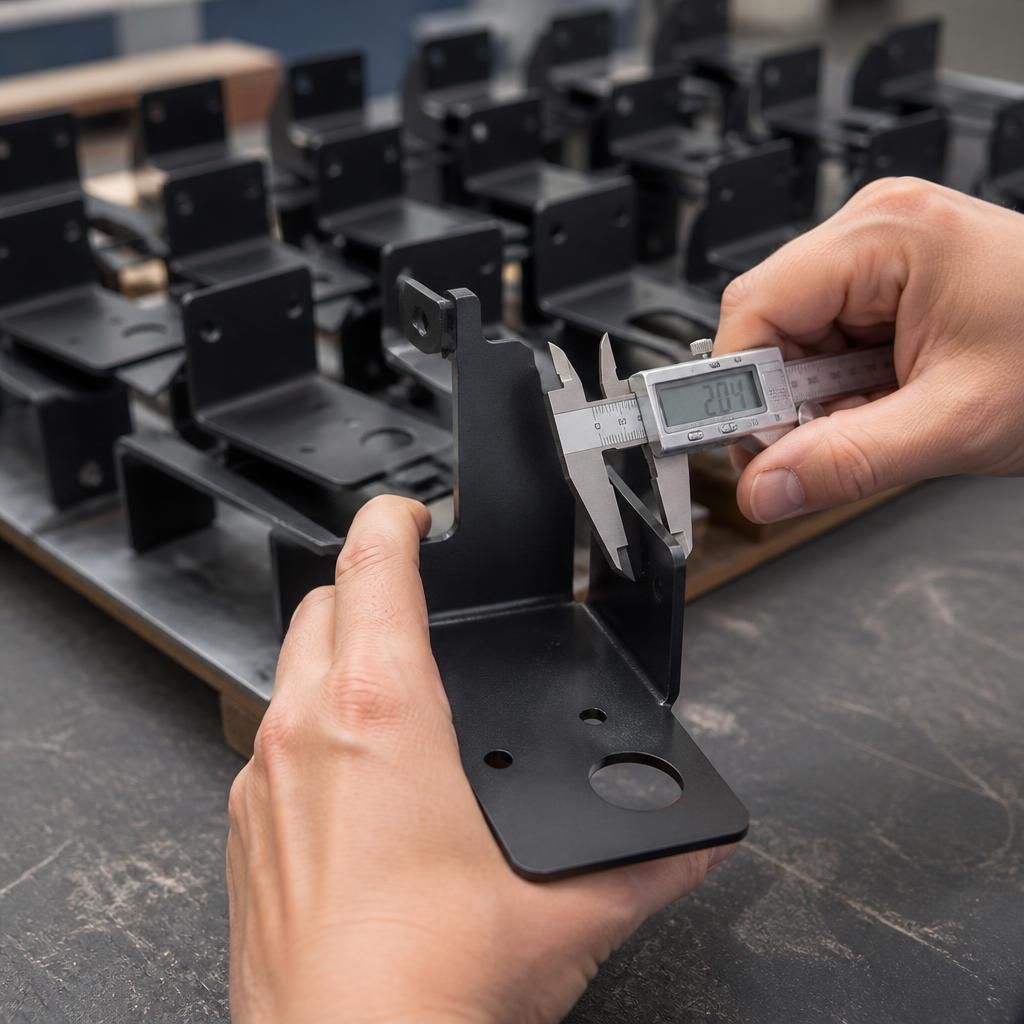
A further benefit of phosphate steel treatment is its minimal effect on component dimensions. Unlike a separate primer or other substantial build-up layer, a phosphate conversion coating is thin and formed directly on the steel surface. This makes it suitable for parts where maintaining close fits, apertures, threads, mating faces or installation clearances is important.
For manufacturers, preserving the original geometry can simplify the finishing specification. Components can receive a protective preparation stage without materially changing the dimensions that determine assembly or operation. Masking may still be required for surfaces that must remain free of powder, and the complete coating system must be considered when checking tolerances.
This dimensional advantage is particularly relevant to engineered brackets, fabricated assemblies, enclosures and other metal parts designed to fit with adjoining components. Phosphate treatment therefore provides surface preparation benefits while remaining compatible with applications where excessive coating build-up could affect function.
Discuss phosphate steel treatment for your powder coating preparation
If you are assessing phosphate steel treatment for a powder coating specification, discuss your component geometry, service conditions and required finish with a coating specialist. This helps establish whether the proposed preparation sequence is suitable before production begins.