

What specific pre-treatment methods are employed before applying RAL 2000 powder coat to ensure optimal adhesion and finish quality?
Before applying RAL 2000 powder coat, aluminium components are typically degreased to remove oils and residues, then rinsed and treated with a suitable chemical conversion coating to improve adhesion and corrosion resistance. Where required, light abrasive preparation removes oxidation and provides a consistent surface profile before thorough drying and powder application.
Pre-treatment for RAL 2000 powder coating on aluminium is a controlled preparation sequence designed to remove surface contamination, manage the aluminium oxide layer and create a chemically suitable surface for the powder film. The exact method depends on the alloy, component design, previous use, required corrosion protection and the environment in which the finished part will operate.
Initial inspection and substrate assessment are important before any chemicals are selected. The coater checks for oil, silicone, adhesive residues, storage corrosion, machining lubricants, weld contamination, casting residues and damage from previous finishes. Aluminium alloys can respond differently to cleaning and conversion treatments, so the substrate should be identified where this information is available. Particular attention is needed around joints, recesses, drilled holes and welds, where contamination can remain trapped and later cause adhesion defects or blistering.
Where components have been repaired, welded or assembled from different aluminium parts, the preparation process must account for those variations. Weld areas may contain heat-affected oxide, spatter or residues from fabrication products. These areas require compatible preparation rather than relying on the surrounding untreated surface to provide a uniform base.
Alkaline cleaning is commonly used to break down oils, grease and workshop soils that may not be removed by a simple solvent wipe. The cleaner’s concentration, temperature and contact time need to be controlled: insufficient treatment can leave contamination behind, while an unsuitable or overly aggressive cleaner can attack the aluminium or leave residues. Components are arranged so that the solution can reach faces, edges and internal features, and so that cleaning fluid does not remain pooled in the finished part.
Deoxidising and desmutting may be introduced after cleaning where the aluminium surface contains heavy oxide, embedded residues or a dark smut formed during alkaline treatment. These acidic stages condition the surface and remove contaminants that would otherwise interfere with the conversion layer. They must be selected for the particular aluminium alloy and carefully controlled, because excessive attack can alter dimensions, dull the surface or produce an uneven foundation for the coating.
For work requiring higher corrosion resistance, the conversion stage may use a chromate or chromate-free chemistry selected for the specification and service environment. Its purpose is not to form the visible colour of the RAL 2000 finish; it creates a thin, adherent interface between aluminium and powder. Correct coverage is particularly important on edges, corners and complex profiles, where an inconsistent film can lead to localised loss of protection.
Rinsing quality is controlled as part of the treatment rather than treated as an incidental wash-off step. Residual cleaner, acid or conversion chemicals can cause poor adhesion, staining, pinholing or under-film corrosion. The number and quality of rinse stages, drainage and the condition of the rinse water are therefore considered when establishing the process. Components should drain freely, with no pockets capable of carrying treatment chemicals into the oven or onto the coating line.
Before powder is applied, the prepared aluminium must be completely dry and protected from renewed contamination. Drying removes moisture from joints, recesses and hollow sections as well as from exposed faces. Handling is carried out with clean gloves or suitable equipment where necessary, since fingerprints, dust and workshop oils can compromise an otherwise correctly treated surface.
Masking and drainage planning are also part of practical preparation for components with precision interfaces. Threads, electrical contact points, bearing seats, machined bores and areas intended for earthing may need temporary plugs, caps or masking. Masking materials must tolerate the subsequent curing process and must not transfer adhesive or leave residue on the prepared aluminium. Drain holes and vent paths should remain clear so that cleaning and rinsing solutions do not become trapped.
The finished preparation is checked before powder application. Typical checks include visual examination under suitable lighting, confirmation that there is no visible oil, dust, water residue or chemical staining, and review of treatment records where a controlled production process is required. A surface that has been touched, contaminated or left exposed for too long may need to be re-cleaned rather than coated.
For batch work, the process is normally verified using representative components or test pieces, particularly when the batch contains a new alloy, a complex profile or a combination of fabricated and cast parts. Subsequent coating checks can include adhesion assessment and inspection for defects such as cratering, blistering, pinholes or uneven coverage. These checks help distinguish a powder application problem from a substrate or pre-treatment problem.
In practice, the most suitable method is therefore not determined by the RAL 2000 colour alone. The powder manufacturer’s technical requirements, the aluminium substrate, component geometry and expected exposure all influence the treatment sequence. A specialist coater can establish whether standard cleaning and conversion are appropriate or whether additional deoxidising, desmutting, masking or process controls are needed before the RAL 2000 powder is applied.
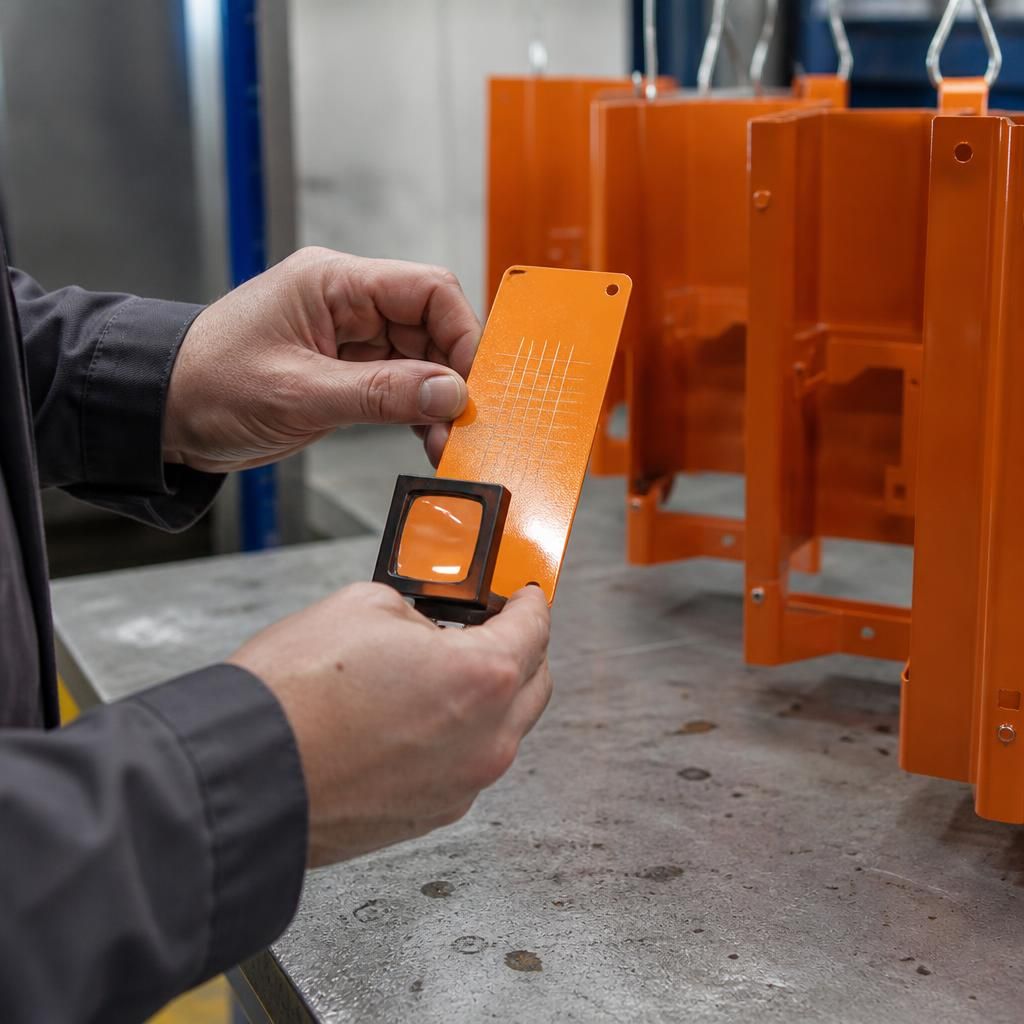
A practical way to confirm that the selected pre-treatment is suitable is to coat a representative test coupon alongside the aluminium components. The coupon should match the alloy and receive the same cleaning, conversion, rinsing and drying sequence as the production parts. After curing, a cross-cut adhesion test or another agreed inspection method can help show whether the powder film has bonded consistently to the prepared surface.
The location and character of any failure are informative. Separation at the aluminium interface may indicate inadequate cleaning, conversion or drying, while defects within the coating film may point to a separate application or curing issue. This distinction helps the coater refine the preparation method before processing the full batch, particularly where unfamiliar aluminium alloys or mixed component designs are involved.
Discuss Pre-Treatment for Your RAL 2000 Powder Coat
Discuss your aluminium components, alloy details and required service environment with our coating team to identify a suitable pre-treatment sequence for RAL 2000 powder coating. Providing drawings or representative parts can help establish the preparation requirements before production.