

What specific UV-resistant additives enhance the longevity of outdoor powder coatings for metal?
Outdoor powder coatings commonly use ultraviolet (UV) absorbers and hindered amine light stabilisers (HALS) to slow resin breakdown, colour fading and loss of gloss caused by sunlight. Weather-resistant pigments and suitable antioxidants can further support colour retention and coating stability, provided they are compatible with the powder formulation and curing process.
The most effective UV-resistant additive systems for outdoor powder coatings combine specific UV absorbers with hindered amine light stabilisers (HALS), and may also use inorganic UV screens and processing stabilisers. Their purpose is to protect the coating binder from photochemical damage, so the finish retains its colour, gloss, flexibility and adhesion for longer.
UV absorbers work by taking in harmful ultraviolet energy before it reaches the resin. The energy is then released as low-level heat rather than causing significant chemical damage. Common families used in coating formulations include:
- Benzotriazoles, which are effective across important UV wavelengths and are used where colour and gloss retention are priorities.
- Benzophenones, an established absorber class that can be suitable for particular resin and pigment combinations.
- Hydroxyphenyl triazines, which offer strong absorption and are often considered for demanding exterior applications where extended light stability is required.
The appropriate absorber depends on the powder resin, film thickness, colour and curing conditions. An additive that performs well in a clear or lightly coloured coating may behave differently in a heavily pigmented finish.
HALS protect the coating by interrupting the free-radical reactions that develop after UV exposure has initiated oxidation in the binder. Unlike an absorber, a HALS does not primarily screen incoming UV light. It helps neutralise the reactive species responsible for molecular breakdown, making it a complementary part of the stabilisation system. Different HALS chemistries are selected according to their compatibility with the resin and their resistance to extraction or chemical interaction.
Inorganic UV screens can provide an additional physical barrier. Carefully selected, surface-treated rutile titanium dioxide, zinc oxide or cerium-based particles can scatter or absorb portions of the UV radiation before it reaches the polymer. These materials must be dispersed properly. Agglomeration can reduce protection and may also affect opacity, gloss, surface smoothness and mechanical performance. Fine-particle or nano-scale grades therefore require particularly careful formulation and handling.
Some formulations also include thermal and processing stabilisers. These help limit degradation during extrusion, powder production and curing, when the resin is exposed to heat and shear. Phosphite-based secondary stabilisers, for example, can support protection against oxidation during processing, while other stabiliser systems may be chosen to control interactions with pigments, catalysts or metal substrates. Their role is different from that of a UV absorber, but damage introduced during manufacture can reduce outdoor durability later.
Additive performance depends on the complete coating formulation rather than on the name of one ingredient. Important compatibility checks include:
- Resin compatibility: the additive must remain uniformly distributed in the polyester or other coating binder without causing separation, migration or loss of surface quality.
- Cure compatibility: it should not inhibit the chemical reaction needed to form the coating film or alter the intended cure window.
- Dispersion: solid UV screens and stabilisers must be distributed consistently throughout the powder and finished film.
- Colour and gloss: the package must work with the chosen pigment system without creating haze, yellowing or unwanted changes in appearance.
- Film thickness: protection can vary between thin and heavy films, so the additive level and coating specification should reflect the actual application.
- Substrate and environment: moisture, pollutants, heat and chemical exposure can accelerate degradation through mechanisms that UV additives alone cannot prevent.
Overloading an additive is not automatically beneficial. Excess material can affect melt flow, intercoat adhesion, mechanical properties, surface appearance or powder stability. The stabiliser package should therefore be selected and validated with the resin, pigments, curing system and intended exposure conditions considered together.
For critical outdoor metal components, validation normally combines accelerated weathering with checks on colour change, gloss retention, chalking, cracking, adhesion and corrosion protection. This confirms whether the chosen additive system protects the whole coating film rather than merely improving its initial appearance. A powder coating specialist can then match the formulation and application process to the component’s exposure, geometry and required finish.
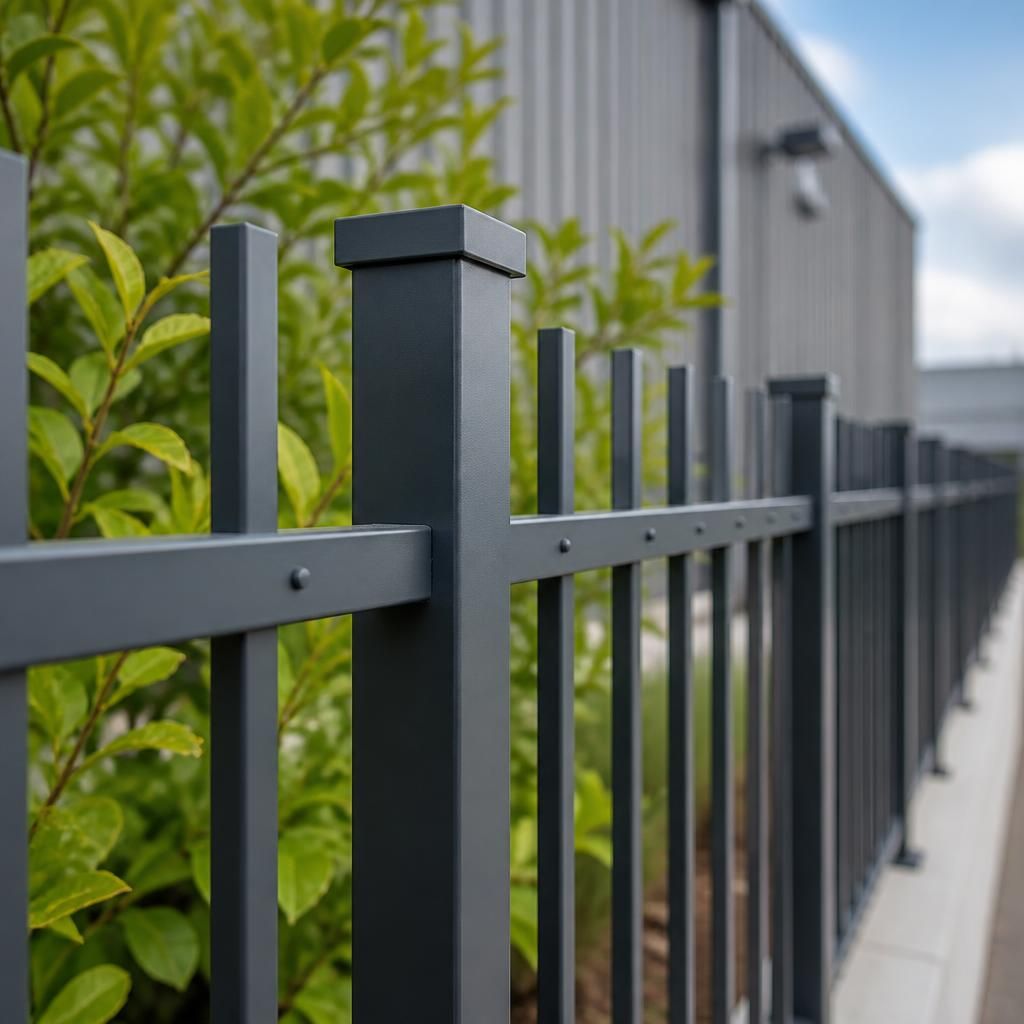
Weather-resistant pigments can reinforce the protection provided by UV absorbers and hindered amine light stabilisers (HALS). Inorganic pigment systems, including suitable iron oxide or titanium dioxide grades, are generally more resistant to sunlight than many organic colourants and can help limit the amount of UV reaching the binder. The pigment must still be selected for the required colour, opacity, gloss and exterior exposure, because a durable pigment cannot prevent degradation elsewhere in the coating.
This is why UV durability is assessed as a complete colour formulation rather than by additive choice alone. The same stabiliser package may perform differently in a dark, highly pigmented finish compared with a bright or lightly coloured one, so the pigment, resin and additive combination should be tested together on the intended metal component.