

What environmental conditions should be considered before applying an epoxy primer coat to ensure optimal adhesion and performance?
Before applying an epoxy primer coat, ensure the metal surface is clean, dry and free from condensation, with ambient and substrate temperatures suitable for the product. Control humidity, monitor the dew point, and provide adequate ventilation while avoiding dust, moisture and other airborne contaminants that could impair adhesion or curing.
The application area must provide stable, controlled conditions throughout application and the early curing period. In practice, this means using a sheltered, enclosed workspace rather than an exposed yard, and controlling weather changes, nearby processes, material conditioning and handling so the epoxy primer can form a consistent film and bond properly to the metal.
Protect the work from changing outdoor conditions. Rain, spray, fog, wind-driven particles and sudden weather changes can affect the coating even when the metal initially appears suitable for painting. Doors and access points should be managed to limit uncontrolled air movement, particularly where the work is close to loading areas, open bays or external fabrication activities. If the environment cannot remain stable, application should be postponed or moved to a more suitable area.
Allow the metal and coating materials to reach a stable condition. Metal components can retain heat or cold after storage, transport, welding, blasting or exposure to the weather. This may create a difference between the surrounding air and the component itself, affecting how the primer spreads and cures. Primer components should also be conditioned and mixed in accordance with the product data sheet. Cold material can become more viscous and difficult to atomise, while excessive warmth can shorten working time and alter application behaviour.
Separate coating from incompatible activities. Spraying, grinding, welding, shot blasting, solvent use and powder coating in the same uncontrolled area can introduce conditions that interfere with the primer. Airborne residues may settle on freshly applied material, while vapours from other products can affect film formation or create a safety risk. Coating work should therefore be scheduled and positioned away from activities that generate fumes, fibres, abrasive residue or other process by-products.
Control the condition of the application equipment and work area. Spray guns, hoses, mixing vessels and measuring equipment should be clean and dry. Compressed air systems require suitable filtration and drainage so that oil or water is not introduced into the primer during application. The area should also be organised to prevent freshly coated components contacting dirty supports, packaging or handling equipment.
Consider the full curing environment, not just the spray stage. An epoxy primer may appear acceptable immediately after application but still be vulnerable while it is curing. Components should remain protected from impact, handling, water, process vapours and contamination until the specified cure has been achieved. Large or complex parts may cure differently across their surfaces because of their mass, geometry and position, so the coating schedule should account for the slowest-curing areas.
Before starting a production batch, the applicator should confirm the product data sheet requirements and record the relevant site conditions. A practical check should cover:
- Whether the work area is enclosed and protected from rain, mist, wind and sudden environmental changes;
- Whether nearby operations could introduce fumes, residue or other contamination;
- Whether the metal, primer components and equipment have been stored and conditioned appropriately;
- Whether compressed air and application equipment are clean, dry and suitable for the process;
- Whether the parts can remain undisturbed and protected for the required curing period; and
- Whether a trial component or test panel should be assessed before coating the complete batch.
These controls are particularly important where the epoxy primer will receive a subsequent powder coating layer. Consistent application and curing help create a sound intermediate surface, whereas variable site conditions can lead to uneven film formation, poor intercoat compatibility or premature coating failure. For industrial work, environmental checks should therefore form part of the coating specification and batch records rather than being treated as an informal visual assessment.
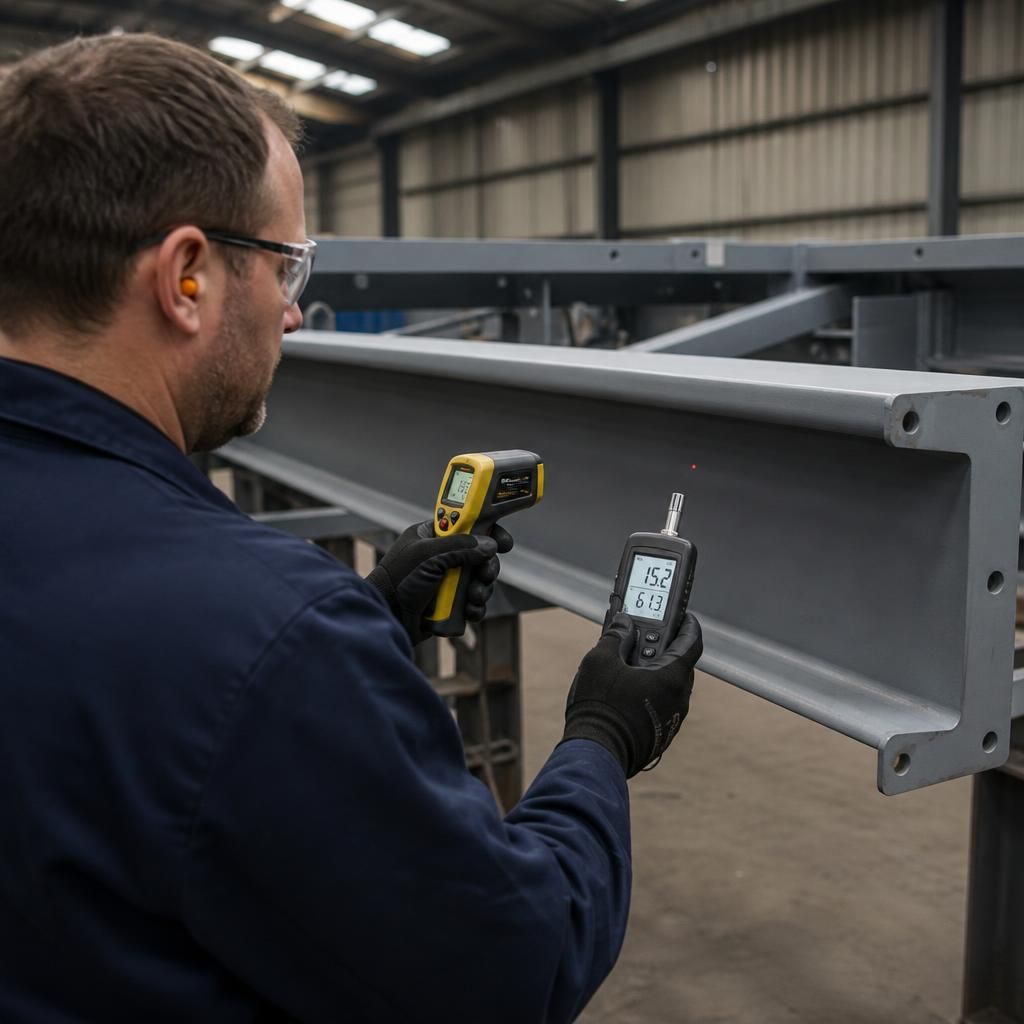
Environmental readings should be taken at the location of the metal components, not only near a doorway or on a general workshop wall. Air temperature and humidity can vary around large fabrications, cold floors, external walls and storage racks, while the steel itself may remain at a different temperature. A surface thermometer and a calibrated temperature-and-humidity meter provide a more reliable basis for deciding whether coating can proceed.
Record the readings alongside the component condition and product requirements before application. If measurements vary significantly across the work area, use the least favourable result when assessing suitability. This prevents a locally cold or humid section from being overlooked and helps explain differences in adhesion, curing or appearance during later quality checks.