

What specific environmental factors should I consider when choosing a powder coating primer for my project?
When choosing a powder coating primer, assess the part’s exposure to humidity, temperature changes, UV radiation, water, salt and industrial chemicals, as these conditions affect corrosion protection, adhesion and long-term finish stability. Select a primer system tested for the expected environment and confirm that its curing requirements and compatibility suit the metal substrate and complete coating specification.
Environmental selection of a powder coating primer means matching the primer system to the complete service conditions of the finished component, including how often it is exposed, how the coating is physically handled, how the part is cleaned and where moisture or contaminants can collect. The correct choice is therefore based on the component’s actual use rather than simply describing it as an indoor or outdoor application.
Consider the following factors when defining the exposure profile:
- Degree and duration of exposure: A component exposed continuously requires a different level of protection from one that is only occasionally exposed. Record whether the part is sheltered, partially exposed or fully exposed, and whether it is installed in an open, enclosed or poorly ventilated location.
- Orientation and design: Horizontal surfaces, recesses, folded sections, joints and areas behind fittings can retain deposits and remain damp for longer than freely draining surfaces. A primer should be assessed as part of the full coating specification, while the component design and drainage arrangements should also be reviewed.
- Abrasion and impact: Parts used in plant, transport equipment, access systems or handling areas may experience rubbing, knocks, vibration or repeated contact. In these cases, assess the primer and topcoat together for resistance to the relevant mechanical demands. A primer selected only for atmospheric protection may not be appropriate where the coating is regularly damaged or worn.
- Cleaning and maintenance: Establish whether the coated item will be washed, pressure-cleaned, brushed or treated with a particular cleaning product. The frequency, pressure and method of cleaning can affect the coating system, especially around edges and joins. Any cleaning or maintenance chemicals should be checked against the primer and topcoat technical information before specification.
- Immersion or prolonged contact: Components that are submerged, buried, installed below ground or regularly in contact with saturated materials need a system specifically assessed for that exposure. Ordinary atmospheric powder coating should not automatically be assumed suitable for permanent immersion or concealed areas where inspection is difficult.
- Industrial deposits and airborne pollutants: Dust, processing residues, fumes and other airborne deposits can settle on the coating and alter maintenance requirements. Identify the substances present in the surrounding process and distinguish between occasional surface contamination and continual exposure. The primer manufacturer’s resistance data should relate to the actual substances and concentrations involved.
- Contact with other materials: Rubber, plastics, sealants, treated timber, insulation and adjacent metals can affect the coating at contact points. Check for possible staining, softening, abrasion or galvanic effects, and specify suitable separators, edge treatment or an appropriate primer system where necessary.
- Service life and inspection access: A difficult-to-access component may need a more conservative specification because defects cannot be readily found or repaired. Consider how the coating will be inspected, whether damaged areas can be recoated and whether the design creates concealed interfaces that require additional protection.
Environmental assessment should also include the application site. The surrounding conditions during pre-treatment, priming, curing and storage can influence the result, so the coating contractor needs the part dimensions, metal type, intended use and any restrictions on the process. Large or heavy components may behave differently during heating, and assembled parts can contain areas that are difficult to coat or cure uniformly.
Do not assess the primer in isolation. Confirm that it is compatible with the selected topcoat, pre-treatment and substrate, and that the complete system has evidence relevant to the intended exposure. A system suitable for a sheltered fabricated component may be inappropriate for an abrasive industrial part, a buried item or equipment subject to frequent cleaning. Where the service conditions are unusual, provide the coating supplier with a written exposure description and request product data or test evidence for that specific combination.
A practical specification should document the installation setting, exposure frequency, likely mechanical contact, cleaning method, immersion risk, adjacent materials and inspection arrangements. This information gives the applicator a clear basis for selecting and validating the powder coating primer, rather than relying on a broad environmental label that may conceal important differences between projects.
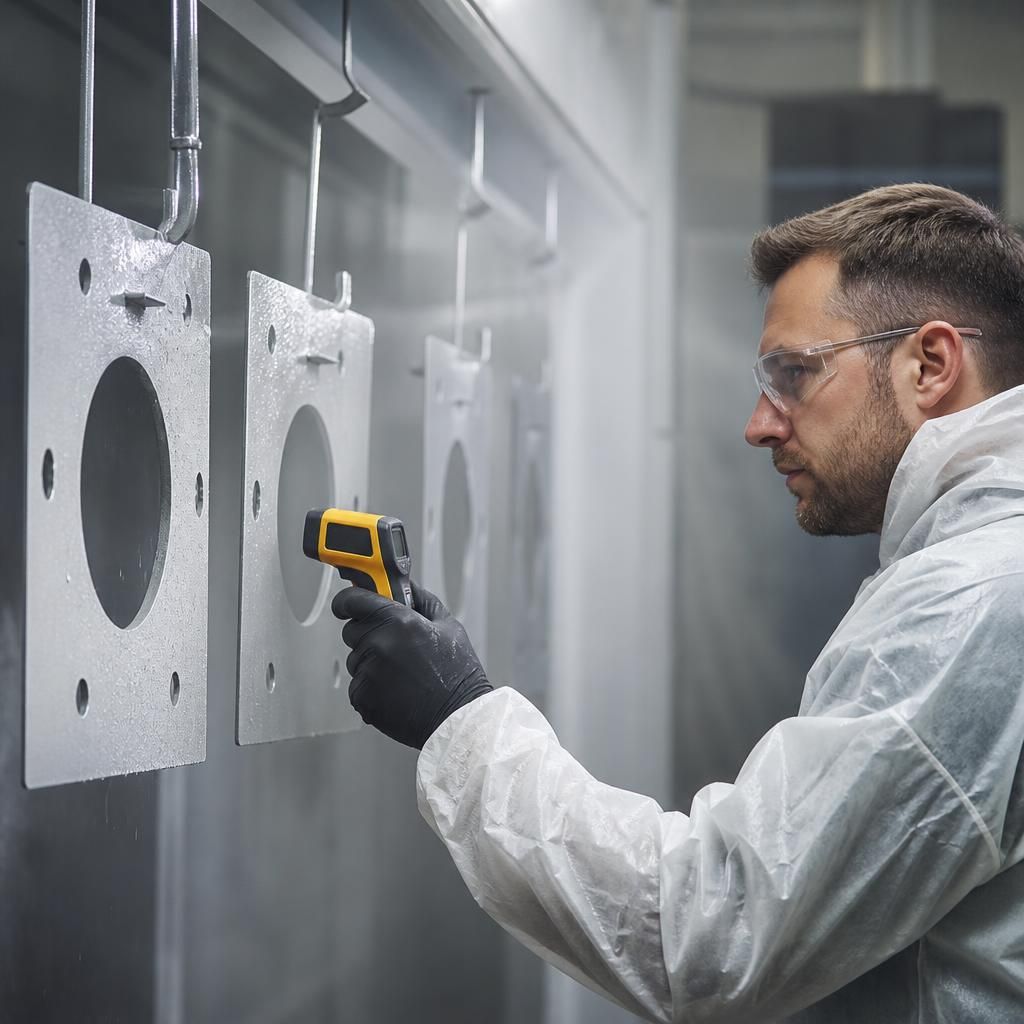
Environmental conditions during application can be as important as those experienced in service. If the metal or surrounding air is too cool, humid or close to the dew point, condensation may form on the substrate and interfere with pretreatment, primer adhesion and curing. The parts should therefore be dry and at a suitable temperature before coating, with storage conditions controlled so that prepared metal does not absorb moisture or become contaminated before priming. Ask the coating supplier to confirm the primer’s application limits, curing profile and storage requirements for the conditions at your facility.