

What specific preparation processes must be followed when preparing a metal surface for electrostatic powder coating?
Metal surfaces must be thoroughly degreased and cleaned to remove oil, grease, dirt, mill scale and rust, then mechanically prepared by abrasive blasting or another suitable method. The surface should be rinsed where required, chemically pretreated, completely dried, inspected for contamination and damage, and masked at areas that must remain free of powder before coating.
The essential preparation for electrostatic powder coating is a controlled process that makes the metal chemically suitable, physically sound and electrically conductive before powder is applied. In addition to the basic cleaning, surface treatment and drying stages, preparation must account for the substrate, component design, weld quality, coating thickness, racking and the conditions required during curing.
Assess the substrate and existing condition. Steel, galvanised steel, aluminium and previously coated components do not behave identically during powder coating. The preparation route should therefore be selected according to the metal, its manufacturing history and any existing treatment. Previously painted or plated parts may require removal of the old coating rather than simply applying a new system over it. Galvanised surfaces need particular attention because zinc can affect adhesion and may release gas during curing if the surface or component has not been prepared correctly.
Review the component design before processing. Powder must be able to reach the intended surfaces, while trapped air, moisture or contaminants must have a way to escape. Hollow sections, box fabrications and enclosed areas should be checked for suitable drain and vent holes. Without adequate venting, gases can cause pinholes, blistering or other defects when the part enters the oven. Drainage is also important where components have been through aqueous stages, as retained liquid can interfere with the finish or create a safety risk during heating.
Correct fabrication defects. Welds should be continuous where specified, with excessive spatter, sharp projections and loose residues removed. Incomplete welds, porous joints and unsealed overlaps can retain contamination and produce visible defects after coating. Sharp edges may give a thinner coating film than adjacent faces, so edges should be formed or treated in line with the required performance and appearance. Any grinding, filling or repair material used must be compatible with the coating system and able to withstand the curing cycle.
Control threaded and precision areas. Threads, bearing faces, machined bores, electrical contact points and close-fitting interfaces may need plugs, caps or other temporary protection. The required allowance should be agreed before processing because powder adds film thickness to the surface. Protecting these areas is not simply an appearance issue: excess coating can prevent assembly, alter tolerances or interrupt electrical continuity.
Plan racking and electrical contact. Electrostatic application depends on the workpiece being effectively earthed so that charged powder is attracted to the metal. Components should therefore be supported on suitable racks or hooks at points that provide a reliable conductive path. Contact points need to remain free from insulating residues and excessive cured powder. The location of the contact mark should be chosen where it will not affect a visible face, sealing surface or important fit. Large or unusually shaped fabrications may need more than one support point to remain stable and adequately connected throughout processing.
Keep prepared parts protected during handling. Once the surface has completed its preparation route, it should be handled with clean equipment and protected from contact with bare hands, workshop dust, moisture and other sources of recontamination. Components should not be placed directly on dirty floors or surfaces, and prepared areas should be kept separate from unprocessed work. The interval between preparation and coating should be controlled according to the metal and the surrounding conditions, particularly where flash corrosion or renewed contamination is possible.
Define the coating requirements in advance. Preparation should be matched to the specified finish, exposure conditions and required coating performance. A decorative internal component may have different requirements from a fabricated part exposed to weather, chemicals or abrasion. The specification should identify the visible faces, areas requiring masking, acceptable contact marks, critical dimensions and any test or inspection requirements. This prevents preparation decisions being made solely on appearance when adhesion, corrosion protection or assembly fit is the real concern.
Use a documented release check. Before a component moves to powder application, the processor should confirm the substrate, fabrication condition, venting, protected areas, racking arrangement and readiness for coating. Where a batch contains mixed metals, repairs or different fabrication methods, each variation should be considered rather than assuming that one preparation route suits every item. Clear drawings, photographs or marked-up samples can help identify areas that must remain uncoated or meet a particular visual standard.
In practice, the most reliable preparation method is determined by the complete component and its end use, not by the coating material alone. Providing accurate information about the metal, previous treatments, geometry, tolerances and service environment allows the preparation and coating sequence to be selected without compromising adhesion, appearance or assembly.
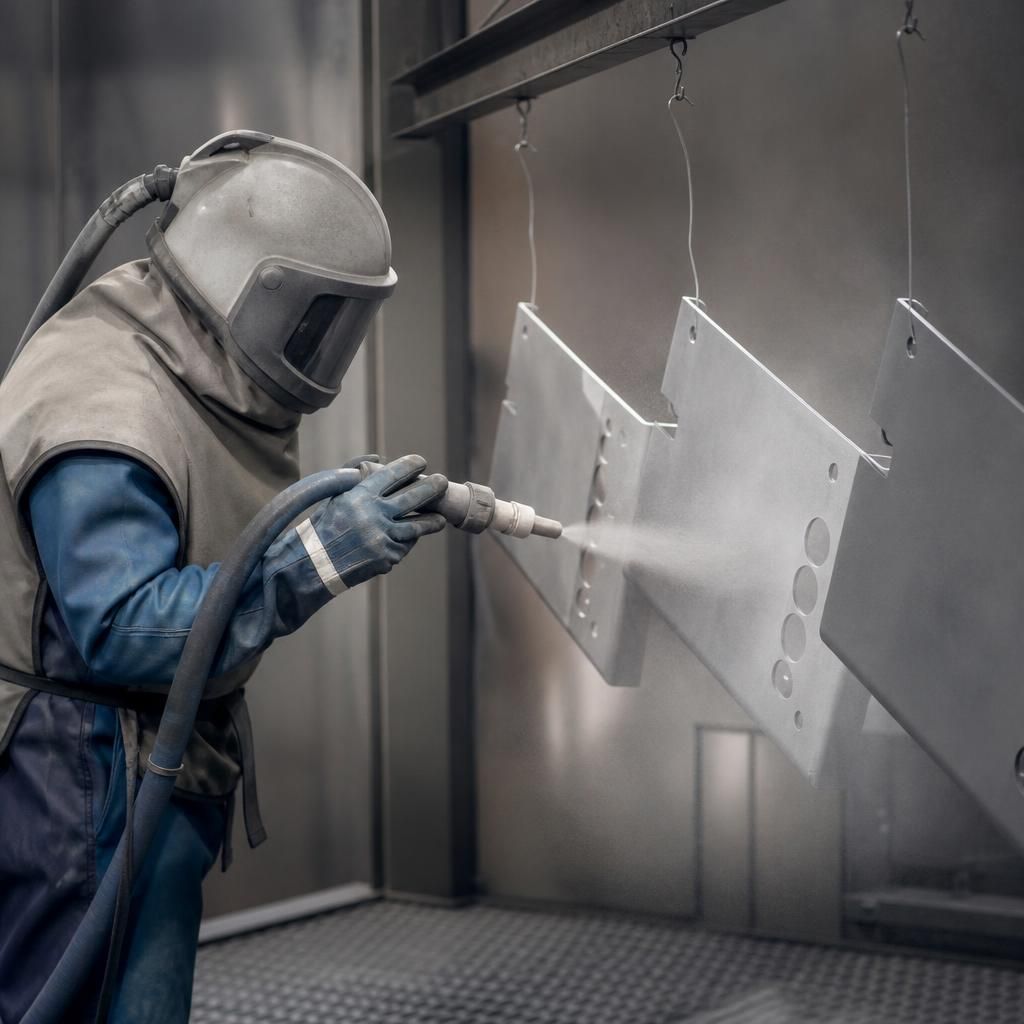
Abrasive blasting must be controlled to produce a consistent surface profile without damaging the substrate. The blasting media, pressure and technique should suit the metal and component thickness: excessive treatment can distort thin sections or create an unnecessarily rough finish, while insufficient treatment may leave mill scale, corrosion or weakly bonded residues in place.
After blasting, remove dust and loose abrasive thoroughly before the next preparation stage. The surface should then be checked for remaining scale, embedded media, sharp defects and uneven treatment. This creates a clean, uniform key for the powder coating and helps prevent adhesion problems that may not become visible until the coated part is handled or placed in service.
Discuss your metal surface preparation requirements
Discuss your component drawings, substrate, finish requirements and service conditions with the powder-coating team to establish the appropriate preparation route. This helps identify any masking, tolerance or fabrication considerations before the parts are processed.