

What specific pretreatment steps are crucial for enhancing the adhesion and longevity of powder coating on aluminium components?
Crucial pretreatment steps for aluminium components include thorough cleaning and degreasing, rinsing, etching or deoxidising, chemical conversion coating, controlled drying and final inspection. Together, these steps remove contaminants, prepare the surface profile and establish a stable base that helps the powder coating adhere and resist corrosion and premature deterioration.
The most important pretreatment controls for aluminium powder coating are substrate assessment, complete contaminant removal, consistent surface conditioning, correctly controlled conversion treatment, and protection of the prepared surface before powder application. These controls determine whether the coating bonds to the aluminium and whether the finished component can withstand moisture, handling, chemicals and outdoor exposure without premature failure.
Assess the aluminium before processing
Aluminium components should be examined before they enter the pretreatment line. Alloy type, surface condition, previous use and manufacturing method can all affect the treatment required. Extrusions, castings, sheet, machined parts and welded assemblies may carry different residues, including lubricants, drawing compounds, polishing media, adhesive traces, oxide films or welding deposits.
Part geometry also needs consideration. Recesses, joints, threaded holes and enclosed sections can retain cleaning chemicals or rinse water. Drainage and ventilation should therefore be checked, particularly on fabricated assemblies. Areas that cannot drain properly may remain contaminated or cause staining and coating defects later in the process.
Remove manufacturing residues without damaging the substrate
Cleaning must be strong enough to remove oil, grease, dirt and processing residues but controlled enough to avoid attacking the aluminium unevenly. A suitable alkaline or mildly acidic cleaning stage may be selected according to the alloy and contamination present. Aggressive or poorly controlled chemistry can cause excessive etching, discolouration or a non-uniform surface, while insufficient cleaning leaves a weak boundary layer beneath the powder film.
Where components have been handled extensively, fingerprints and other organic contamination are particularly important because they may not be visible after drying. Cleaning should be followed by a thorough rinse so that dissolved soils and chemical residues are removed rather than redistributed across the surface.
Control oxide and smut formation
Aluminium develops a naturally occurring oxide layer rapidly. Although this layer is protective in some applications, it is not always a suitable bonding surface for powder coating, especially where it is uneven, contaminated or mixed with residues from fabrication. Deoxidising or etching can remove or condition this layer and help produce a more consistent surface for subsequent conversion treatment.
Some alloys can develop a dark residue, often called smut, during alkaline cleaning or etching. If it is not removed, it can interfere with conversion coating and contribute to inconsistent appearance or adhesion. The treatment sequence must therefore be selected for the particular aluminium grade and monitored so that the surface is active and uniform without unnecessary material removal.
Apply chemical conversion treatment consistently
Conversion coating is a key adhesion and corrosion-control stage because it changes the aluminium surface chemically and provides a more receptive base for the powder film. The process depends on factors such as bath condition, concentration, temperature, contact time, solution coverage and rinse quality. Inadequate treatment may leave exposed or poorly conditioned areas; excessive or uneven treatment can produce staining, powdery deposits or variation between components.
All surfaces, including edges, corners and less accessible faces, need adequate contact with the treatment solution. Parts should be positioned to prevent air pockets and to allow liquid to drain rather than pool. Process checks should confirm that the treatment remains within its specified operating limits, with corrective action taken when contamination or chemical depletion is detected.
Prevent recontamination after pretreatment
A correctly treated surface can be compromised by contact with bare hands, dirty fixtures, shop dust, oil vapour or unclean handling equipment. Components should be handled with suitable clean gloves or other methods that do not transfer contamination. Racks, hooks and contact points should also be kept clean, while masking materials must be compatible with the process and positioned so they do not trap residue.
The interval between pretreatment and powder application should be controlled. Aluminium can re-oxidise or collect contamination if it is left exposed in unsuitable conditions. Prepared parts should be kept dry and protected from dust, condensation and unnecessary handling until they enter the coating stage.
Dry the component thoroughly
Drying is more than a cosmetic step. Water trapped in joints, recesses or folded sections can cause defects during curing, interfere with powder deposition and contribute to corrosion at vulnerable points. Residual treatment chemicals may create blistering, staining or loss of adhesion if they remain on the surface.
Components should be arranged so that water can drain and air can reach difficult areas. Drying conditions need to suit the component’s size, shape and construction, while avoiding practices that introduce fresh contamination. Particular attention is required around welds, deep profiles, threaded features and overlapping joints.
Verify the prepared surface before coating
Final inspection should combine visual checks with process records. The surface should appear clean and consistently treated, without visible oil, powdery deposits, water marks, excessive etching, untreated patches or foreign material. Coating personnel should also confirm that masking is secure, drainage holes are clear where required and the component is presented in the correct orientation for powder application.
For critical work, verification can include checks of bath chemistry, rinse quality, surface condition and coating performance using an agreed quality plan. Adhesion testing and corrosion-related testing may be appropriate for qualification or ongoing process control, but the method should reflect the component’s specification and end use. A test on a representative sample is more meaningful when the alloy, preparation and coating conditions match the production parts.
Coordinate pretreatment with the final service conditions
The required pretreatment standard should be based on where and how the aluminium component will be used. Interior parts with limited exposure may have different requirements from components exposed to rain, road contaminants, condensation, industrial pollutants or coastal conditions. Joint design, sharp edges, welds and areas where water can collect may also need additional attention because these locations are more vulnerable to coating breakdown.
Good pretreatment cannot compensate for unsuitable component design, contaminated materials or incorrect curing. It must work as part of a controlled sequence that includes appropriate powder selection, correct film formation and curing in accordance with the coating specification. When these stages are aligned, the aluminium has a stable, clean and chemically conditioned surface on which the powder coating can form a durable protective film.
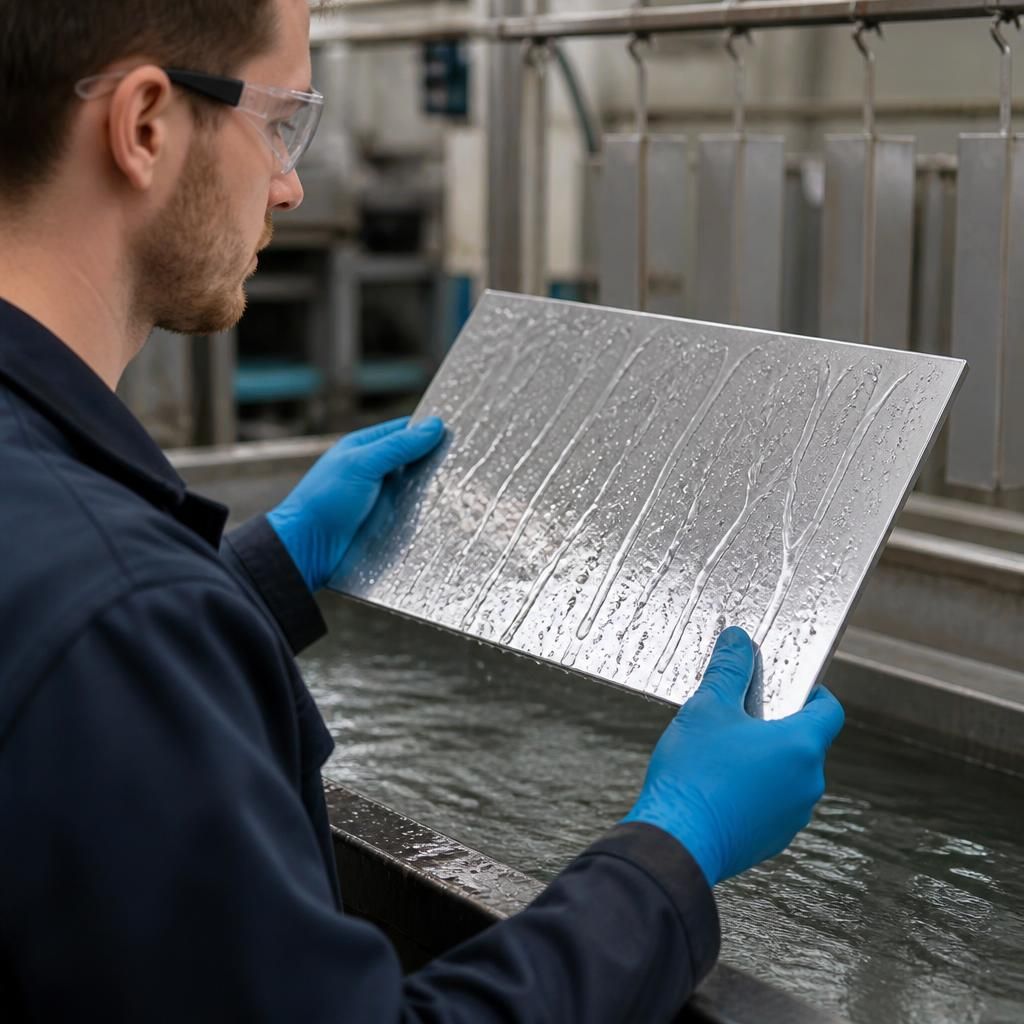
A practical check after cleaning and rinsing is whether the aluminium presents a continuous water film across its surface. Clean metal should allow water to sheet evenly, whereas beading or rapid breaks in the film can indicate residual oil, grease or handling contamination. This check helps identify incomplete cleaning before the component proceeds to conversion treatment and powder application.
The result should be considered alongside the specified chemical controls and visual inspection rather than used as a substitute for them. Complex shapes, recessed areas and fabricated joints may require particular attention because contamination can remain hidden even when the accessible faces appear clean.