

What differentiates edge powder coating from standard powder coating, and why is it crucial for aluminium components?
Edge powder coating is formulated and applied to achieve more consistent coverage around sharp corners, profiles and exposed edges than standard powder coating, where the electrostatic effect can draw powder away from these areas. This is crucial for aluminium components because incomplete edge coverage can leave vulnerable points where moisture, contaminants and corrosion may compromise the finish.
Edge powder coating differs from standard powder coating because it is specified and applied with particular attention to film build, adhesion and continuity at corners, cut-outs, returns and other difficult geometries. It is not necessarily a completely separate powder type; the distinction may involve the powder formulation, application settings, component preparation and inspection criteria used to achieve a reliable coating at the component’s edges.
Standard powder coating is generally designed to produce an even finish across accessible faces. On a straightforward, gently profiled aluminium panel, that may be sufficient. However, components with folded sections, narrow flanges, apertures, extruded profiles or sharp transitions require more careful control. The coating specification must account for the shape of the part rather than treating every surface as equally easy to coat.
The principal differences are usually found in four areas:
- Powder selection: the coating system may be chosen for its ability to form a consistent film on the specified substrate and geometry, while also meeting the required chemical, mechanical and weathering performance.
- Part preparation: edges may need deburring, cleaning and suitable pre-treatment so that loose material, machining residue and contaminants do not interfere with adhesion.
- Application control: gun position, spray angle, voltage, powder flow and the number of passes can be adjusted to suit corners and profiles instead of relying on one uniform application across the whole part.
- Inspection: the finished component is assessed with attention to edge continuity, visible thin areas, inclusions, adhesion and the specified overall film characteristics.
Aluminium makes this approach particularly important because it is frequently used in lightweight fabricated or extruded components with complex profiles. Its natural oxide layer can assist protection, but it also means that surface preparation and pre-treatment need to be controlled carefully. Any contamination or inconsistent preparation may affect how well the powder coating bonds to the substrate. Edges created by sawing, punching, machining or fabrication can also differ from the surrounding surface in smoothness and shape.
Geometry is a major factor. A very sharp external corner gives the coating less opportunity to form a continuous, well-supported film than a suitably radiused edge. Internal corners, narrow recesses and overlapping folds create different application challenges again. A specification that simply states a colour and a nominal coating type may therefore be incomplete for an aluminium component with several edge conditions. The drawing or coating brief should identify critical edges, visible faces, contact areas and any locations where the coating must maintain a defined appearance or protective function.
Edge preparation should normally be considered before coating rather than used to correct a design problem afterwards. Removing sharp burrs, avoiding loose swarf and providing practical radii where the design permits can make coating coverage more predictable. Drainage and venting also matter on fabricated or hollow sections, since trapped pre-treatment chemicals, water or air can interfere with processing and may create defects during curing. These requirements should be agreed between the designer, fabricator and coater before production, particularly for repeat batches.
The difference between a standard and edge-focused approach is also one of process control. A coater may need to establish how the component is hung, which surfaces are presented first, how the spray equipment is angled and whether difficult areas require a separate pass. Excessive powder application is not a dependable solution: it can affect appearance, create runs or disturb the intended finish. The aim is controlled, uniform coverage that suits the complete component and its service conditions.
Curing is another consideration. The powder must reach the required metal temperature for the specified time, and aluminium can transfer heat differently from heavier steel parts because of its mass, section thickness and profile. Thin extrusions, thick mounting points and mixed assemblies may not heat in the same way. The cure schedule should therefore be based on the component and powder system rather than assumed solely from the oven air temperature. Under-cure can reduce the coating’s performance, while unsuitable processing can affect appearance or the properties of the aluminium assembly.
Edge powder coating is crucial when an aluminium component will experience handling, outdoor exposure, condensation, cleaning chemicals, abrasion or contact with other parts. Edges are often the first locations to be affected by impact and the first areas examined when a finish begins to deteriorate. Consistent coverage helps maintain the intended barrier and appearance, but the correct coating still depends on the environment, required durability, colour, gloss, pre-treatment and substrate condition.
For a technically sound comparison, evaluate more than whether the finished surface looks smooth. Ask how the provider deals with aluminium pre-treatment, sharp and radiused edges, folded sections, hollow profiles, curing requirements and batch-to-batch consistency. The coating requirement should define the relevant acceptance criteria, including appearance, adhesion, film characteristics and any sector-specific performance requirements. Standard powder coating may be entirely suitable for simple aluminium parts; edge-focused powder coating becomes the more appropriate specification when the component’s geometry or operating conditions make edge performance critical.
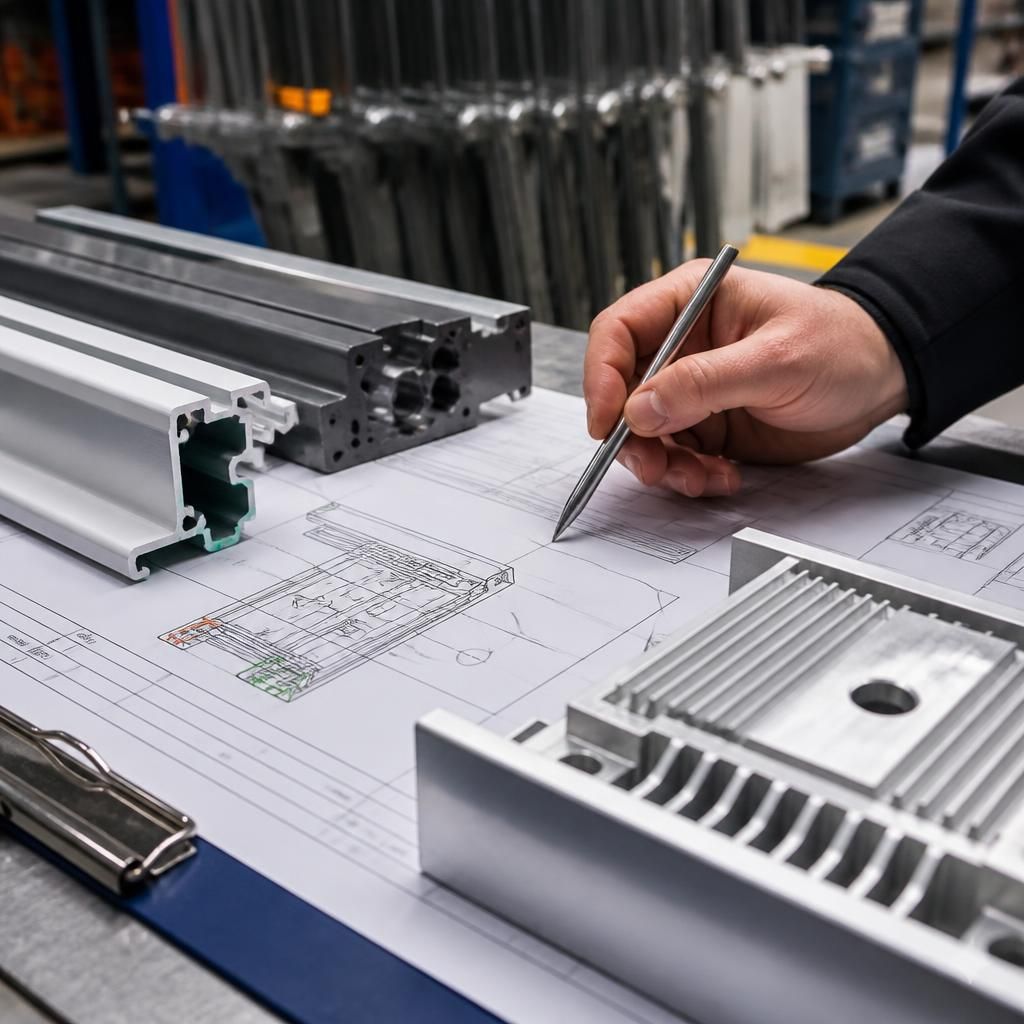
Edge powder coating must protect exposed aluminium without interfering with the component’s fit or function. Powder applied to a mating edge, threaded feature, bearing surface or earthing point can alter clearances, prevent reliable contact or affect assembly. For this reason, an edge-focused coating specification should distinguish between edges that require continuous protection and surfaces that need masking or controlled film build.
This is an important difference from treating every part as a simple decorative finish. The drawing should identify critical interfaces, masking points and acceptable coating limits alongside the required appearance. Controlled application around these areas helps preserve dimensional accuracy while maintaining protection on exposed aluminium edges.