

What factors should be considered when selecting the right powder coat finish for aluminium components?
Selecting a powder coat finish for aluminium components requires balancing the service environment, required durability, colour and texture, surface preparation, and the component’s design and dimensional tolerances. The coating must also be compatible with the aluminium substrate and curing requirements so the finished part delivers the necessary protection and appearance.
The right powder coat finish for an aluminium component is selected by matching the coating specification to the part’s function, appearance requirements, production process and inspection criteria. The most suitable choice is not simply the preferred colour or gloss level; it is the finish that provides the required protection and visual consistency without affecting assembly, performance or repeatability between batches.
Define the component’s duty before choosing the finish. Consider what the aluminium part must withstand during use, handling, transport and installation. Relevant factors may include contact with oils, cleaning agents, moisture, road contaminants, friction, impact, heat or electrical requirements. These conditions help determine whether the specification should prioritise chemical resistance, surface hardness, flexibility, insulation or ease of cleaning. A coating selected only for appearance may be unsuitable where the component is exposed to regular abrasion or aggressive substances.
Choose the appropriate powder chemistry. Different resin systems provide different balances of appearance, flexibility, chemical resistance and mechanical performance. A polyester-based system may be appropriate where exterior appearance and weathering performance are important, while other systems may be considered for internal applications or particular functional requirements. The choice should be based on the component’s actual use rather than a general preference for one type of powder. Where a part has several duties, the specification should identify the most demanding requirement and confirm that the proposed system is suitable for it.
Set clear appearance requirements. Colour should be identified using an agreed reference, sample or recognised colour standard, with acceptable variation defined before production. Gloss level, texture and visual uniformity should also be stated. Smooth finishes can highlight dents, scratches or surface irregularities, whereas textured finishes may provide a different visual effect and can be more forgiving of minor substrate variation. Metallic and special-effect powders may require particular attention to application consistency because the final appearance can be affected by spray technique, orientation and batch control.
For components assembled alongside other coated parts, consider whether all items need to match in colour, gloss and texture. Parts produced at different times or by different processes may show visible variation even when the nominal colour reference is the same. Retaining an approved sample and recording the agreed finish helps provide a practical comparison during inspection.
Consider the coating’s effect on assembly. Powder adds a measurable film to the component, so the specification should identify areas that must remain free from coating. These may include threads, bearing seats, earth points, electrical contact surfaces, locating faces and close-fitting interfaces. Masking requirements should be agreed from the drawings or samples, particularly where the coated part will be assembled with another component. Clear instructions reduce the risk of removing coating later or finding that the finished part no longer fits as intended.
Review the component’s geometry and handling requirements. Recesses, corners, apertures and concealed faces can affect how consistently powder is deposited and how the part is supported during coating and curing. Large or heavy components may also need suitable hanging or handling points that do not interfere with visible surfaces. These considerations do not change the selected colour or resin, but they can influence the achievable finish and should be included in the coating specification at the quotation or design stage.
Match the specification to the production process. The selected powder must be suitable for the available curing cycle and for the thickness and construction of the aluminium component. Assemblies containing different metals, inserts or heat-sensitive materials may need additional review. Drawings should identify areas requiring masking, the required coating thickness where relevant, and any surfaces that must remain uncoated. Providing complete technical information makes it easier to assess the finish consistently across repeat work.
Specify measurable acceptance criteria. A useful specification should cover:
- the agreed colour reference and acceptable visual variation;
- gloss and texture requirements;
- the powder system or performance class, where specified by the end use;
- required coating coverage and any critical surfaces;
- masking, racking and contact-point requirements;
- areas requiring particular resistance or functional performance; and
- the inspection method for appearance and finish quality.
Inspection should take place under consistent viewing conditions and should distinguish between an appearance issue and a functional defect. Runs, contamination, pinholes, poor coverage or visible damage may require investigation, while minor variation in a textured or special-effect finish may need to be assessed against the approved sample and agreed criteria.
Account for the complete supply chain. Aluminium components can be marked after coating by stacking, packaging, machining or installation. The selected finish should therefore be considered alongside packing materials, protection during transport and the method used to handle the parts. If the coating will be machined, drilled or fitted after application, confirm whether the exposed edges or altered areas need additional treatment.
For repeat production, retain the approved powder reference and coating instructions so future batches can be compared against the same requirements. Where the finish is safety-critical, highly visible or used across multiple component sizes, a trial part or representative sample can help confirm the colour, masking, assembly fit and overall appearance before full production. A clear, documented specification gives the coating provider and the customer the same basis for selecting and checking the finish.
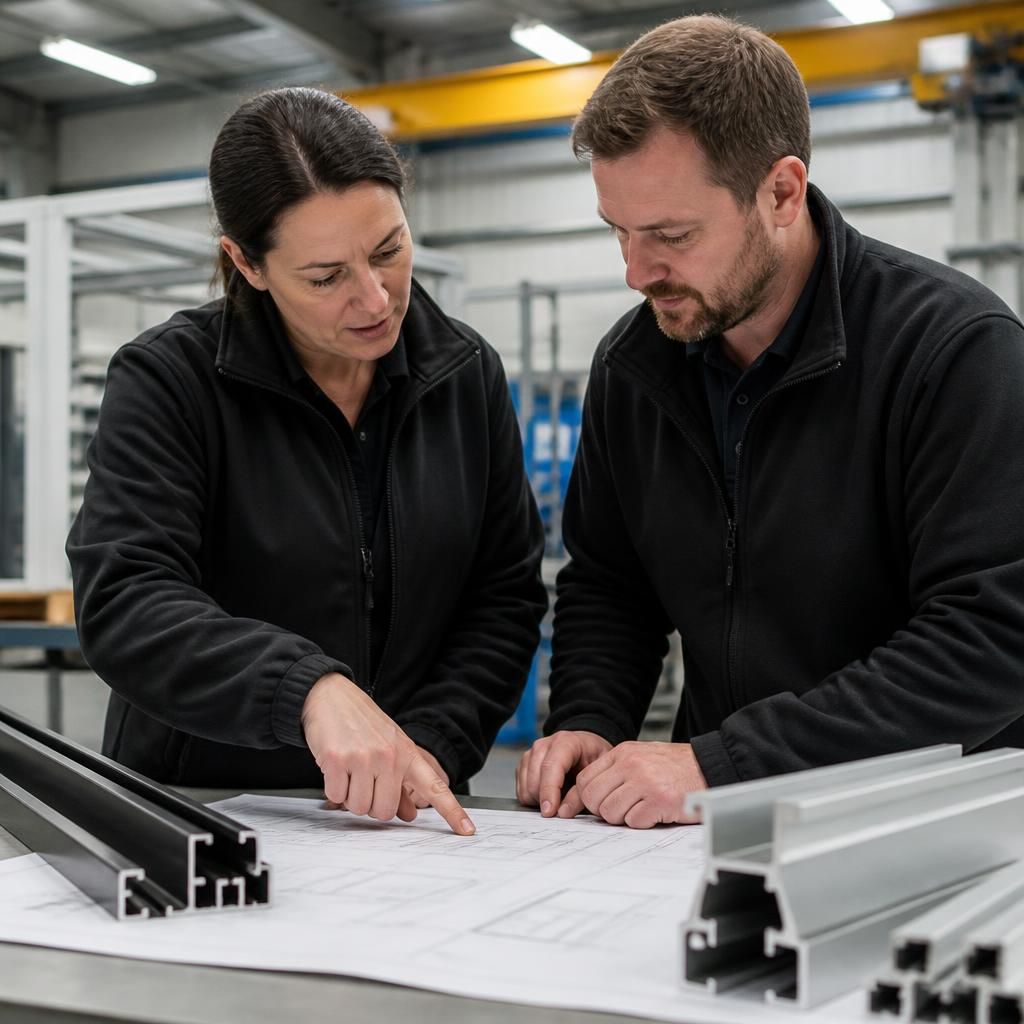
Project and end-user specifications should be checked before selecting a powder coat finish for aluminium. A component may need to meet defined requirements for coating classification, pretreatment, colour range, gloss, adhesion or resistance testing, particularly when it forms part of a wider construction or manufactured system. These requirements can limit the suitable powder systems and should take priority over an informal preference for a particular appearance.
Ask for the relevant coating requirements, drawings and inspection criteria at the specification stage. Where the component is supplied into an established product range, the finish should also be compatible with adjacent materials and any documented approval process. Confirming these details before coating helps prevent a visually acceptable finish from being rejected because it does not meet the project’s technical or procurement requirements.
Discuss the Right Powder Coat Finish for Aluminium Components
Discuss your aluminium components with the powder coating team and provide the relevant drawings, samples and finish requirements for review. This will help establish a coating specification suited to the component’s intended use and production needs.