

What are the key benefits of choosing powder coated aluminium for industrial applications?
Powder coated aluminium provides industrial components with a durable, uniform finish that helps protect against corrosion, wear and weathering. It also offers consistent colour and texture, making it suitable for applications where long-term performance and a professional appearance are required.
Powder coated aluminium is valuable in industrial applications because it combines aluminium’s low weight and structural practicality with a hard, engineered surface finish. This can help manufacturers reduce component mass, simplify handling and achieve a consistent specification across batches without using a heavier steel substrate or relying solely on liquid paint.
Low weight with useful mechanical performance
Aluminium is considerably lighter than many commonly used engineering metals, which can make components easier to move, install and integrate into larger assemblies. The weight advantage is relevant to fabricated panels, housings, frames, covers, enclosures and transport-related parts. Powder coating adds a protective surface without fundamentally changing the lightweight character that makes aluminium useful in the first place.
Lower component mass can also assist with design decisions where lifting, mounting or transport requirements affect the overall product. The coating specification still needs to be matched to the substrate, forming method and intended service conditions; powder coating does not replace the need for suitable aluminium grade, thickness or structural design.
Reliable surface coverage on complex components
Powder is applied electrostatically before being cured, allowing the coating to form a continuous film over appropriately prepared surfaces. This is useful for fabricated components with profiles, apertures, folds and other geometric features. Careful racking and application are important, particularly around recesses, internal faces and contact points where the electrical charge may affect powder deposition.
For industrial production, the process can provide repeatable results when pretreatment, powder selection, application and curing are controlled. That repeatability helps a manufacturer specify a finish across individual parts and production batches, reducing variation caused by inconsistent manual application.
Resistance suited to demanding service conditions
A correctly selected powder coating can provide resistance to routine handling, abrasion and exposure to moisture. This is useful on equipment that is assembled, transported, cleaned or installed in environments where an uncoated aluminium surface would not provide the required appearance or surface characteristics.
Performance depends on the resin chemistry, film build, pretreatment and exposure conditions. Industrial parts exposed to chemicals, elevated temperatures, aggressive cleaning agents or continuous outdoor service should be assessed against the relevant coating data before a specification is agreed. A coating specialist can use the component’s operating environment to identify a suitable system rather than treating every powder finish as interchangeable.
Efficient design and specification flexibility
Powder coated aluminium can be specified for functional components as well as visible external parts. The finish may be used to identify equipment, distinguish product ranges or support a defined appearance across panels and assemblies. A broad choice of coating formulations and surface effects allows the specification to balance appearance with requirements such as chemical resistance, hardness or external exposure.
This flexibility is particularly useful when a business uses the same aluminium component in more than one application. The substrate and manufacturing method may remain similar while the coating system is adjusted to suit the environment, provided the revised specification is technically compatible with the part.
Reduced reliance on solvent-based application
Powder coating is supplied as a dry powder rather than a liquid coating carried in conventional organic solvents. This can reduce the use of solvent-based materials during application and avoids the need to manage liquid paint residues in the same way. Unused powder may also be recoverable in suitable application systems, although recovery arrangements and material suitability vary.
This is one reason powder coating is considered during industrial process reviews, but environmental performance should be assessed across the full system. Pretreatment chemicals, curing energy, packaging, transport and end-of-life recycling all affect the overall impact. Aluminium’s recyclability can support responsible material choices, while the coated part may need an appropriate recycling route at the end of its service life.
Practical benefits for production
- Lightweight parts can be easier to handle during fabrication, finishing and assembly.
- A controlled coating process can help maintain a repeatable specification across batches.
- The finish can be applied to many formed and fabricated aluminium components, subject to suitable preparation and curing.
- Coating selection can be aligned with the part’s exposure, cleaning regime and functional requirements.
- A finished surface can reduce the need for additional decorative treatment after coating.
The best results depend on decisions made before coating begins. Aluminium should be clean and suitably pretreated, welds and sharp edges should be considered, and components must be designed for effective racking and oven curing. Contamination, trapped residues, unsuitable masking or incorrect cure conditions can affect adhesion and final performance.
For that reason, the key benefit is not simply the powder material itself but the combination of an appropriate aluminium component, a correctly specified coating system and controlled preparation and application. Industrial powder coating providers can review the component geometry, quantity, operating environment and required finish before recommending the most suitable approach.
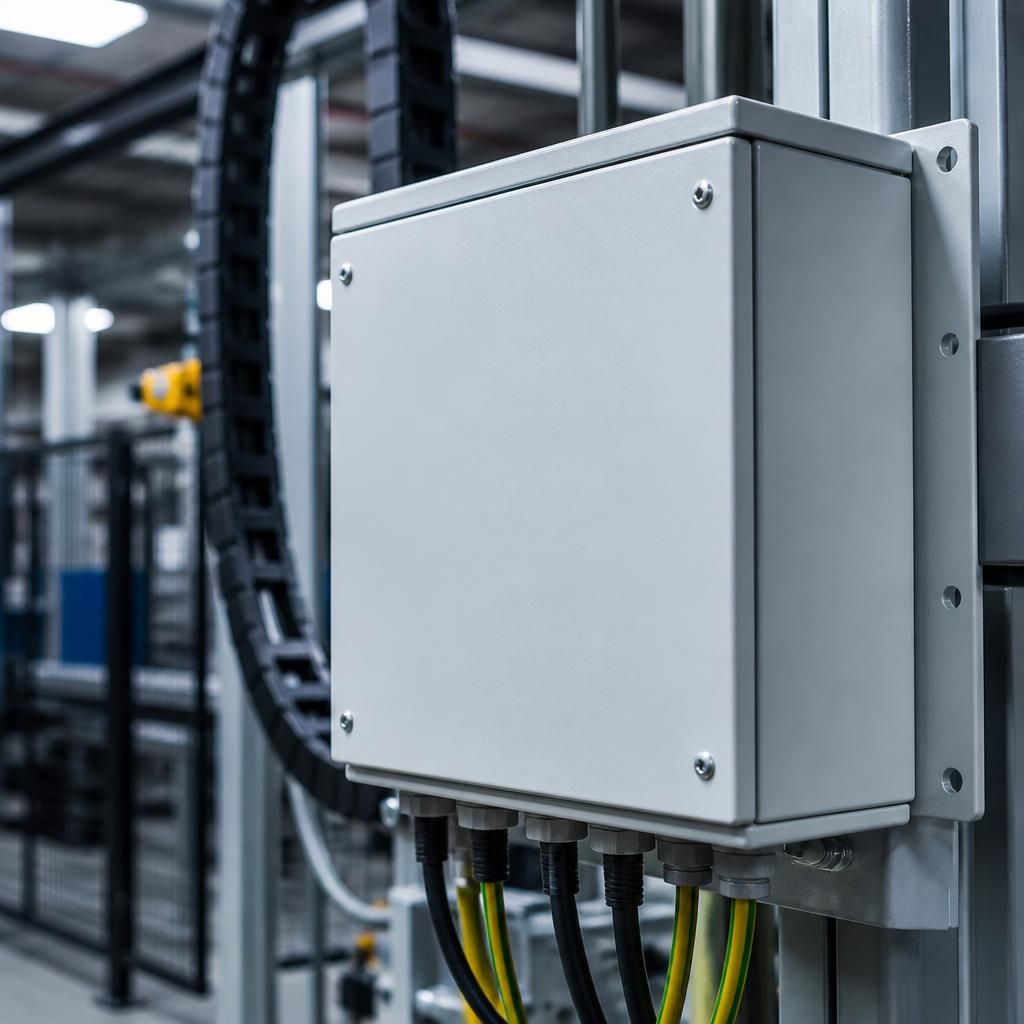
Powder coating can give aluminium an electrically insulating surface, which is useful for selected industrial housings, covers, brackets and other metal components where the finished surface should not provide direct electrical contact. This can support safer separation between the aluminium substrate and adjacent conductive parts, provided the coating system is suitable for the application.
The insulating effect depends on coating continuity, film thickness, edge coverage and the condition of the finished part. Contact points, earthing locations and areas requiring electrical bonding must be identified before coating and masked or treated accordingly. Powder coating should therefore support—not replace—the product’s electrical design, testing and applicable safety requirements.
Discuss your powder coated aluminium requirements
Discuss your powder coated aluminium requirements with a specialist, including the component’s operating environment, geometry and required finish. This information can help determine whether the proposed coating system is suitable for the application.