

What are the specific advantages of using electrostatic aluminium powder spray compared to other coating methods?
Electrostatic aluminium powder spray uses an electrical charge to draw dry powder evenly onto grounded aluminium, providing efficient coverage and a uniform finish with less reliance on solvent-based materials than wet paint. Once cured, the coating offers strong resistance to corrosion, impact and everyday wear, making it a durable alternative for many metal components.
The main advantages of electrostatic aluminium powder spray are precise material application, repeatable film build, broad finish and colour flexibility, and a coating system that avoids many of the handling issues associated with liquid paint. It is particularly useful where aluminium components need a controlled, hard-wearing surface without changing the underlying shape or appearance more than necessary.
More controlled application: Unlike liquid paint, powder is applied as a dry material rather than being diluted to a spraying viscosity. This removes the need to balance paint, thinner and hardener during application. The coater can select a powder system and application setting suited to the component, then cure the deposited layer to form the finished film. This supports more repeatable production work, especially where the same aluminium parts are processed in batches.
Reduced risk of liquid-paint defects: Wet coatings can be affected by runs, sags, solvent entrapment and uneven drying if application or environmental conditions vary. Powder coating does not rely on solvent evaporation to leave the film behind. Correct preparation and curing remain essential, but the process avoids several defects associated specifically with liquid paint drying. The result can be a cleaner and more predictable surface on correctly prepared components.
Reliable film thickness: Powder application allows the coating specification to be based on a defined film build rather than repeated wet coats. This can be advantageous on aluminium fabrications with multiple faces, apertures or formed sections, provided the component is designed and positioned for effective coating. Film thickness still needs to be checked because excessive build can affect fit, edge definition and the appearance of textured finishes.
Greater design flexibility than some surface treatments: Compared with anodising or other conversion treatments, powder coating offers a wider choice of colours, gloss levels and surface textures. It can therefore be selected to match a product design, identify components, or provide a consistent appearance across aluminium parts made by different fabrication methods. The exact performance depends on the powder chemistry, pretreatment and curing conditions, so the finish should be specified for its intended environment rather than chosen on appearance alone.
Useful build on edges and profiles: Aluminium components often include folded edges, channels, brackets and irregular profiles that are difficult to coat consistently by manual brushing or rolling. Electrostatic spraying is suited to applying powder across exposed surfaces before curing. Complex geometry still requires skilled racking, gun positioning and preparation: recessed areas can receive less material, while corners and narrow gaps may need particular attention because of the Faraday-cage effect.
No wet coating stage during transport and handling: Powder is supplied and applied in dry form, so there is no liquid film that can be disturbed by minor contact before curing. After the specified cure has been achieved and the component has cooled, parts can be handled as finished coated items. This differs from liquid systems that may require careful protection while successive layers dry or harden.
Potentially simpler coating specifications: Many aluminium parts can be completed as a single powder coating system when the selected product, pretreatment and service conditions allow it. Other applications may require a primer, topcoat or specialist powder. The important comparison is not simply powder versus paint, but whether the proposed system provides the required adhesion, appearance, chemical resistance, flexibility and exposure performance for the component.
Electrostatic aluminium powder spray is not automatically the best choice for every part. Tight dimensional tolerances, heat-sensitive assemblies, deep internal recesses and areas that must remain electrically conductive may require masking, alternative preparation or another coating method. Aluminium must also be thoroughly cleaned and suitably pretreated because the coating’s performance depends on the condition of the substrate as well as the powder itself. For B2B production, the practical decision should therefore consider component geometry, batch size, required finish, operating environment, curing limitations and inspection requirements together.
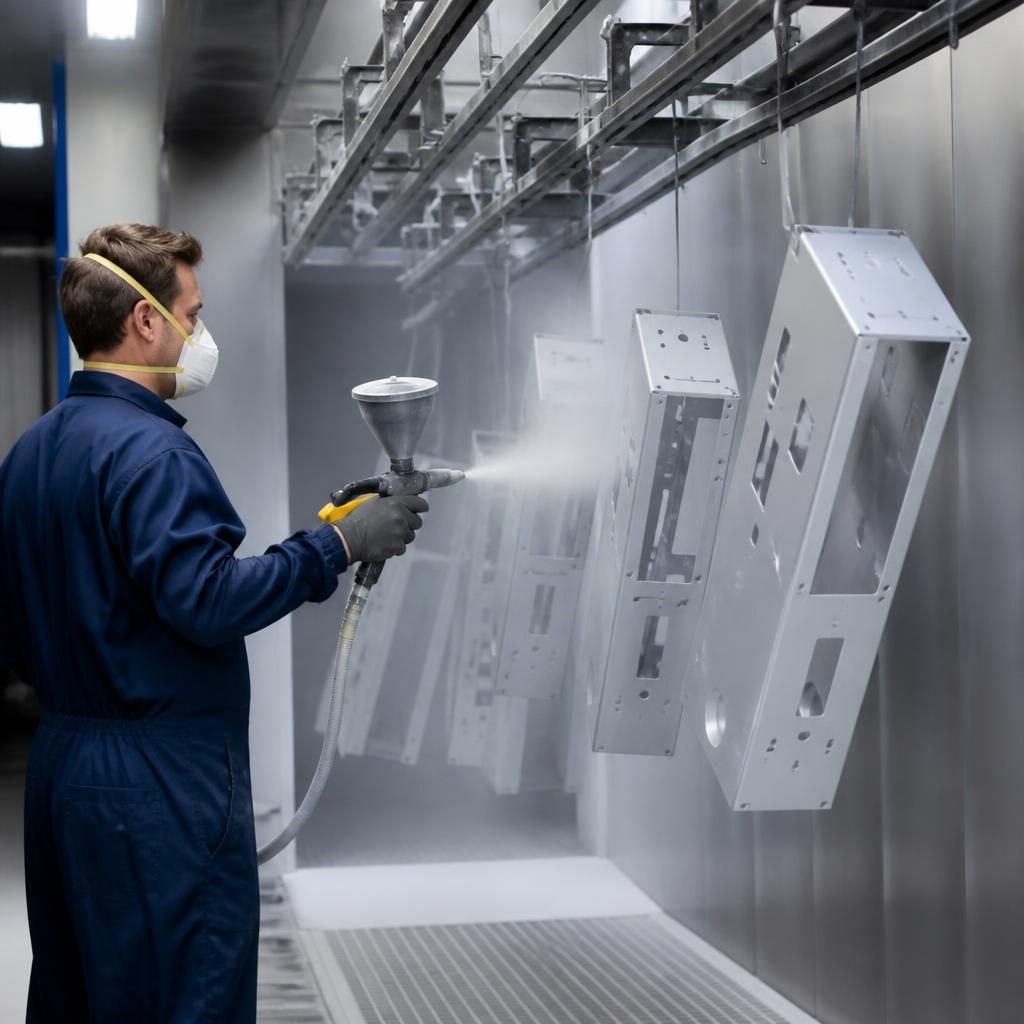
A further advantage of electrostatic aluminium powder spray is that the coating is applied without a solvent carrier. Compared with solvent-borne liquid systems, this reduces the need to handle thinners and hardeners during application and avoids leaving solvent residues in the deposited film. For manufacturers and fabricators, that can simplify the coating specification and reduce the variables involved in achieving the required finish, provided the aluminium is correctly pretreated and the powder is cured to its specified conditions.
Discuss Your Electrostatic Aluminium Powder Spray Requirements
Discuss your aluminium components with the powder-coating team to assess whether electrostatic powder spray is suitable for the geometry, operating environment and required finish. Providing drawings, dimensions and coating requirements will help establish the appropriate preparation, powder system and curing specification.