

What specific factors should I consider when selecting a specialist for repairing corrosion on powder-coated metal?
Choose a specialist that can accurately assess the corrosion, identify its underlying cause and define suitable preparation, repair and recoating methods for the component’s metal, existing finish and working environment. Also consider their experience with comparable industrial parts, inspection and quality-control procedures, ability to manage batch or specialist coating requirements, and collection and delivery arrangements across the Midlands.
Select a corrosion-repair specialist by comparing their understanding of the component’s duty, the condition and compatibility of the existing finish, the standard of appearance required, and the evidence they can provide that the completed work meets your specification. The best choice is not simply the provider offering the lowest recoating price; it is the one that can show how the repair will remain suitable for the component’s operating environment and intended service life.
Consider the component’s working conditions. Corrosion repair should be judged against the exposure the part will face after treatment. Relevant factors include indoor or outdoor use, contact with water or condensation, road salt, industrial pollutants, chemicals, abrasion, impact and elevated temperatures. A coating system suitable for a protected indoor enclosure may be inappropriate for exposed structural or automotive components. Ask the specialist to relate the proposed finish to the actual environment rather than recommending a generic coating.
Check that the proposed repair is technically compatible. Powder-coated metal may include mild steel, galvanised steel, aluminium or assemblies containing more than one metal. The existing coating may also vary in thickness, adhesion, chemistry, colour and condition. The specialist should be able to explain how these variables affect the repair and whether the existing coating can remain in sound areas. Where corrosion has reduced the metal section, distorted the part or affected welded joints and edges, recoating alone may not restore the component’s structural function. A responsible provider will identify when additional fabrication, replacement or engineering review is needed.
Define the required appearance before work begins. For visible components, specify the acceptable colour, gloss level, texture and degree of visual blending. A local touch-up and a full strip-and-recoat can produce different results, particularly where the original powder coating has weathered or faded. Ask how the specialist will deal with colour variation between the repaired area and adjacent surfaces, and whether the finished part will be assessed under agreed lighting and viewing conditions. This prevents an appearance dispute after the work is complete.
Look for clear acceptance criteria. A quotation should identify what is included, such as removal of corrosion, treatment of damaged areas, masking, recoating, curing, inspection and any reassembly. It should also state what is excluded, including hidden corrosion, damage discovered after stripping or repairs requiring metalwork. Agree measurable requirements where relevant, such as coating coverage, permitted visual defects, adhesion expectations, film thickness or the treatment of exposed edges and recesses. Clear criteria make it easier to compare providers and evaluate the finished component objectively.
Ask how parts will be protected during handling. Powder-coated components can be damaged by unsuitable lifting equipment, stacking, abrasive contact and poor packaging after repair. This matters particularly for long, heavy, thin-walled or geometrically complex parts. Confirm how items will be supported, masked, moved and packaged, and whether fixing points, threads, bores, bearing seats and mating faces will be protected from coating build-up. Good handling arrangements reduce the risk of a completed repair being damaged before installation.
Review traceability and technical records. For components used in production, construction or safety-relevant applications, retain a record linking the work to the part or batch. Useful documentation can include the agreed specification, coating product details, preparation and curing records, inspection findings, photographs of significant corrosion and any deviations approved by the customer. Traceability is particularly valuable if a recurring corrosion problem later needs to be investigated across multiple components.
Examine how the specialist manages uncertainty. Corrosion is not always visible at the outset. Stripping can reveal pitting, corrosion beneath the coating, contamination, poorly sealed joints or damage around fasteners. Before appointing a provider, establish how newly discovered conditions will be reported, who will authorise additional work and how costs will be controlled. A written decision process is preferable to proceeding with unapproved alterations or returning a component with concealed defects.
Consider the practical scope of the service. If parts require dismantling, masking, plugs, replacement fixings, post-coating assembly or special packing, confirm who is responsible for each activity. Check whether the provider can accommodate the component’s dimensions, weight, geometry and batch requirements, and whether your drawings, coating schedule or customer specification can be incorporated into the job documentation. These details are often more important than a headline price because they determine whether the repaired parts can be returned to production without further work.
Before making a decision, compare written proposals using the same information: component material and dimensions, corrosion photographs, required appearance, operating environment, quantity, inspection requirements and delivery arrangements. A technically credible specialist should explain the limits of the proposed repair, identify decisions that require your approval and provide enough detail for you to understand what will happen to the component and how the result will be judged.
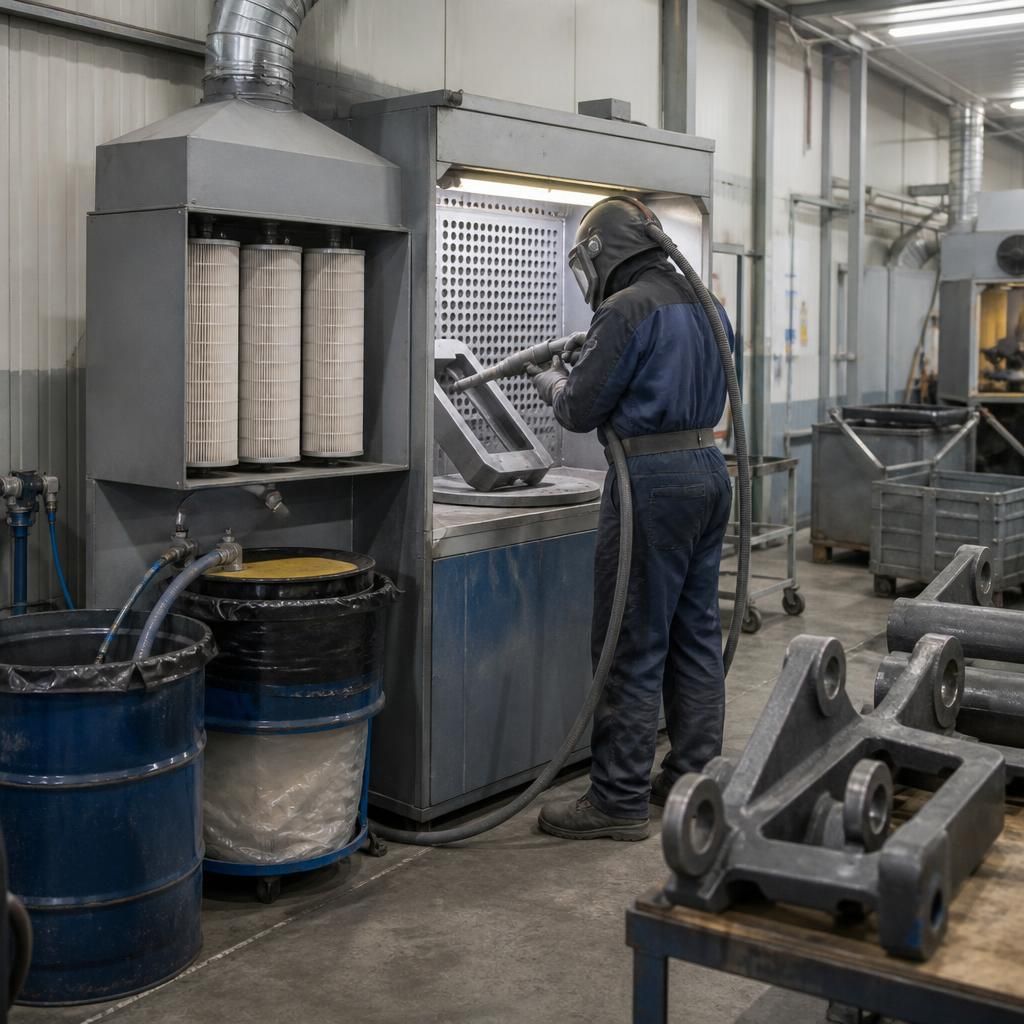
Environmental and waste controls are also relevant when selecting a corrosion-repair specialist. Stripping powder coating and removing corrosion can produce dust, spent abrasive and contaminated residues that must be contained, handled and disposed of appropriately. Ask how the provider controls airborne debris, separates waste streams and prevents removed material from contaminating other components or work areas.
Where the existing coating or substrate may contain hazardous contamination, confirm that the proposed preparation method is suitable and that the resulting waste will be managed through an appropriate disposal route. Clear answers on these points indicate that the specialist has considered the complete repair process, not just the application of a new powder coating.