

What specific qualities should I look for in a metal shot blasting service to ensure effective removal of defective coatings and optimal surface preparation?
Look for a metal shot blasting service that assesses the substrate and defective coating before selecting the appropriate abrasive, blast pressure and technique. It should also inspect the prepared surface for consistent coating removal, suitable surface profile and protection of the component’s dimensions and condition.
A suitable metal shot blasting service should combine substrate knowledge, controlled blasting, careful component handling and verifiable quality checks. It should be able to explain how it will remove the defective coating without creating unacceptable distortion, loss of detail, contamination or damage to the metal, and should provide a clear process for confirming that the parts are ready for their next finish.
Relevant experience with industrial components
Choose a service familiar with the type, size and use of components being treated. Structural fabrications, machined parts, castings, pressed sections and automotive components can respond differently to blasting. The service should understand how sharp edges, welds, recesses, drilled holes, threads and thin sections affect both access and the risk of over-processing.
Experience should also cover the coating being removed. Powder coatings, paint systems, scale, corrosion products and mixed or layered finishes may require different preparation methods. A competent provider will identify whether the existing coating can be removed by shot blasting alone or whether local stripping, masking or another preparatory operation is needed.
Controlled and adjustable equipment
Effective blasting depends on more than using a powerful machine. Look for equipment that allows the operator to control factors such as abrasive type, particle size, air or wheel intensity, exposure time, nozzle distance and angle. Consistent control is particularly important when a batch contains parts with different thicknesses or geometries.
The service should maintain its blasting equipment properly and keep abrasive in a suitable condition. Contaminated, degraded or incorrectly sized media can reduce coating removal efficiency and transfer unwanted material to the substrate. Enclosed equipment, appropriate extraction and effective separation of spent material also help maintain process control and reduce dust within the work area.
A defined preparation and testing method
A reliable provider should be willing to establish the process before treating the full order. For unfamiliar parts, a test area or sample component can help confirm that the selected method removes the defective coating while retaining important features. This is useful where the coating is unusually thick, strongly bonded, layered or applied over a relatively thin metal section.
Ask how the service will deal with areas that should not be blasted. Suitable masking or protection may be required for precision faces, internal bores, threads, bearing seats, seals, labels and other surfaces that must remain undamaged. The provider should also explain how blasted parts will be turned, supported and transferred so that prepared surfaces are not marked or contaminated afterwards.
Evidence of consistent quality
Quality control should cover more than visual appearance. Depending on the component and its next coating, relevant checks may include:
- confirmation that defective coating, corrosion and loose material have been removed;
- inspection for embedded abrasive, residual dust, flash rust or other contamination;
- assessment of the surface condition and suitability for the specified subsequent finish;
- checks for distortion, damaged edges, blocked holes or loss of critical detail; and
- batch identification and records showing how the parts were processed.
Where the parts have defined technical requirements, ask whether inspection findings can be documented and linked to the relevant batch. Clear records make it easier to investigate an inconsistent result and to reproduce an acceptable process on repeat work.
Understanding of what happens after blasting
Freshly blasted steel and other metals may be more susceptible to contamination or oxidation than coated parts. A capable service should explain how the components will be protected between blasting and the next operation. This may involve suitable packaging, dry handling, controlled storage or coordination with the company applying the replacement coating.
The service should also identify any limitations that could affect the final result. For example, blasting may expose pre-existing pitting, weld irregularities, porosity, dents or repairs that were hidden by the old coating. These conditions are characteristics of the component rather than defects created by the blasting process, so they should be reported rather than concealed.
Safe, organised handling and communication
Industrial components need suitable lifting, loading and storage arrangements, particularly where they are large, heavy or vulnerable to impact. Check that the provider can handle the component safely, keep parts from different jobs separated and return them in a condition suitable for inspection or onward coating.
Before work begins, the quotation or job specification should identify the parts, required level of removal, areas to protect, expected finish, packaging requirements and any acceptance criteria. Clear communication at this stage is a useful indicator that the service understands the technical purpose of the work rather than treating every item as a standard blasting job.
For businesses comparing providers, the strongest evidence is a combination of relevant experience, controlled equipment, a willingness to test and document the process, and a clear understanding of how the prepared metal will be used afterwards. Those qualities reduce the risk of incomplete coating removal, damaged components and an unsuitable surface for the replacement finish.
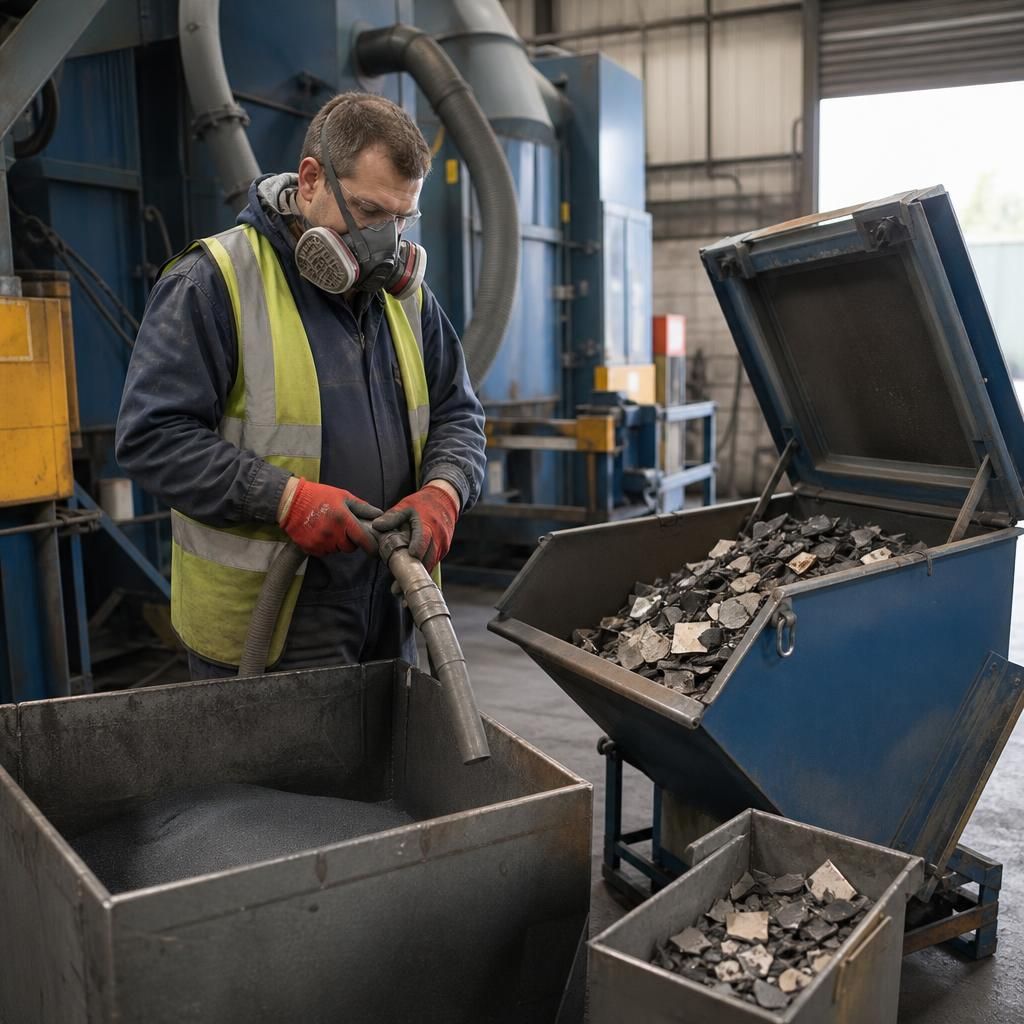
A further quality to look for is disciplined management of spent abrasive and removed coating. The service should separate waste from reusable media where appropriate, prevent debris from being transferred between jobs and store removed material securely before its onward handling. This is particularly important when old coatings contain substances that require controlled waste arrangements.
Good waste control also supports surface preparation: degraded or mixed abrasive can contaminate the component and make the blasting result less consistent. Ask how the provider prevents cross-contamination between different materials and how waste streams are identified, contained and documented.