

What specific benefits does a thermoset topcoat provide for metal components in terms of chemical and abrasion resistance?
A thermoset topcoat forms a permanently cross-linked film during curing, giving metal components strong resistance to many chemicals, oils and solvents, as well as abrasion from handling, friction and service conditions. Its performance depends on the coating formulation, film build and surface preparation, but it provides a tougher protective layer than an uncured or purely decorative finish.
A thermoset topcoat is the final, fully cured layer in a two-coat powder coating system. Its cross-linked structure helps preserve the coating barrier when a metal component is exposed to chemical contact, repeated rubbing, impact from handling or abrasive particles. This protects the underlying coating and substrate, provided the resin, film thickness, curing schedule and preparation are suitable for the service conditions.
Chemical resistance. Once cured, the topcoat forms a stable film that is less prone to softening, swelling or dissolving than an uncured coating. This can help components withstand contact with substances such as cleaning agents, fuels, hydraulic fluids, processing chemicals and lubricants. Resistance is not universal: concentrated chemicals, elevated temperatures, prolonged immersion and repeated contamination can challenge even a well-applied coating. The specific formulation should therefore be selected against the actual chemicals, concentration, temperature and exposure time involved.
In a two-coat system, the topcoat provides an additional barrier over the base layer. If the surface remains continuous, it reduces the opportunity for liquids or vapours to reach the primer or metal beneath. This is particularly important where contamination is frequent or where cleaning is part of normal maintenance. A suitable topcoat can also make the finished surface easier to clean because residues are less likely to penetrate the coating film.
Abrasion resistance. Abrasion occurs when a surface is worn by sliding contact, repeated loading, contact with packaging or movement of particulate material. A thermoset topcoat is designed to retain its integrity under this type of mechanical action, helping to limit scuffing, powdering and loss of the protective film. The result is not simply a better appearance: reducing wear helps preserve the continuous barrier that separates the metal from moisture and contaminants.
The level of abrasion resistance depends on more than the word “thermoset”. Resin chemistry, additives, gloss level, cure state and film build all influence the result. A coating designed for interior equipment may not be the best choice for components exposed to sharp aggregate, heavy sliding contact or frequent impact. Where wear is a major concern, the intended contact conditions should be discussed before selecting the powder system rather than relying on a general-purpose finish.
Why the topcoat matters in a two-coat system. The basecoat and topcoat perform complementary roles. The lower coat may provide adhesion, corrosion protection or a foundation for the final finish, while the topcoat contributes surface durability and resistance to the working environment. The top layer must bond properly to the layer beneath it and cure without defects. Poor intercoat adhesion, contamination, pinholes or insufficient coverage can create routes through which chemicals and moisture reach lower layers, reducing the expected protection.
Factors that determine real-world performance include:
- Surface preparation: oil, rust, mill scale, dust and other contaminants can prevent reliable adhesion and create weak points.
- Application consistency: uneven coverage, excessive thinness and defects at edges or recesses can leave vulnerable areas.
- Curing: the coating must reach the required cure conditions throughout the component. Under-cured material may have reduced hardness and chemical resistance, while unsuitable curing can affect the finish and intercoat bond.
- Component design: sharp edges, joints, threaded sections and areas that trap chemicals require particular attention during preparation and application.
- Service conditions: temperature, exposure duration, cleaning methods, impact and the presence of abrasive contaminants should all be considered together.
For demanding applications, resistance should be assessed using relevant technical data, supplier guidance or testing against representative chemicals and wear conditions. A test panel or sample component can help identify changes in colour, gloss, hardness, adhesion or surface condition before production parts are processed.
A thermoset topcoat therefore provides its greatest value when it is treated as part of a specified coating system rather than as an isolated decorative layer. Correct preparation, compatible coats and controlled curing allow the cross-linked finish to deliver stronger protection against chemical attack and mechanical wear while helping the metal component retain a sound, serviceable surface.
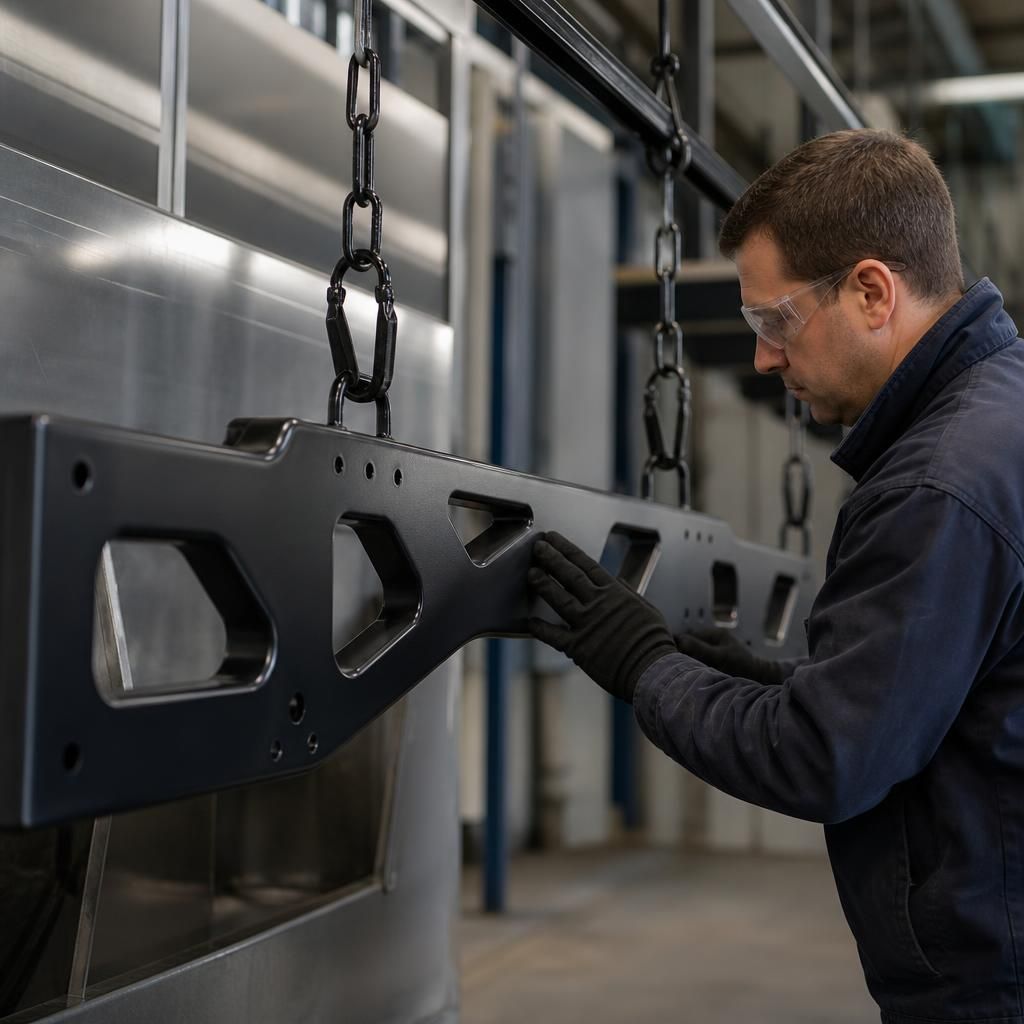
Chemical resistance and abrasion resistance protect a thermoset topcoat from different types of failure, so they should be assessed as separate requirements. Chemical resistance concerns the coating’s ability to remain stable when exposed to liquids, vapours or residues. Abrasion resistance concerns its ability to withstand physical wear without excessive scuffing, thinning or loss of surface material.
This distinction matters when specifying a coating for metal components. A part may encounter frequent cleaning but little friction, or repeated sliding contact with minimal chemical exposure. The topcoat should therefore be evaluated against the actual combination of hazards rather than selected on a general claim of durability. Technical information for the proposed system should identify relevant chemical exposure and wear performance, with representative samples used where the operating conditions are particularly demanding.
Discuss Your Chemical and Abrasion Resistance Requirements
Discuss your component’s operating environment, chemical exposure and wear conditions with our Midlands powder coating specialists to help identify a suitable thermoset topcoat system. Providing details of the metal, service conditions and required finish will support a more informed coating specification.