

What specific surface preparation is required before applying powder coating to galvanised steel to ensure optimal adhesion?
Before powder coating, galvanised steel should be thoroughly degreased, cleaned of dirt and zinc corrosion products, and lightly abraded or sweep blasted to create a sound key without removing excessive zinc. Any residue must be removed, the surface rinsed where applicable and dried completely before applying the powder coating.
Optimal adhesion to galvanised steel depends on preparing a stable zinc surface rather than coating directly over bright, smooth or contaminated galvanising. The preparation specification should include condition assessment, removal of contaminants and unstable zinc products, controlled profiling, suitable chemical pre-treatment where required, and confirmation that the surface is fully dry and compatible with the powder-coating system.
Preparation should begin with an inspection of the galvanised coating and the component itself. Check for oil, marking ink, adhesive residue, storage stains, white rust, loose zinc, sharp runs, ash inclusions and areas where the zinc coating is damaged. Pay particular attention to recesses, overlaps, folded edges, weld zones, holes and contact points, as these can retain contamination or have a different surface condition from the surrounding steel.
The condition of the zinc is important. Firm, well-bonded galvanising can form a suitable base after controlled preparation, but powder should not be applied over powdery white corrosion, flaking material or loosely attached residues. Any damaged or unstable area should be dealt with according to the coating specification, with exposed steel and repaired galvanising assessed separately. If the zinc layer has been heavily weathered or chemically attacked, the required treatment may differ from that used on recently galvanised work.
Where abrasive preparation is selected, it must be controlled to create a uniform key without unnecessarily stripping the zinc layer. The abrasive, pressure, angle and travel pattern should suit the component and the condition of the galvanising. Excessive blasting can expose steel, alter dimensions at edges or leave an uneven profile that affects the appearance and corrosion performance of the finished coating. Dust from blasting must not remain on the surface or inside cavities.
A chemical pre-treatment can provide additional support for adhesion and corrosion resistance, particularly where the powder system and galvanised substrate have been specified together. The treatment must be suitable for zinc rather than intended only for bare steel. Its concentration, contact time, rinsing requirements and drying stage should follow the process specification. Residual treatment chemicals, salts or rinse water can cause adhesion loss, blistering or early corrosion if they remain trapped on the component.
Fabrication details also need attention before coating. Weld spatter, sharp burrs, laser residue and alkaline or acidic residues from earlier processing can interfere with the coating. Welds should be sound and free from porous contamination where possible, while sharp edges may need suitable treatment to avoid thin coverage at the edge. Enclosed sections require drainage and venting provisions so that cleaning fluids cannot remain trapped and later emerge during curing.
Outgassing is a further consideration with porous or irregular galvanised surfaces. Zinc-coated fabrications can contain air, moisture or process residues in pores, overlaps and crevices. During oven curing, these may escape through the powder film and produce pinholes, bubbles or craters. The risk should be assessed during specification and, where appropriate, managed through component design, pre-heating or a coating system selected for the substrate. Any pre-heating must not introduce new contamination or allow the prepared surface to deteriorate before powder application.
Before coating, the prepared parts should be handled with clean gloves or suitable equipment. Contact with bare hands, dirty slings, workshop dust or unprotected storage surfaces can reintroduce oils and salts after preparation. Parts should be kept in a clean, dry condition and coated without unnecessary delay, because exposed zinc can accumulate contamination or develop surface corrosion while waiting.
Quality checks should be agreed before production begins. These may include visual inspection under suitable lighting, checks for visible residue or loose material, confirmation that the specified surface profile has been achieved, and verification that the substrate is dry. On critical work, a trial panel or representative component can be used to confirm compatibility of the preparation, powder and curing process before the full batch is processed.
The final preparation standard should therefore be documented rather than described simply as “clean galvanised steel”. It should identify the acceptable condition of the zinc, the cleaning and profiling method, the required pre-treatment, handling controls, inspection criteria and the response to damaged or heavily corroded areas. This gives the applicator and the customer a clear basis for assessing adhesion and avoiding defects associated with incompatible or incomplete preparation.
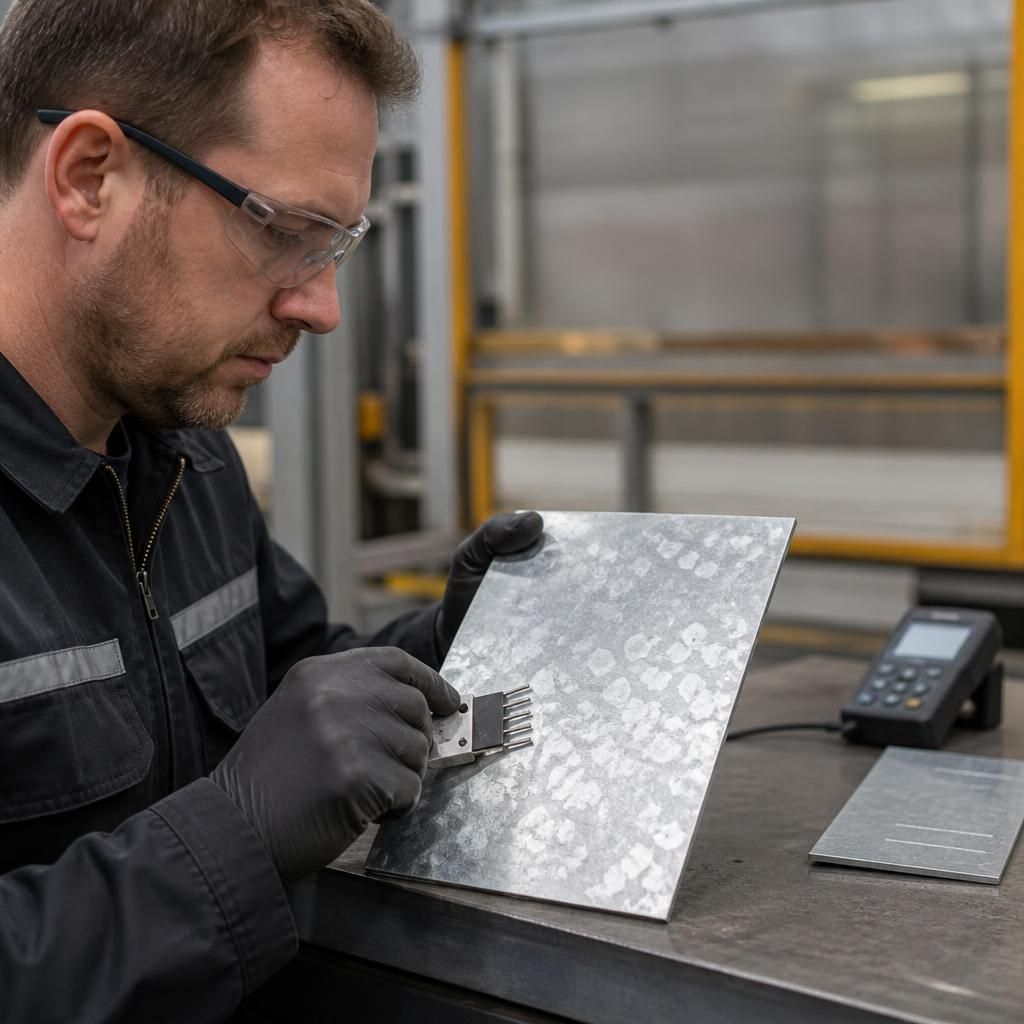
A prepared galvanised surface should be validated on a representative component or trial panel rather than judged by appearance alone. Bright, clean zinc may still be unsuitable if the surface chemistry or profile is incompatible with the powder-coating system.
After the trial coating has been cured to the specified schedule, adhesion can be assessed using a suitable method, such as a cross-cut test for an appropriate coating thickness or a pull-off test where the specification requires it. The result should be interpreted alongside the failure mode:
- Failure at the zinc-to-coating interface can indicate contamination, inadequate profiling or an unsuitable pre-treatment.
- Flaking associated with powdery zinc products points to an unstable galvanised surface rather than a sound substrate.
- Blistering or pinholing may indicate trapped moisture, salts, treatment residue or outgassing rather than a simple adhesion problem.
This validation is particularly useful when galvanised components have different ages, surface conditions or fabrication details. It confirms that the selected preparation and powder system work together before the full batch is processed, and provides an objective basis for adjusting the preparation specification where necessary.