

What specific factors should be considered when selecting a high temp powder coating for metal components in industrial applications?
Selecting a high temp powder coating for industrial metal components requires comparing the coating’s maximum service temperature and thermal-cycling performance with the component’s operating conditions. Also assess the metal substrate, exposure to chemicals or corrosion, required film thickness, application method, finish requirements and the preparation needed to achieve reliable adhesion.
Selecting a high temperature powder coating requires matching the coating system to the component’s complete service environment, not simply choosing the highest quoted temperature rating. The decision should consider the type and duration of heat exposure, the required mechanical and electrical performance, the component’s geometry and curing requirements, environmental influences, appearance retention and the evidence available from technical data and practical testing.
Define the actual heat profile. Establish whether the part will experience a continuous operating temperature, short-term temperature peaks or repeated heating and cooling. A coating suitable for occasional exposure may not be appropriate for uninterrupted high-temperature service. Record the heating rate, cooling rate, dwell periods and the likely number of cycles. Also identify whether heat is applied evenly or concentrated around welds, joints, edges, apertures or contact points. These details help determine whether the coating needs resistance to thermal degradation, flexibility during expansion and contraction, or both.
Consider the consequences of coating failure. In some applications, a change in colour or gloss is mainly an appearance issue. In others, cracking, blistering, loss of adhesion or embrittlement could expose the metal and affect safety or equipment performance. Components used near heat sources, moving assemblies or critical enclosures may need a coating with a carefully defined failure mode. The specification should state which properties are essential and which changes are acceptable over the intended service life.
Review the powder coating chemistry and technical data. High temperature performance depends on the formulation, binder system, pigments and additives rather than on the product description alone. Request technical information covering:
- recommended continuous and intermittent service conditions;
- retention of adhesion after heat exposure;
- resistance to cracking, blistering, chalking and embrittlement;
- expected colour and gloss stability at operating temperature;
- recommended cure conditions and permissible substrate temperature;
- resistance to the specific fluids, gases and cleaning agents in the application; and
- any restrictions on use with particular metal constructions or fabrication methods.
A nominal maximum temperature should be treated as a starting point for assessment, not as proof that the coating will meet every other performance requirement at that temperature.
Assess mechanical service conditions at temperature. Heat can alter the hardness, flexibility and wear behaviour of a coating. If the component is subject to impact, vibration, sliding contact, abrasion, pressure, clamping or repeated handling, these loads should be considered at the actual operating temperature. A coating that performs well on a static panel may be unsuitable for a part that flexes or rubs against another component. Pay particular attention to fastener holes, folded sections, contact faces and areas where movement may concentrate stress.
Check dimensional and assembly requirements. Powder coating adds a controlled layer to the finished component, which can affect close-fitting interfaces, threads, bearing seats, electrical contacts and moving clearances. Define areas that must remain free of coating and confirm how they will be protected during application. For assemblies, consider whether different parts expand at different rates and whether the coating could bridge joints or restrict movement. These checks are especially important where components are installed with tight tolerances or are assembled after coating.
Examine the component’s construction. Welds, overlaps, boxed sections, sharp corners and enclosed cavities can influence both coating behaviour and heat distribution. Trapped moisture, oils or gases may be released during curing or later heating, causing pinholes, bubbling or blistering. Vented designs, drain paths and appropriate pre-treatment should therefore be considered before production. Fabrication residues and weld contamination may require additional treatment because a high temperature formulation cannot compensate for an unsuitable surface condition.
Confirm that the curing process suits the part. Powder coating is cured by applying heat to the component, so the oven schedule must be assessed against the thickest and thinnest sections, the part’s mass and its thermal conductivity. The relevant condition is the temperature reached by the metal and the time it remains there, rather than the oven air temperature alone. Parts that cannot tolerate the required cure cycle, or assemblies containing heat-sensitive materials, may need a different coating approach or design arrangement. Cure validation should be based on measured component temperatures and the coating manufacturer’s stated requirements.
Include electrical and functional requirements. Where the coated component forms part of an enclosure, guard, heater assembly or electrical system, establish whether the finish needs to provide insulation, controlled conductivity, earthing continuity or resistance to tracking. Masking and contact-point design must be planned accordingly. The coating must not interfere with bonding points, terminals, sensors, heat-transfer surfaces or other features that have a functional role.
Match the coating to the surrounding environment. Heat may be combined with humidity, salt, industrial gases, oils, fuels, solvents, food-processing residues or abrasive dust. The interaction between these factors can be more damaging than heat alone. Identify the substances that will contact the finish, their concentration, contact time and temperature, then check the coating’s chemical-resistance information under comparable conditions. For outdoor or semi-exposed equipment, ultraviolet exposure and weathering should also be included in the assessment.
Evaluate appearance retention separately from protection. Pigments and surface characteristics can respond differently to prolonged heat. If colour matching, gloss level or visual inspection is important, specify the acceptable appearance change and assess it after representative heat exposure. A coating may continue to protect the metal while its colour or gloss changes, so appearance requirements should not be assumed to indicate protective performance.
Consider maintenance and inspection. Select a finish that can be inspected for defects, cleaned using the available methods and repaired in a controlled way if damage occurs. The repair material and process should be compatible with the original coating and with the component’s future temperature exposure. Define how the part will be checked for cracking, blistering, discolouration, corrosion or loss of adhesion, particularly in areas that are difficult to access once installed.
Validate the choice before committing to a production batch. A representative trial should use the same metal, fabrication method, surface preparation, coating thickness, cure cycle and relevant masking arrangements as the finished component. Expose test pieces or sample parts to the expected heat profile and any important chemicals, moisture, vibration or abrasion. Examine adhesion, cracking, blistering, colour change, gloss, dimensional fit and functional contact points after testing. Where the application is safety-critical or unusually severe, independent laboratory testing or documented approval from the coating manufacturer may be appropriate.
The final specification should record the service temperature profile, required coating properties, cure conditions, inspection criteria, permitted appearance change, maintenance method and validation evidence. Providing these details to a specialist powder coater at the quotation and design stage allows the proposed system and process to be checked against the component’s real operating conditions rather than selected from a temperature label alone.
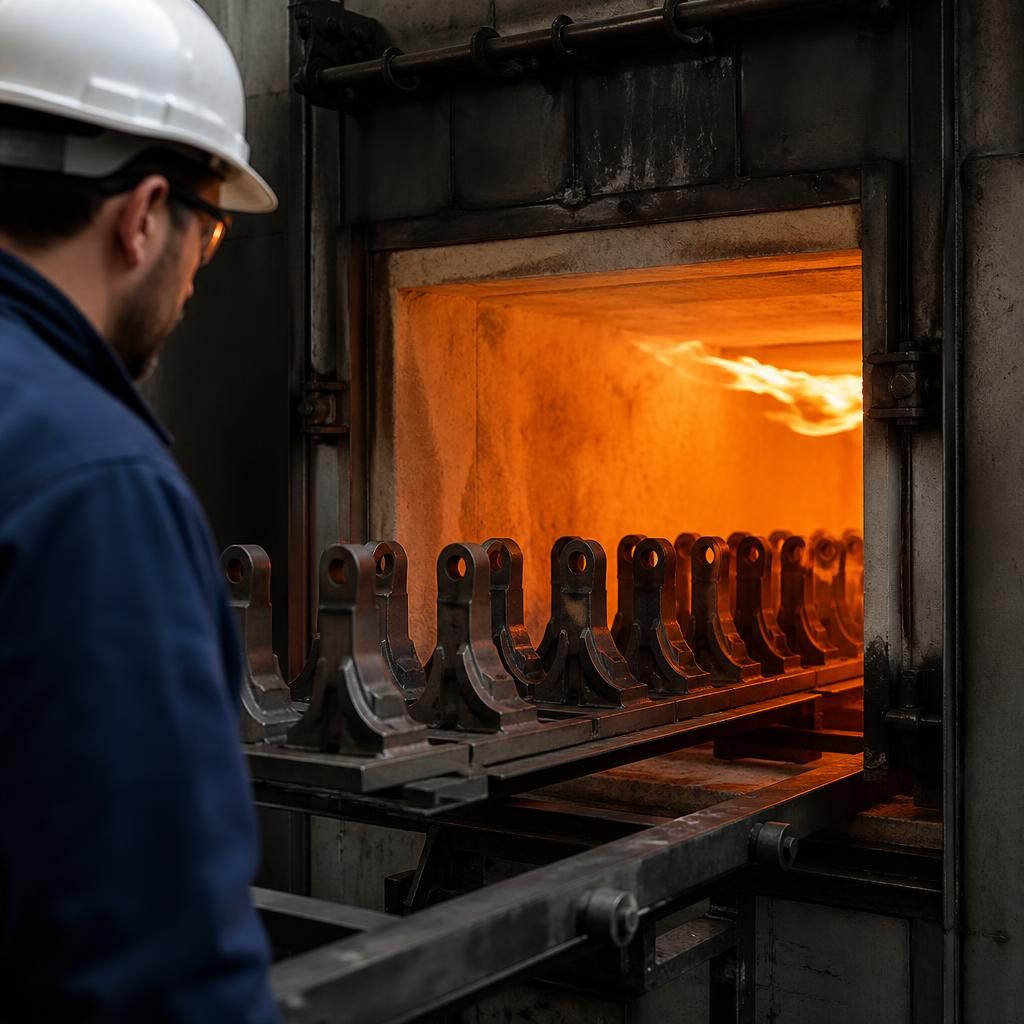
The method by which heat reaches the component is an important selection factor. A part exposed to heated air may experience a different coating temperature and degradation pattern from one subjected to direct flame, hot gas, radiant heat or contact with a heated surface. These conditions can create localised hotspots and rapid temperature gradients that are not represented by the average surrounding-air temperature.
Assess the temperature at the coated surface, particularly near burners, exhaust paths, heating elements, welds and contact points. If direct flame, radiant heat or hot-gas exposure is involved, request technical evidence relevant to that exposure rather than relying solely on a general maximum-temperature rating. This helps establish whether the proposed coating is suitable for the actual heat-transfer conditions across the component.
Discuss Your High Temp Powder Coating Requirements
Discuss your component’s heat profile, substrate and performance requirements with a specialist powder coater before finalising the specification. Providing drawings, operating conditions and any testing requirements will help determine the most suitable high temperature coating system.