

How does epoxy primer with zinc phosphate enhance corrosion resistance compared to standard powder coating?
Epoxy primer containing zinc phosphate enhances corrosion resistance by combining a strongly adherent, moisture-resistant barrier with zinc phosphate’s inhibitive protection at the metal surface. Compared with standard powder coating applied as a single finish layer, this primer system provides a dedicated anti-corrosion base that helps limit moisture ingress and reduce corrosion spreading beneath the coating.
Epoxy primer with zinc phosphate generally provides more robust corrosion control than a standard single-layer powder coating because it separates the protective functions into a prepared primer layer and, where required, a compatible powder topcoat. This gives the system greater control over adhesion, underfilm corrosion and protection at vulnerable areas such as edges, welds, fixings and fabricated joints.
The important difference is the coating system rather than the word “powder” alone. Standard powder coating can provide an effective decorative and protective finish, particularly when the metal is correctly prepared and the component operates in a relatively moderate environment. However, a conventional single-coat application has limited tolerance for defects, contamination, insufficient coverage or local damage. Once corrosion reaches exposed steel or aluminium, the coating may lose integrity around the damaged area.
An epoxy primer containing zinc phosphate is designed to address corrosion protection at the interface between the metal and the coating. Zinc phosphate acts as an active anti-corrosion pigment within the primer. When the coating is correctly applied, it supports passivation at vulnerable points and helps restrict the electrochemical processes that cause rust. The epoxy binder also creates a strongly bonded foundation for the subsequent finish coat, reducing the likelihood of premature lifting or flaking caused by poor intercoat adhesion.
Compared with standard powder coating, the main performance advantages are:
- Improved substrate protection: the primer is formulated specifically for contact with prepared metal, rather than relying on a finish coat to perform every protective role.
- Greater resistance to corrosion spread: a well-bonded primer can help contain corrosion at a localised defect, reducing the tendency for coating failure to extend beneath the surrounding film.
- Better support for complex fabrications: a primer system is useful where components include welded areas, returns, recesses, sharp transitions or assembled sections that are more difficult to protect uniformly.
- More suitable protection for demanding service conditions: the additional layer can be specified where moisture, salts, industrial contaminants or repeated handling create a higher risk than a decorative powder finish is intended to manage alone.
- Improved repair and maintenance planning: a defined primer and topcoat system makes it easier to identify the role of each layer and to specify compatible preparation and repair materials if damage occurs.
Preparation remains decisive. Neither zinc phosphate primer nor powder coating can compensate for oil, grease, mill scale, rust, welding residues, abrasive dust or moisture left on the substrate. The metal normally needs an appropriate cleaning and preparation process, followed by careful control of surface condition before the primer is applied. Weld spatter and sharp edges may require particular attention because they can create thin spots or stress concentrations in the coating.
Application control also affects the comparison. The primer must achieve a consistent film across the component, including difficult geometries, without runs, pinholes or areas of inadequate coverage. The interval between primer and topcoat should be managed in accordance with the coating system’s technical requirements. Contamination or excessive delay between layers can reduce adhesion and undermine the benefit of using a two-stage system.
A compatible powder topcoat is normally applied over the epoxy primer when the component needs a finished colour, additional mechanical protection or improved resistance to the surrounding environment. Epoxy coatings are strong choices for adhesion and corrosion protection, but they are not always the preferred exposed final finish where prolonged ultraviolet exposure is expected, as epoxy surfaces can lose colour or chalk. A suitable topcoat therefore allows the primer to perform its anti-corrosion function while another layer provides the required appearance and exterior durability.
Standard powder coating may still be appropriate where the substrate is sound, the design has limited corrosion risk, preparation is well controlled and the operating environment is not especially aggressive. It can also be the practical choice where the specification calls for a straightforward finish and the consequences of local coating damage are limited. The fact that a coating is applied as powder does not by itself determine its corrosion performance; resin chemistry, pretreatment, film build, curing and component design all influence the result.
For industrial metalwork, the selection should therefore begin with the expected exposure and the consequences of corrosion rather than with the coating label. Consider whether the item will encounter outdoor moisture, condensation, road salt, process chemicals, abrasion, immersion, sheltered or unsheltered service, and whether corrosion at a joint or edge would affect safety or operation. The substrate, fabrication method and intended service life should then be matched to a tested primer-and-topcoat specification.
In practical terms, epoxy primer with zinc phosphate is most valuable when corrosion protection is a primary requirement and the component justifies a dedicated primer layer. Standard powder coating can remain suitable for less demanding applications, but it offers less opportunity to engineer separate protection at the metal interface. For manufacturers, fabricators, construction firms and automotive businesses, discussing the substrate, fabrication details and service environment before coating helps determine whether the added primer stage is warranted.
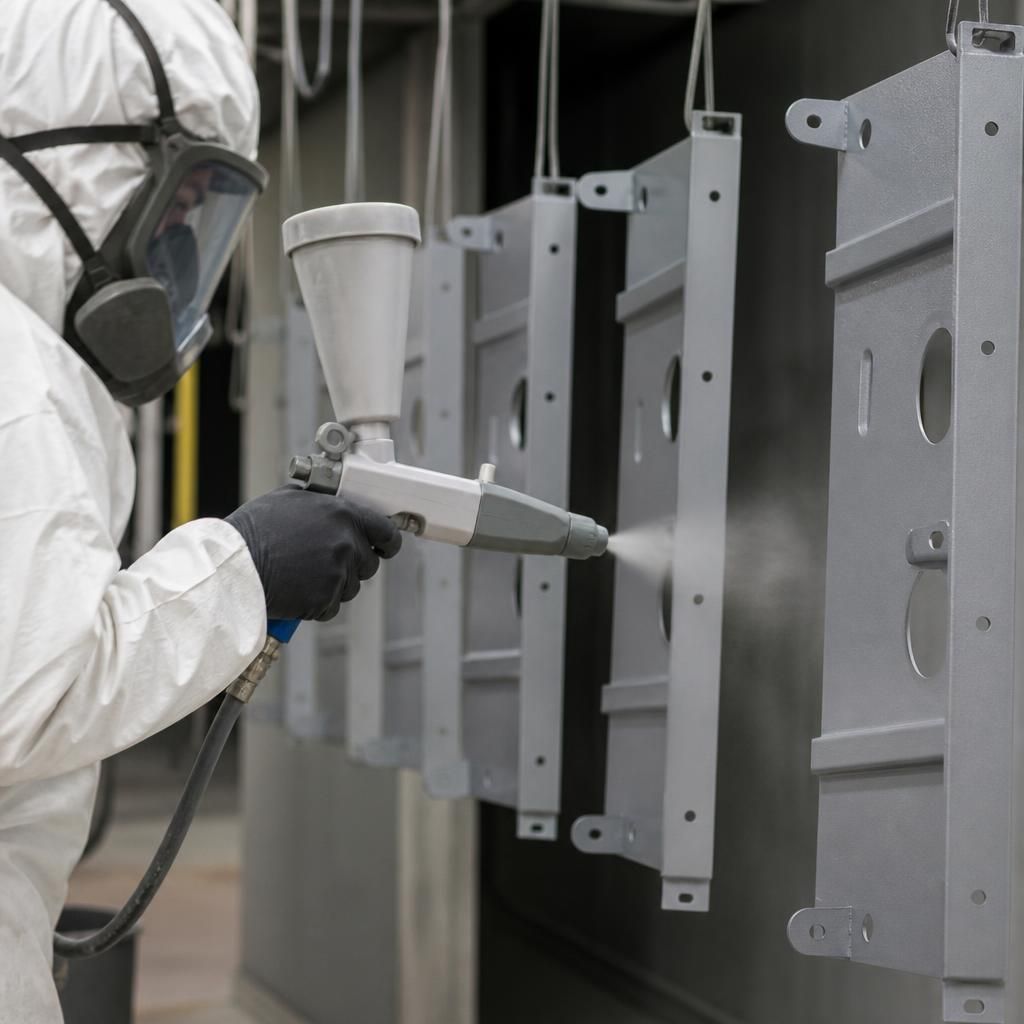
Epoxy primer with zinc phosphate improves corrosion resistance through inhibition and barrier protection, not by acting as a sacrificial zinc coating. Zinc phosphate helps suppress corrosion reactions at the prepared metal interface, while the epoxy binder limits the movement of water and contaminants through the film. This distinction matters when comparing specifications: a zinc-phosphate epoxy primer should not be assessed as though it provides the same electrochemical protection as a zinc-rich system. Its performance depends on the complete coating specification, including substrate preparation, film continuity, curing and compatibility with any finish coat.
Discuss your epoxy primer and zinc phosphate requirements
Discuss your epoxy primer and zinc phosphate requirements with our team, including the component specification, intended environment and finish requirements. This will help establish whether a primer-and-topcoat system is appropriate for your metalwork.