

What specific advantages do thermoset powder coatings offer over traditional liquid coatings for industrial applications?
Thermoset powder coatings offer industrial metal components a tough, chemically resistant finish with consistent coverage and strong adhesion. Compared with traditional liquid coatings, they use no solvent-based carrier, can reduce coating waste through controlled overspray recovery, and generally support efficient application with fewer emissions.
Thermoset powder coatings offer industrial users several practical advantages over traditional liquid coatings, particularly in process control, handling and cured-film performance. Their resin forms a permanently cross-linked film when heated, so the coating does not simply dry by losing a liquid carrier; it undergoes a controlled chemical cure that creates a stable finish around the prepared metal component.
- Less drying and flash-off management: Liquid coatings usually require time for solvents or water to evaporate before the part can be handled or moved to the next stage. Thermoset powder still requires oven curing, but it does not involve the same wet-film drying stage. This can simplify production planning where components are coated in repeatable batches.
- Efficient film formation: Powder is applied as a dry, measurable layer and then melted and cured. This avoids some of the sagging, runs and solvent entrapment problems associated with applying liquid material too heavily. Correct powder selection, gun settings, film-thickness control and oven conditions remain essential, but the process is well suited to defined production parameters.
- Reduced risk during post-coating handling: Once fully cured, a thermoset film is not tacky or vulnerable to marking in the way a partially dried liquid coating can be. This is useful for fabricated parts that must be packed, assembled or transported after coating. The component must nevertheless have reached the required cure schedule; a surface that feels dry is not necessarily fully cured.
- Stable properties at service temperature: A cured thermoset does not melt and flow again when reheated in normal service. This distinguishes it from a thermoplastic film and helps the coating retain its form where components experience moderate temperature variation. Excessive heat can still damage the resin, so the coating specification must match the component’s operating conditions.
- Repeatable specification of the finished film: Industrial powder systems can be selected by resin chemistry, gloss, texture, colour and functional requirements. Linking those choices to a defined preparation, application and cure procedure makes it easier to reproduce the required finish across batches than relying on visual judgement alone. Inspection may include film thickness, appearance, cure and adhesion checks.
- Suitable for demanding component designs: Thermoset formulations are available for different combinations of appearance and service requirements, including smooth or textured finishes and coatings intended for particular exposure conditions. The correct choice depends on the metal substrate, pretreatment, expected environment, temperature and handling demands rather than on the coating format alone.
- Cleaner production-area handling: Powder is supplied as a dry material, so operators do not need to manage liquid tins, wet overspray or solvent-contaminated equipment in the same way as with many liquid systems. This does not remove the need for extraction, personal protective equipment, housekeeping or appropriate waste procedures, but it can make material handling more straightforward.
These advantages do not make thermoset powder the right solution for every component. The part must tolerate the curing temperature, and the geometry must be suitable for electrostatic application and oven processing. Very large assemblies, heat-sensitive materials, areas requiring a very thin film or work needing onsite touch-up may call for a different coating approach. Liquid coatings can also remain preferable where a wet-on-wet application, unusual substrate or field repair is central to the specification.
For an industrial comparison, the most important question is therefore not simply whether powder is preferable to liquid. It is whether the complete coating system is appropriate: substrate preparation, powder chemistry, application method, film thickness, curing profile and inspection requirements must all support the component’s intended use. When these factors are controlled, thermoset powder can provide a more manageable and repeatable production route than traditional liquid coating for many metal parts.
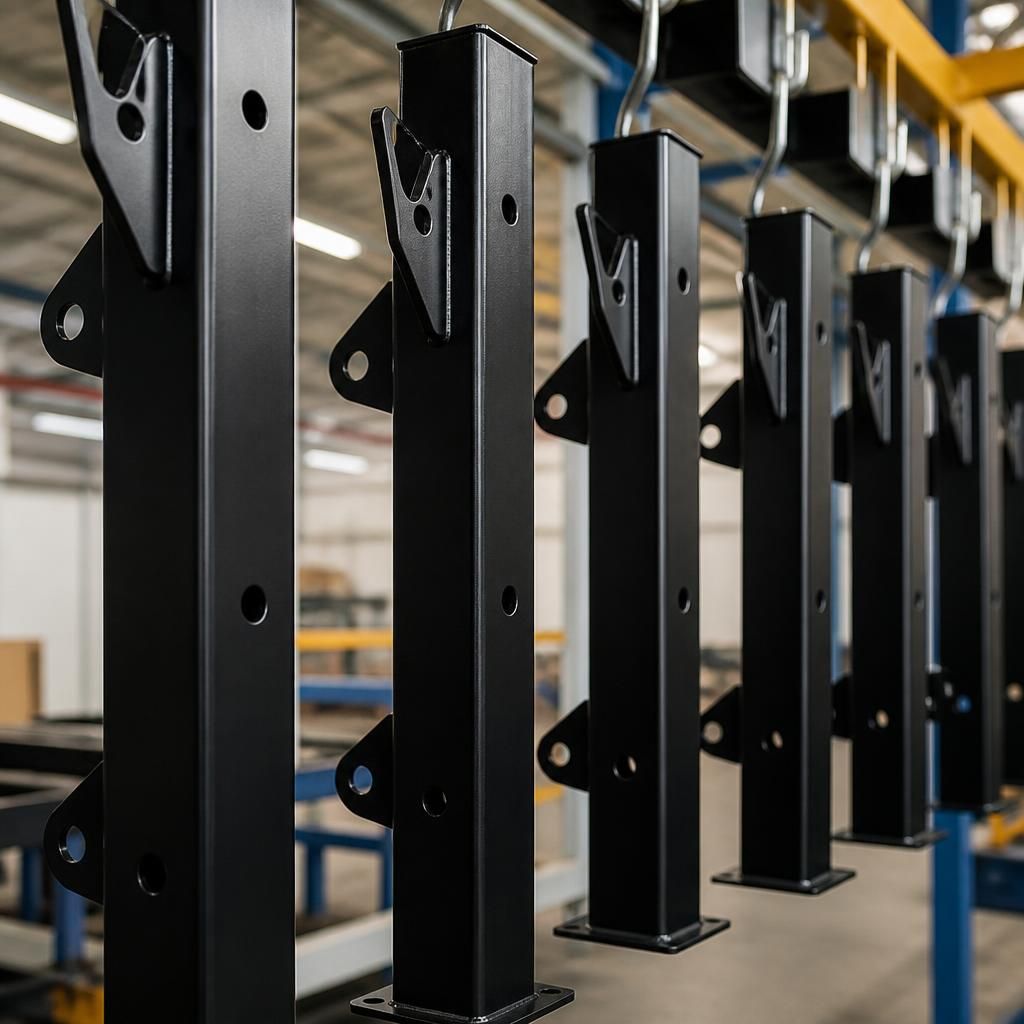
A key advantage of thermoset powder coatings is the service life of the cured film. Once cross-linked, the coating forms a hard protective barrier that can resist abrasion, impact and environmental exposure, helping shield the metal substrate during handling and use. This can reduce the need for remedial coating work on components subject to repeated contact or demanding industrial conditions. The result depends on choosing a resin system and film thickness suited to the component’s operating environment, with correct surface preparation and curing remaining essential.