

What are the key considerations when choosing a speciality powder coating for high-temperature applications?
When choosing a speciality powder coating for high-temperature applications, assess its continuous and peak temperature resistance alongside thermal cycling, substrate compatibility, adhesion and the required level of protection. Also consider exposure to chemicals, moisture and abrasion, the finish required, and whether the coating can be correctly applied and cured for the component’s operating conditions.
The key consideration when selecting a speciality powder coating for high-temperature use is whether the complete coating system is suitable for the component’s real operating conditions, not simply its stated maximum temperature. Selection should account for the temperature profile, expected change in appearance or properties, dimensional requirements, the metal substrate, and how the finished part will be tested and used.
Define the thermal duty accurately
Record how the component experiences heat rather than relying on a single nominal operating temperature. Relevant details include the normal surface temperature, the duration of exposure, the frequency of heating, the location of hot spots and the highest temperature reached during abnormal or cleaning conditions. A coating may tolerate a short excursion that it could not withstand continuously, while a lower but constant temperature may gradually cause softening, embrittlement, discoloration or loss of gloss.
Also establish whether the coating is exposed to direct radiant heat, hot air, heated fluids or contact with another hot surface. These conditions can produce different temperatures across one component. Thermal mapping of a representative assembly can help identify areas that require a different specification, masking arrangement or coating system.
Consider property retention, not just survival
A coating can remain attached to metal while no longer delivering the properties required in service. Ask whether the finish must retain hardness, flexibility, electrical insulation, low friction, colour stability or resistance to handling after heating. The acceptable level of change should be agreed before coating, particularly for visible components or parts that form part of an electrical, mechanical or safety-related assembly.
High temperature can also alter the appearance of a finish. Dark colours may show changes more readily, and gloss, texture and colour can develop differently on areas exposed to different temperatures. Where appearance is important, assess an approved sample after representative heat exposure rather than judging an unused panel alone.
Check coating thickness and component tolerances
The required film build needs to be balanced against the geometry and function of the part. Excessive build can affect the fit of mating components, threaded areas, hinges, sliding surfaces and close-tolerance assemblies. Thin edges, recesses and internal corners may also behave differently from broad, accessible faces.
Define areas that must remain free from coating and identify surfaces requiring controlled thickness. This is particularly important where the component transfers heat, forms an electrical contact or must locate accurately within a larger assembly. Masking, racking and the order of processing should be considered during the design stage rather than after coating has been specified.
Assess heat transfer and insulation requirements
Powder coating changes the surface of a metal part, so its effect on heat transfer should be considered where the component is intended to dissipate or conduct heat. A thicker or less conductive finish may influence the temperature reached at the surface, the rate at which heat leaves the part and the performance of nearby components.
Conversely, some applications require the coating to provide electrical separation at elevated temperature. In that case, the specification should define the required dielectric performance after heat exposure, along with the acceptable thickness range and any areas where electrical contact must be maintained.
Review the whole assembly
Do not assess the coating in isolation if the component is installed with seals, adhesives, plastics, lubricants, insulation or other coated parts. Heat can cause adjacent materials to release vapours, soften, swell or transfer residues onto the finish. Fasteners and inserts may expand at different rates, creating pressure at interfaces or changing assembly clearances.
Where the coated part forms part of an assembly, check the combined effect of temperature, movement, contact pressure and contamination. A coating that is suitable on an exposed panel may be unsuitable at a joint, beneath a clamp or against a material with a different expansion rate.
Specify evidence and validation
Request technical documentation covering the intended temperature range, test method, film-build assumptions and any restrictions on use. Temperature claims are meaningful only when the test conditions resemble the proposed service. The specification should also state how changes in colour, gloss, hardness, adhesion and other relevant properties will be assessed.
For critical or unusual applications, validate the selected system on a representative component or a test piece with comparable geometry and substrate. Expose it to the planned heat profile, then inspect the finish and, where relevant, repeat functional or electrical tests. This can identify problems caused by hot spots, masking, edge coverage or assembly interfaces that are not visible on a flat laboratory panel.
Plan manufacture and future inspection
The powder system should be selected alongside the production process. Component size, loading method, racking points, access to all surfaces and the permitted cure schedule can affect the achievable result. Any areas that cannot tolerate the coating process or cure temperature should be identified before parts are sent for treatment.
Finally, define inspection criteria for the finished parts. These may include visual appearance, film thickness, coverage of specified surfaces, freedom from defects and confirmation that masked or contact areas remain usable. For repeat batches, retaining an approved reference sample and recording the agreed specification can make changes easier to identify.
For manufacturers and fabricators across the Midlands, a powder-coating specialist can review the component design, operating profile and validation requirements before recommending a suitable speciality system. Collection and delivery options can also be considered where parts need to move between the customer’s site and the coating facility.
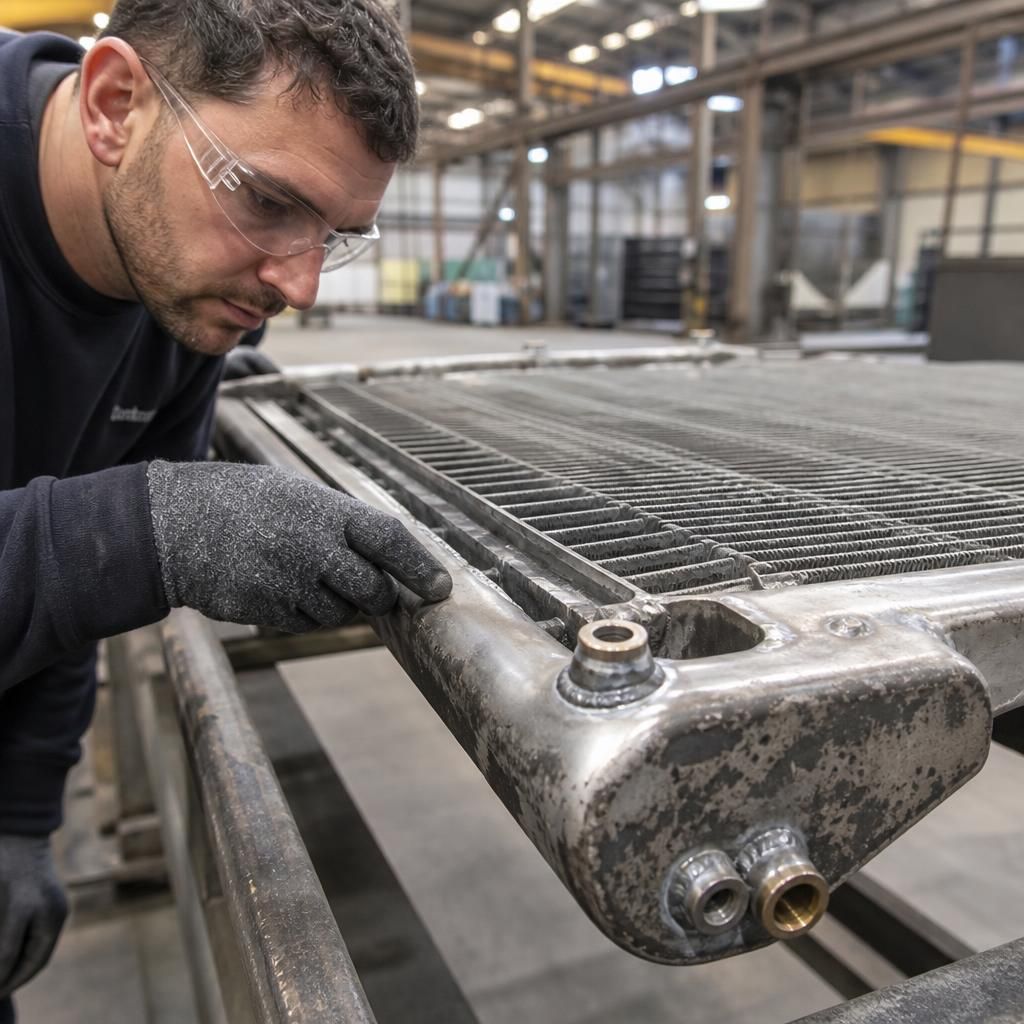
Consider the substrate and its surface condition at operating temperature. High heat can expose weaknesses that are not apparent on an untreated sample, including outgassing from cast metal, residues in weld areas and corrosion beneath incomplete coverage. These defects may cause pinholes, blistering, loss of adhesion or localised coating failure.
The specification should therefore identify the metal type, previous treatments, weld condition and required preparation before the powder is selected. Particular attention is needed for castings, galvanised components and parts with crevices, as trapped gases or contaminants can affect the finish during curing and subsequent heating. A suitable pre-treatment and an agreed inspection standard help ensure that the coating system is assessed on a representative surface rather than on idealised flat steel.
Discuss your high-temperature speciality coating requirements
Discuss your component’s operating conditions, substrate and validation requirements with a powder-coating specialist before selecting a high-temperature speciality coating. This helps establish a suitable specification and identify any testing or preparation needed.