

What specific environmental conditions will the coating need to withstand?
The coating must withstand the conditions it will encounter in service, including moisture, UV exposure, temperature changes, chemicals, abrasion, impact and corrosive atmospheres. Select the thermoset powder coating and pretreatment system according to whether the component is used indoors or outdoors and the severity of its environment.
The required coating system is determined by the component’s complete exposure profile, not simply by whether it is installed indoors or outdoors. Assessment should cover the intensity, duration and combination of environmental stresses, because moisture, temperature, chemicals and mechanical wear can interact and shorten service life when the coating, substrate preparation or film thickness is unsuitable.
Moisture and water contact
Humidity, condensation, rain, wash-down and standing water create different demands. A component exposed to intermittent dampness may require a different system from one subject to regular condensation or prolonged immersion. Water can enter through damaged areas, sharp edges, joints and porous contamination, allowing corrosion to develop beneath the film. Drainage, sealed joints and a design that avoids water traps are therefore part of the coating assessment. If immersion is expected, the proposed system should be specifically validated for that service rather than assumed suitable because it performs well in ordinary external conditions.
Sunlight and weathering
Ultraviolet radiation can cause fading, loss of gloss, chalking and gradual degradation of the binder. The risk varies with exposure direction, shading, location and the chosen colour and resin chemistry. A coating selected mainly for adhesion and chemical resistance may not provide the required appearance retention in sustained sunlight. Where colour stability matters, the specification should identify the expected visual standard and the relevant weathering evidence, rather than relying on a generic statement that the finish is suitable for external use.
Temperature and thermal cycling
Consider both the highest and lowest temperatures reached by the metal, including heat from nearby equipment, sunlight or process operations. Repeated heating and cooling can place stress on the coating, particularly where the coating and substrate expand at different rates. Rapid temperature changes, hot surfaces followed by cold wash-down, and freeze–thaw exposure may be more demanding than a steady temperature. The coating’s technical data should be checked for the anticipated service range and for any change in hardness, flexibility, colour or adhesion at those temperatures.
Chemical exposure
Identify each substance that may contact the finish, including cleaning agents, oils, fuels, solvents, acids, alkalis, salts and process chemicals. Compatibility depends on concentration, temperature, contact time and whether the contact is occasional, repeated or continuous. Vapours and chemical deposits can also affect a surface without visible liquid contact. Testing should be based on the actual substance and operating conditions where the consequence of coating failure is significant. A finish that resists brief splashes may not tolerate prolonged contact or immersion.
Atmospheric corrosion
Airborne salts, pollutants, moisture and industrial deposits increase the corrosion risk for exposed steel and other metals. The severity is influenced by the site, the presence of contaminants and the way the component is designed. Welds, cut edges, recesses, fasteners and areas where dissimilar metals meet need particular attention because they can become initiation points for corrosion. The coating should be considered as part of a system comprising substrate preparation, pretreatment, primer where specified, powder application and curing. A sound topcoat cannot reliably compensate for soluble salts, oil, rust or poor surface preparation beneath it.
Abrasion, impact and movement
Environmental exposure often occurs alongside physical damage. Components may be rubbed by products, struck during handling, subjected to vibration or exposed to dust and grit. Repeated movement at joints can be more damaging than a single impact, while a sharp impact can expose the substrate and create a local corrosion point. Assess how the part will be handled, installed, cleaned and used, then consider hardness, flexibility, adhesion and repair requirements together. Protecting the finish during transport and installation is also important because damage before commissioning may not be visible until corrosion begins.
Edges, geometry and design details
Complex shapes can make it difficult to achieve consistent coverage. Sharp edges may receive a thinner film, while recesses, internal corners and enclosed sections can affect powder deposition and curing. These areas should be identified before coating, with radiused edges, suitable drainage and accessible surfaces incorporated where possible. Threads, mating faces, electrical contact points and close tolerances may need masking or a defined coating allowance. The operating environment cannot be assessed separately from the component’s geometry.
How to turn the assessment into a specification
- Record where the part will be installed and whether exposure is sheltered, exposed, enclosed, buried, washed down or immersed.
- List the actual liquids, vapours, deposits and cleaning products that may contact the finish.
- Define temperature extremes, cycling, sunlight, humidity and any corrosive contaminants.
- Describe handling, impact, rubbing, vibration and maintenance conditions.
- Identify the substrate, welds, edges, joints, recesses and areas where corrosion would have serious consequences.
- Match the coating chemistry and pretreatment to that profile, then confirm suitability through technical data or project-specific testing.
For industrial work, the most reliable specification records the exposure conditions in measurable practical terms rather than using a broad label such as “heavy duty”. This gives the coating applicator and project team a clear basis for selecting the thermoset powder type, preparing the metal, controlling application and checking that the cured finish is appropriate for its intended service.
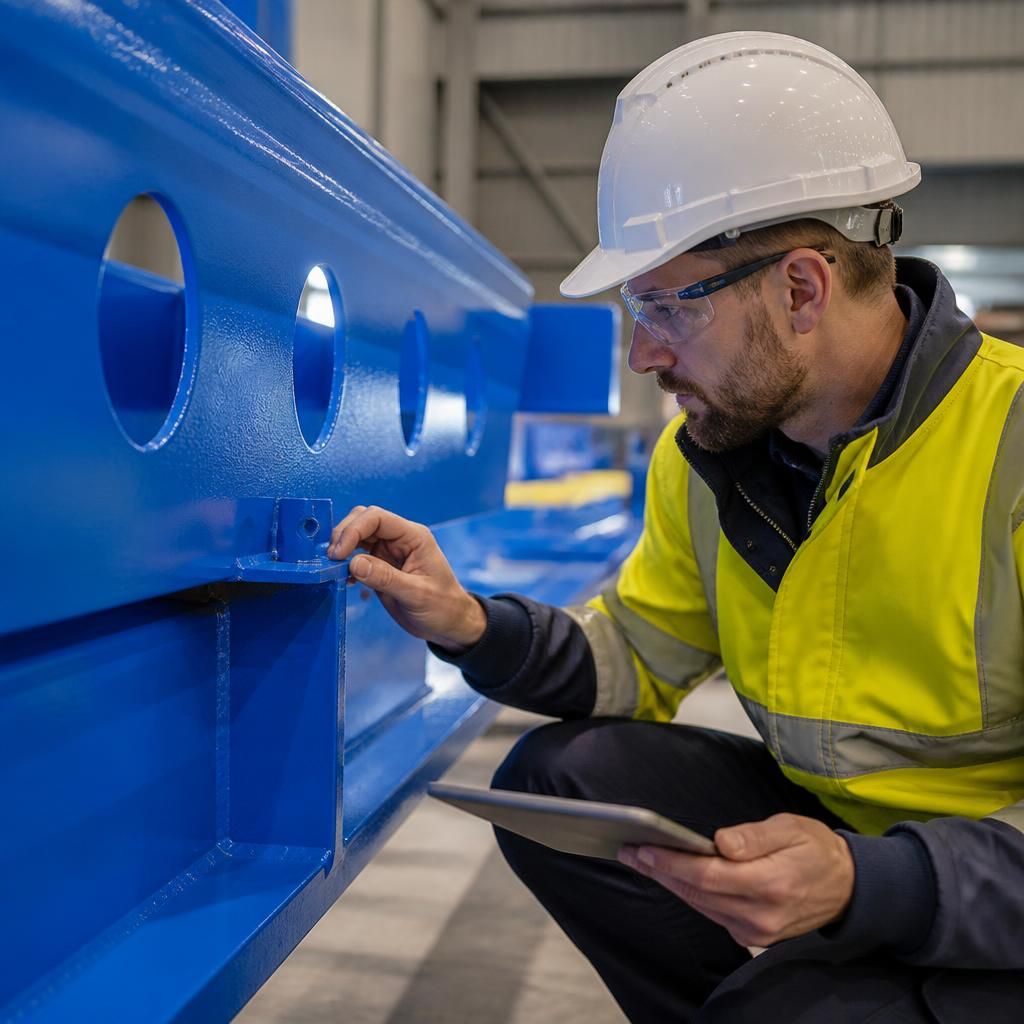
Maintenance access should influence the coating specification. A component that can be inspected, cleaned and repaired regularly may be managed differently from one enclosed within equipment, installed at height or difficult to remove. For inaccessible parts, assess the consequences of coating damage and specify a system suited to the full exposure profile rather than relying on routine touch-up work.
Define how the finish will be checked in service, including visible damage, loss of adhesion, corrosion at edges and changes in appearance. The inspection method and repair procedure should be compatible with the coating system, so minor defects can be addressed before environmental exposure causes more extensive substrate deterioration.