

How do you ensure colour consistency and durability across different batch sizes in powder coating?
Colour consistency and durability are maintained by controlling the powder specification, surface preparation, application settings and curing conditions for each production run. Samples or approved reference panels, together with checks during coating and curing, help verify that small, large and repeat batches meet the required appearance and performance standard.
Consistent colour and durability across different batch sizes depend on treating every batch as a controlled repeat of an agreed specification, rather than simply applying the same powder to a different quantity of parts. The key is to control the variables that change when production moves between a few components and a high-volume run, then verify the finished coating against defined acceptance criteria.
Colour consistency starts with an agreed visual and technical standard. A colour reference should identify the required shade, gloss level, texture and acceptable variation. Where appearance is critical, the reference should be retained under consistent lighting conditions and compared with coated samples using the same viewing method. Instrument readings can support visual inspection by measuring colour and gloss, but they should be interpreted alongside the approved reference because surface texture, reflectivity and component shape can affect the result.
Powder from different manufacturing lots can show small variations even when it is sold under the same colour description. For repeat work, recording the powder batch or lot number creates traceability and helps identify whether a change in appearance is linked to the material, the equipment or the parts themselves. Mixing different powder lots without confirming compatibility can introduce avoidable variation, particularly on large visible surfaces or when a new delivery is introduced part-way through a production programme.
Batch size also affects how components move through the coating operation. A small run may be processed with a different rack arrangement, part spacing or line loading from a large run. These changes can alter the amount of powder reaching recessed areas and exposed faces, as well as the way heat reaches the components. Consistent racking and part orientation are therefore important when comparing one batch with another. Parts should be positioned so that critical faces are exposed consistently, while contact points are kept to areas where any small uncoated mark will not affect use or appearance.
Component design must be considered as part of the consistency assessment. Sharp edges, deep recesses, enclosed sections, welds and varying material thicknesses do not receive or heat in the same way as broad, flat surfaces. If a batch contains a different mix of geometries, the coating may need to be assessed by component type rather than by treating the entire order as one uniform group. Separating parts into sensible processing families can make colour and film performance easier to control.
Durability is evaluated through more than the visible finish. The required performance may include resistance to impact, abrasion, chemicals, moisture, corrosion or outdoor exposure, depending on how the component will be used. A coating that looks consistent may still be unsuitable if the film has inadequate adhesion, an unsuitable thickness or incomplete cure. For this reason, the specification should define the relevant performance requirements before production, with checks selected to reflect the component’s operating environment.
Film thickness needs particular attention when batch sizes change. Excessive thickness can affect appearance, fit and flexibility, while insufficient coverage can reduce protection, especially at edges and difficult-to-coat areas. Measurements taken at representative points help establish whether the coating is being applied evenly across different component shapes. Results are more meaningful when the same measurement locations and method are used for every run.
Durability also depends on how coated parts are handled after production. Components should be protected from abrasion, contamination and impact during cooling, packing, storage and transport. Separating finished surfaces, using suitable packaging and preventing metal-to-metal contact can preserve the coating before the parts reach assembly or installation. These controls are particularly relevant to larger batches, where parts may spend longer in staging or be handled in larger quantities.
A practical batch-control record normally links the job specification to:
- the approved colour, gloss and texture requirement;
- the powder product and material lot identification;
- the component type, quantity and coating orientation;
- the equipment and process settings used for the run;
- film-thickness and appearance observations;
- any non-conformances, rework or changes made during production; and
- the inspection outcome and retained reference samples where appropriate.
This information makes repeat work more predictable because a later batch can be compared with an existing record rather than relying on memory or a colour name alone. It also helps distinguish a genuine colour difference from variation caused by lighting, surface texture, component geometry or viewing conditions.
For manufacturers, fabricators and other businesses ordering mixed quantities, the most useful approach is to identify which characteristics are critical before coating begins. A single visible colour requirement may apply to every part, while tolerances for hidden faces, minor texture variation or measurement locations may differ by component. Clear acceptance criteria allow the coater to inspect consistently and give the customer a practical basis for approving or querying a batch.
For work involving small, large or repeat batches, a specialist powder coating provider should be able to discuss how the parts will be grouped, recorded, inspected and handled so that changes in production volume do not become uncontrolled changes in finish. This is especially important when a project includes different component sizes, repeat orders or a combination of decorative appearance and protective performance.
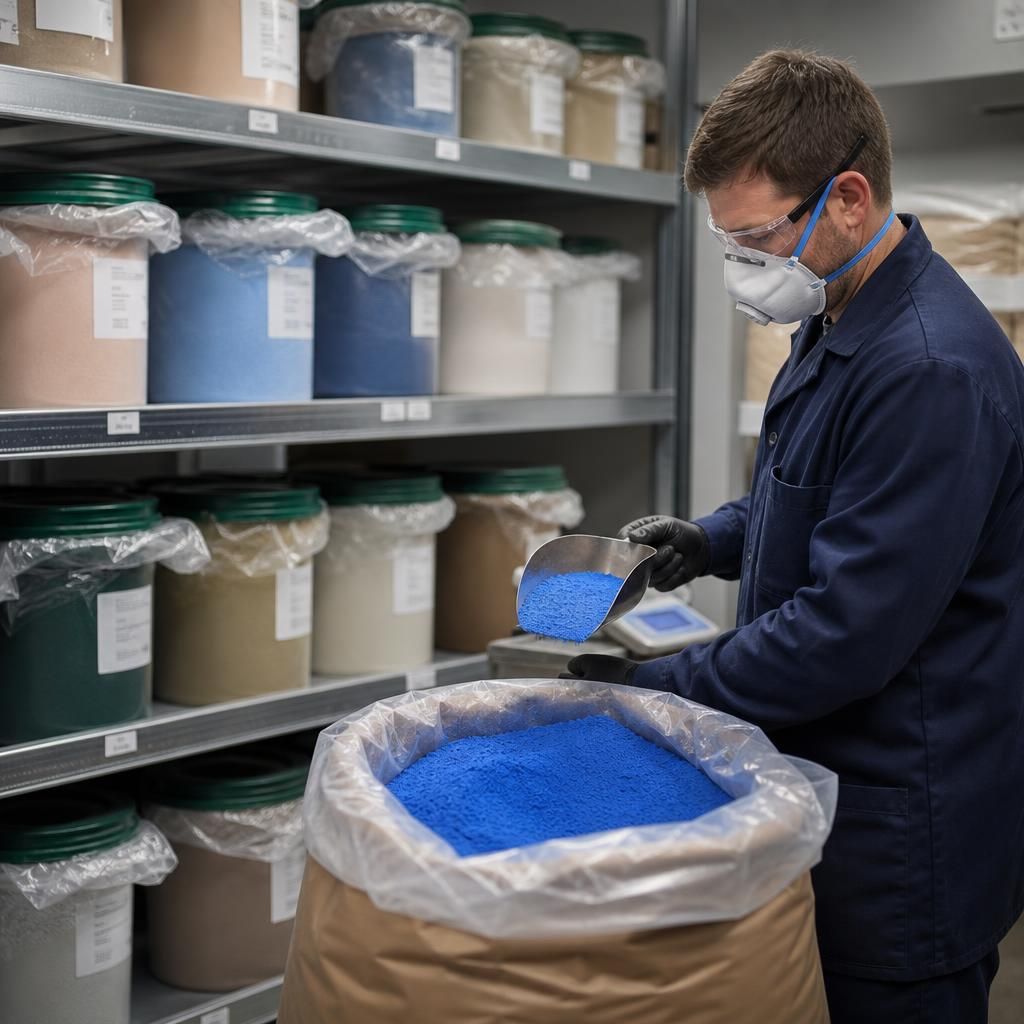
Powder storage and handling are important to colour consistency because the material must reach the spray equipment in a stable, uncontaminated condition. Powder should be kept and used in line with its technical data sheet, with protection from moisture, foreign particles and unsuitable temperature conditions. Changes in flow or charging behaviour can affect coverage, surface texture and the apparent shade, even when the product specification has not changed.
Reclaimed powder also requires control. If recovery is used, its suitability, compatibility and proportion within the coating process should be defined rather than introduced inconsistently between small and large runs. Recording how the powder is handled and whether reclaimed material is included helps separate material-related variation from changes caused by application or curing.