

What specific factors influence the cost of powder coating for large-scale projects?
The cost of a large-scale powder coating project is mainly influenced by component size and configuration, surface preparation requirements, coating type and finish, production volume, and collection or delivery logistics. Complex parts, demanding preparation, specialist coatings and smaller or irregular batches generally require more processing and can increase the overall cost.
Large-scale powder coating costs are influenced by the total processing burden of the project, not simply by the amount of powder used. In addition to the component, preparation, coating and batch factors already identified, the specification, handling method, masking, curing requirements, inspection, packaging and risk of rework can all affect the price.
Specification and drawing quality affect how much work is required before production can begin. Clear drawings should identify coating areas, excluded surfaces, critical dimensions, acceptable appearance, cure requirements and any inspection standard. If these details are incomplete, the coater may need to clarify the scope, assess the parts individually or allow for additional checks. A precise specification reduces uncertainty when the work is costed and helps prevent disagreements about what constitutes an acceptable finish.
Masking and protection of excluded areas can add a significant processing stage. Threads, bearing seats, electrical contact points, machined faces, holes and other areas may need silicone plugs, caps, tapes or bespoke masking. The cost depends on how many areas must be protected, whether masking can be reused and whether it needs to be removed and checked after curing. Parts with tight dimensional tolerances may also require more careful masking than general-purpose structural components.
Racking and part handling influence both labour and throughput. Components must be supported securely while allowing the powder and curing heat to reach the required surfaces. Large or awkwardly shaped items may need specially arranged hanging points, additional support or manual handling between stages. Contact points used for hanging can also leave small uncoated areas, so their position and acceptability should be agreed in advance. Where racking is difficult, more handling time may be needed and fewer parts may be processed in each cycle.
Curing requirements can affect the way a project is scheduled and processed. Powder coating is cured according to the coating manufacturer’s specified time and temperature, with the relevant condition applying to the metal itself rather than merely the oven air temperature. Heavy sections, assemblies with different material thicknesses and heat-sensitive components may require particular attention to the cure profile. If parts cannot be processed together under the same conditions, additional production planning or separate cycles may be necessary.
Colour and coating changes may create a cost beyond the price of the powder itself. Changing between colours or coating systems can require cleaning the application equipment, booth and recovery arrangements to avoid contamination. A project with several coating specifications may therefore involve more setup and changeover work than one using a consistent system. Grouping compatible work together can simplify production planning, subject to the required delivery sequence and specification.
Inspection and documentation are further cost considerations, particularly for manufactured, structural or safety-relevant components. The required checks may include visual inspection, coating thickness measurements, adhesion testing, cure verification or records linking results to a batch. More extensive documentation and inspection require additional labour and may involve holding finished items until the required records are complete. These requirements should be stated before the quotation is prepared rather than introduced after production has started.
Packaging and protection after coating can affect the final project cost. Finished components may need separators, wrapping, edge protection or tailored packing to prevent rubbing, impact and contamination during storage and transport. The appropriate method depends on the part’s shape, weight, surface sensitivity and intended onward handling. Packaging should protect the finish without trapping moisture or allowing coated surfaces to contact one another.
Substrate condition and component history can also change the expected processing effort. New, consistent parts are usually easier to assess than components that have been previously painted, exposed to corrosion, contaminated with oil or altered by welding and fabrication. Weld spatter, sharp edges, trapped residues and inaccessible cavities can affect the work required and may introduce a risk that the agreed finish or dimensional requirements cannot be achieved without further action.
Rework and rejection risk should be considered when a project contains tightly controlled appearance or dimensional requirements. Defects may result from contamination, unsuitable masking, damage during handling, incomplete preparation or an agreed specification being unclear. Recoating may require stripping, repeat preparation, new masking and another curing cycle. Providing representative samples, drawings and acceptance criteria at the quotation stage helps identify avoidable risks and gives the coater a clearer basis for pricing.
For an accurate large-scale quotation, provide the part drawings, material and condition, dimensions and weights, areas to remain uncoated, coating specification, inspection requirements, packaging expectations and the required sequence of work. It is also useful to identify whether the parts are repeat production items, welded assemblies or one-off fabrications. This information allows the quote to reflect the complete process rather than only the application of powder.
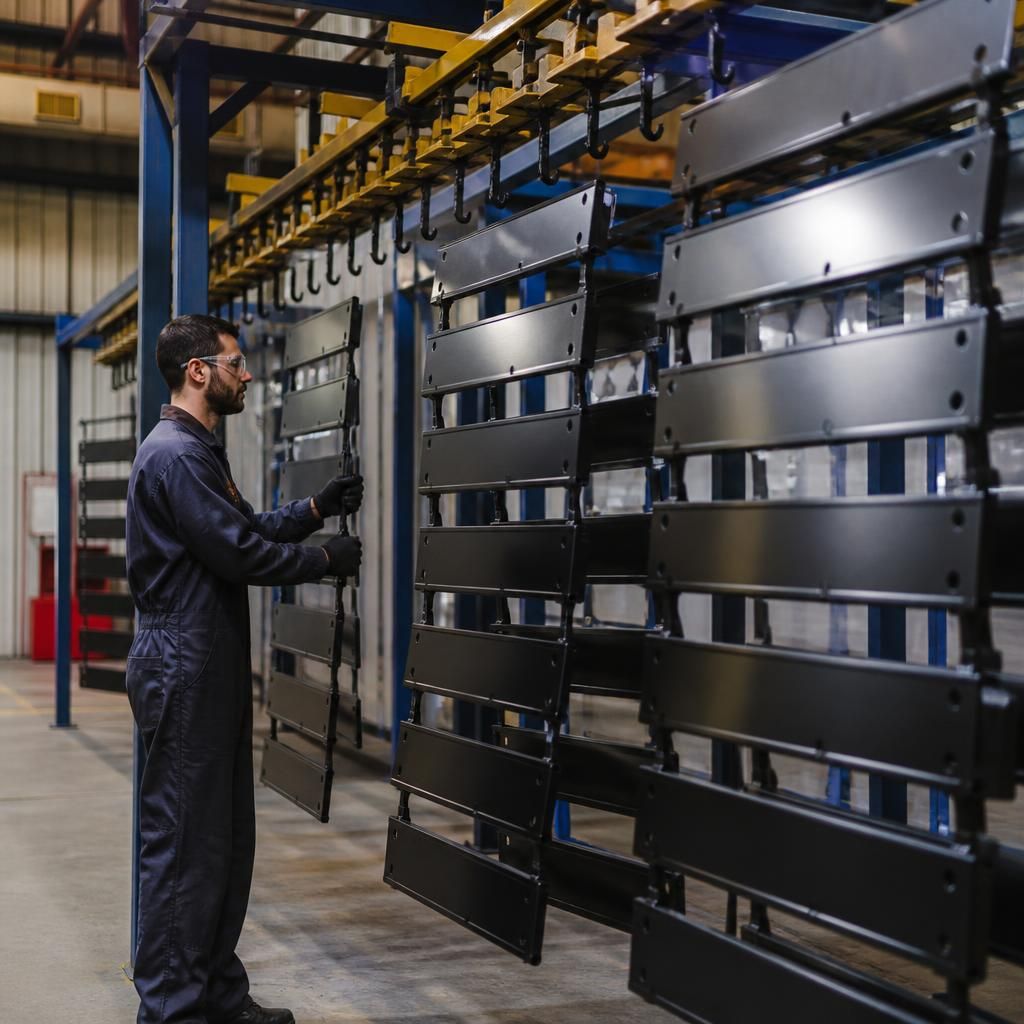
Production volume influences large-scale powder coating cost because setup and handling work can be distributed across a repeat batch. Identical components can often use the same racking arrangement, masking method and coating settings throughout the run, whereas mixed parts may require repeated preparation and adjustments. A consistent batch is therefore usually simpler to process than the same number of components presented as unrelated items.
Repeatability also depends on how the work is released. Supplying a complete, consistent batch may avoid repeated setup activity, while fragmented deliveries or frequent specification changes can introduce additional handling and production planning. When requesting a quotation, explain the expected batch structure, whether parts are repeat items and how the work will be phased. This allows the processing method to reflect the actual production pattern rather than treating every component as a separate job.
Request a Large-Scale Powder Coating Quote
To establish the likely cost of your large-scale powder coating project, request a quotation with your drawings, component details, coating specification and delivery requirements. Powder-coatings.co.uk can assess the complete processing scope for collection and delivery across the Midlands and surrounding areas.