

What are the key differences between nylon coatings and other protective coatings in terms of performance and application suitability?
Nylon coatings are thermoplastic finishes valued for abrasion resistance, impact tolerance, flexibility, low friction and electrical insulation, whereas other protective coatings may be selected primarily for corrosion resistance, chemical exposure, UV stability or higher-temperature service. Nylon is often suitable for components subject to repeated contact, movement or wear, while the most appropriate alternative depends on the metal substrate, component geometry, operating environment, required film thickness and available application process.
Nylon coatings differ from other protective coatings mainly in their coating chemistry, application method, mechanical behaviour and operating limits. Nylon is a thermoplastic material that forms a tough, relatively flexible layer when applied to a suitably prepared metal component. Many alternative protective coatings, including epoxy, polyester, polyurethane and hybrid systems, are thermosetting finishes: they cure through a chemical reaction and create a cross-linked film. Neither category is universally better. The correct choice depends on the type of contact, exposure, temperature, dimensional tolerance and production method involved.
Mechanical performance
Nylon is generally considered where a component needs to tolerate repeated rubbing, impact or sliding contact. Its resilience can help the coating absorb minor knocks without behaving as a brittle surface, while its low-friction characteristics may be useful on parts that move against one another. It is therefore commonly associated with handling equipment, guides, rollers, bushings, brackets and components that experience regular physical interaction.
Other coatings can offer a harder or more rigid surface, which may be advantageous where the main requirement is resistance to indentation, surface marking or a particular chemical environment. Some cured systems can also provide a smoother decorative finish or a more tightly controlled appearance. However, a hard film is not automatically the best choice for an application involving impact or flexing. A coating specification should consider the behaviour of the finished component, not simply the nominal hardness of the coating.
Temperature and dimensional considerations
Thermoplastic nylon can soften or lose some of its mechanical performance when exposed to temperatures beyond the grade’s service range. Repeated heating and cooling may also affect its long-term behaviour. Alternative cured coatings may retain their shape more effectively at particular temperatures, although every formulation has its own upper and lower operating limits. The relevant data should be taken from the proposed coating system rather than assumed from the generic name of the resin.
Film thickness is another important distinction. Nylon is often applied as a relatively substantial protective layer, which can provide useful cushioning and wear resistance but may affect fits, clearances, threads, holes, mating faces and moving interfaces. A thinner alternative may be more suitable where dimensional control is critical. Before coating, drawings should identify surfaces that must remain uncoated, masked or finished to a defined tolerance.
Application process and component design
Nylon application commonly involves preheating the metal and applying powdered material so that it melts and flows into a continuous film. Depending on the component and production requirements, techniques can include fluidised-bed coating, electrostatic application or other specialist methods. The component’s mass, shape, heat capacity and ability to withstand the process temperature influence whether a particular method is practical.
Alternative powder coatings are often applied electrostatically and then cured in an oven, while liquid systems may be sprayed, brushed or otherwise deposited before curing or drying. These processes have different requirements for masking, ventilation, curing control, overspray management and handling. A coating that is technically suitable may still be unsuitable for a component if the part cannot be heated uniformly, cannot be supported without damage or contains areas that the chosen process cannot reach.
Complex geometry requires particular attention. Recesses, enclosed sections, sharp edges, welds and narrow internal areas can affect film build and coverage. Powder application may produce different deposition patterns on corners and recessed features, while liquid application can introduce its own risks of runs, sags or uneven thickness. The application method should be selected alongside the component design and the required inspection standard.
Adhesion and surface preparation
Both nylon and alternative protective coatings depend on proper preparation of the metal substrate. Contamination, mill scale, corrosion products, oil, moisture and poorly treated weld areas can compromise adhesion regardless of the coating family. Preparation may include degreasing, abrasive treatment, blasting or another specified cleaning process, followed by appropriate control of the prepared surface.
Nylon may require a process designed to promote adhesion between the thermoplastic layer and the particular substrate. Some applications use a compatible primer or bonding layer, while others rely on controlled preparation and application conditions. Thermoset systems may use primers, multi-coat arrangements or direct-to-metal formulations. The choice is influenced by the metal type, intended exposure, required film build and whether the coating must accommodate movement or impact.
Exposure to chemicals, moisture and weather
Nylon can perform well in selected environments, but its resistance varies with the nylon grade, chemical concentration, temperature, exposure duration and whether the coating is under mechanical stress. Absorption of moisture can also influence the material’s dimensions and mechanical properties. This matters for close-fitting parts, electrically insulating components and applications where consistent friction or stiffness is required.
Other protective coatings may be formulated specifically for immersion, aggressive chemicals, outdoor weathering or a combination of exposures. A system that performs well against one chemical may be less suitable against another, particularly at elevated temperature. The assessment should therefore use the actual cleaning agents, oils, solvents, process fluids and atmospheric conditions expected in service, rather than relying on the broad label “protective coating”.
Electrical and functional requirements
Nylon’s insulating characteristics can be useful where the coating must separate a metal component from an electrical path or reduce the risk of direct metal-to-metal contact. In contrast, some other systems may be selected for their ability to support a conductive, dissipative, anti-static or electrically controlled design. Electrical performance can be affected by thickness, moisture, surface contamination and the formulation used, so it should be confirmed against the relevant component requirement.
Function also includes noise reduction, handling comfort, grip, release behaviour and protection of a mating part. Nylon may be appropriate where a softer or more resilient interface is needed, whereas a harder cured finish may be preferable for a rigid, easily cleaned surface. These requirements can be more decisive than appearance when comparing coating options.
How to select between the options
- Choose nylon where the component requires a resilient, wear-resistant or low-friction surface and the service temperature and dimensions are compatible with the material.
- Consider a different protective coating where the primary challenge is a defined chemical, immersion, weathering or temperature exposure that has been addressed by a suitably tested formulation.
- Review the coating thickness against threads, bearings, sliding faces, holes, press fits and other critical dimensions.
- Confirm that the component can be prepared, heated, coated, cured and handled using the proposed production process.
- Specify the substrate, preparation standard, masking requirements, film thickness, finish, inspection method and intended operating conditions before production begins.
For industrial work, the decision is best made from the complete duty cycle rather than from the coating name alone. A coating specialist can compare nylon with the relevant alternative by reviewing drawings, substrate, batch size, geometry and service exposure, then recommend an application route that is technically compatible with the component.
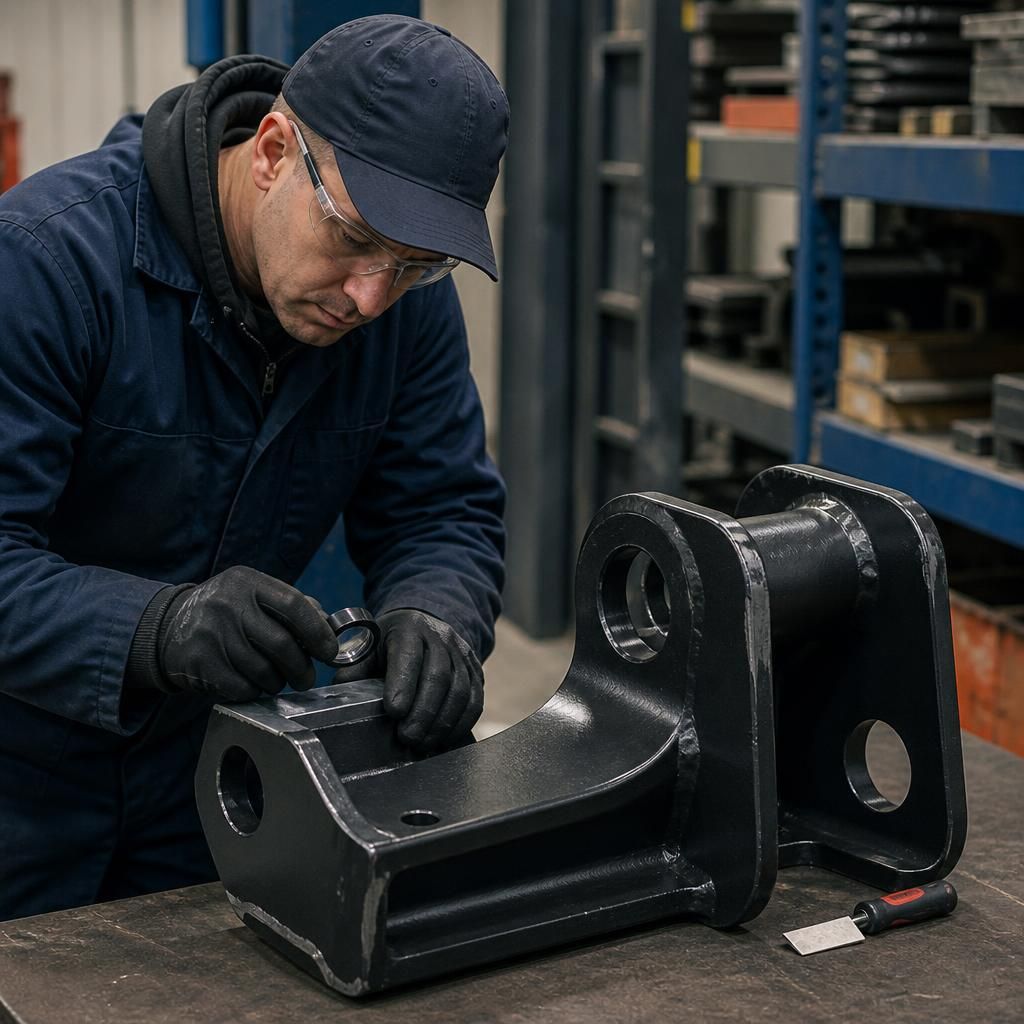
Repairability is another practical difference. Nylon is thermoplastic, so it can soften when reheated, but damaged areas cannot usually be repaired simply by applying heat on the finished component. Local repairs may affect thickness, appearance and adhesion, and the correct approach depends on the coating grade and damage. Thermoset coatings do not remelt after curing; recoating normally requires removal of loose material, preparation of the exposed metal and application of a compatible new system.
This makes the likely damage pattern important when assessing application suitability. Components exposed to repeated rubbing may need a coating selected for controlled wear and planned refurbishment, while components where corrosion protection must remain continuous may require a system and inspection process focused on detecting pinholes, edge damage and loss of adhesion. The specification should therefore address not only initial performance, but also how coating damage will be identified and managed during the component’s service life.