

How can I maximise the lifespan of my powder coating equipment package?
Maximise the lifespan of your powder coating equipment package through scheduled preventive maintenance, correct operating procedures and prompt attention to wear, contamination or performance changes. Keep application, recovery and curing equipment correctly adjusted, replace serviceable components with suitable parts, and maintain clear maintenance records to support reliable operation and informed upgrades.
Maximising the lifespan of a powder coating equipment package depends on controlling the conditions in which it operates, preventing avoidable contamination and ensuring that each part of the system remains correctly matched to the process. In addition to planned servicing, attention should be given to powder handling, compressed air, electrical earthing, booth conditions, oven loading and the way equipment is adjusted for different products.
Protect the equipment from contamination. Powder residue, dust, oil and moisture can affect guns, hoses, pumps, filters and recovery equipment. Keep powder in sealed, clearly identified containers and store it in a clean, dry area away from heat, water and other materials. Do not return contaminated or mixed powder to virgin stock. Where the system handles different colours or chemistries, use a controlled changeover procedure so that residue from one coating does not enter another batch.
Booth interiors, extraction paths and recovery areas should be kept free from accumulated deposits. Excessive build-up can restrict airflow, affect transfer efficiency and place additional demand on extraction and filtration components. Use cleaning methods and tools suitable for the booth and its finish; abrasive techniques or unsuitable solvents may damage surfaces and create further contamination.
Maintain clean, dry compressed air. Moisture, oil and particulates in the air supply can interfere with powder transport and application, while also accelerating deterioration of pneumatic components. Check that filtration, separation and drainage arrangements are appropriate for the equipment package. Investigate any change in air quality, pressure stability or powder delivery rather than compensating indefinitely through gun or pump adjustments.
Preserve reliable earthing. Electrostatic application relies on a suitable path for electrical charge to dissipate from the workpiece. Remove overspray and coating build-up from contact points, hooks, racks and fixtures so that parts remain properly connected to earth. Contact surfaces that become heavily coated can increase transfer losses, encourage uneven application and place greater strain on the application process. Replace damaged or unsuitable contact components rather than relying on intermittent contact.
Use fixtures and loading arrangements carefully. Avoid overloading conveyors, racks or oven trolleys beyond their designed capacity. Excessive weight can cause mechanical stress, misalignment and premature wear, while poorly spaced parts can obstruct airflow and produce uneven curing. Arrange components so that the coating remains protected from impact during movement and so that hooks or supports do not rub against finished surfaces.
Control oven operation through the workpiece, not just the air temperature. Powder cures according to the metal substrate’s achieved temperature and the required time at that temperature. Part thickness, geometry, material and loading pattern all influence heat penetration. Periodic thermal profiling of representative parts can identify cold spots, excessive heat exposure or changes in heat-up behaviour before these conditions damage coatings or place unnecessary demand on heating and circulation systems.
Keep oven doors, seals, fans, burners or heating elements, sensors and air-circulation routes in suitable condition. Uncontrolled heat loss or restricted circulation can make the system work harder and may create uneven curing. Any change in temperature distribution, burner behaviour, fan noise or recovery time should be assessed as a process issue rather than corrected by simply increasing the set point.
Match consumables to the equipment and process. Use powder, hoses, nozzles, pump components and other wear parts that are suitable for the system and the coating material. Highly abrasive powders, metallic formulations and frequent colour changes can place different demands on feed paths and application components. Keep replacement parts clean during installation, and check that seals, tubing and connections are compatible with the materials being used.
Minimise unnecessary adjustment of application settings. Excessive powder output, unsuitable air balance or poorly selected nozzle configurations can increase overspray and accelerate wear without improving the finish. Establish controlled settings for common part types and coating materials, then review them when the substrate, powder or required finish changes.
Reduce mechanical and electrical stress. Avoid operating conveyors, pumps, fans and other moving equipment with abnormal vibration, noise or resistance. Check for loose guards, damaged couplings, worn bearings and misalignment, and isolate equipment before investigating moving parts. Electrical connections, control panels and sensors should be kept clean and protected from powder ingress. Faults affecting voltage, current, temperature or control signals should be diagnosed by a suitably competent person rather than bypassed.
Manage changes in production sensibly. Equipment used intermittently, for long runs or across a wide range of component sizes may experience different forms of stress. Allow the process to stabilise when changing powder, colour, part thickness or oven loading. Avoid abrupt changes that create blockages, excessive powder accumulation or thermal shock. If the package is being asked to handle new materials or higher throughput, confirm that its extraction, recovery, application and curing capacities remain appropriate before making the change permanent.
Useful indicators of declining equipment condition include:
- inconsistent powder flow, pulsing or frequent blockages;
- changes in transfer efficiency or an increase in overspray;
- loss of extraction performance or unusual pressure readings;
- uneven curing across parts or changes in oven temperature distribution;
- repeated loss of electrical contact at hooks or fixtures;
- unusual vibration, heat, noise or odour from mechanical equipment; and
- more frequent faults after cleaning, colour changes or production adjustments.
When these signs appear, identify whether the cause is contamination, wear, air quality, earthing, loading, settings or a control fault. Replacing a single component without addressing the underlying cause may provide only temporary improvement. A condition-based assessment can help determine whether a part should be cleaned, adjusted, repaired or replaced, and whether an upgrade would reduce recurring stress on the package.
Finally, retain technical information for the equipment, including operating limits, compatible consumables, electrical requirements and component specifications. This prevents unsuitable substitutions and helps future operators understand the consequences of changing powder, part size or production conditions. For a B2B coating operation, that discipline protects the equipment package while also supporting consistent treatment of manufactured, fabricated, construction and automotive components.
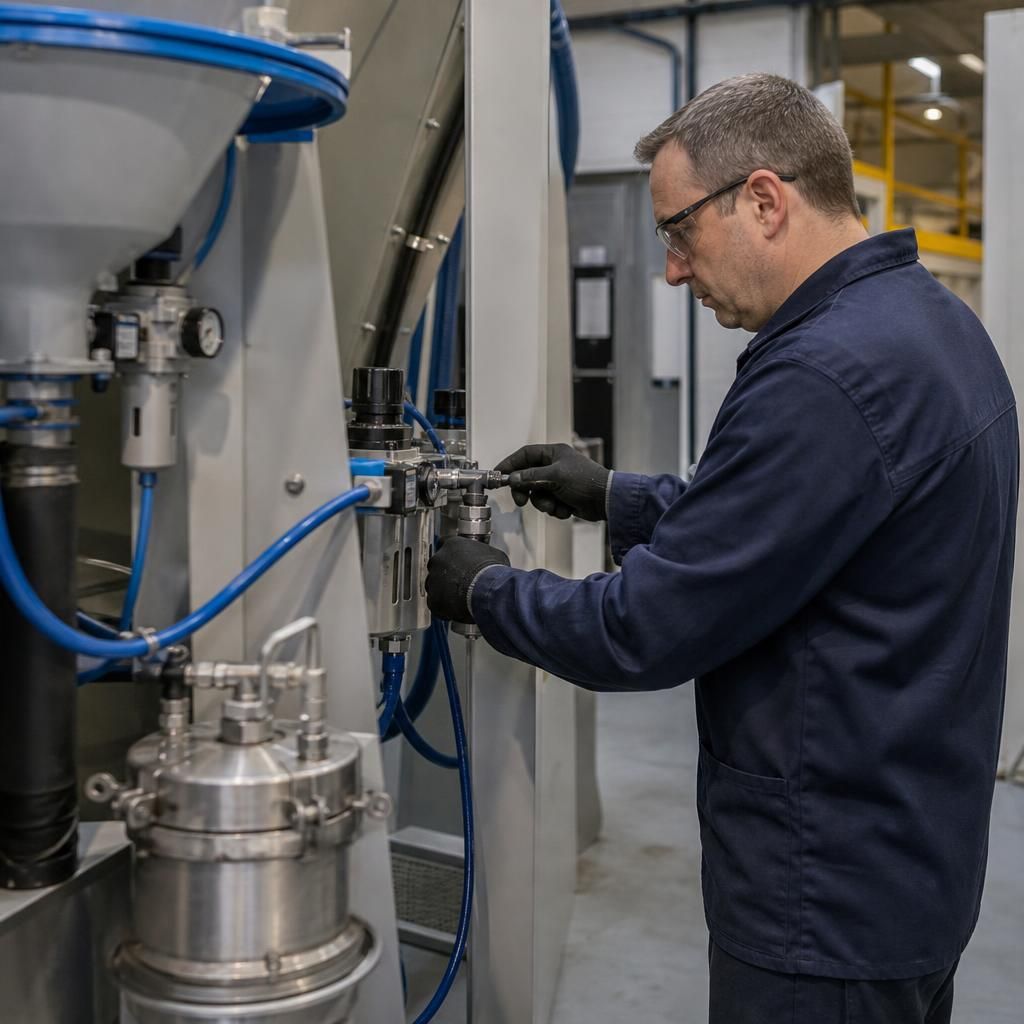
Correct shutdown and storage are essential when a powder coating equipment package will be idle for an extended period. Remove residual powder from hoppers, feed lines, guns and recovery areas, then isolate electrical and pneumatic supplies in accordance with the equipment instructions. Leaving powder or compressed air connected can encourage blockages, contamination and deterioration of seals or other components.
Protect exposed equipment from moisture, dust and accidental impact, particularly around control panels, electrical connections and moving assemblies. Before returning the package to service, inspect hoses, filters, seals, cables, earthing points and guards, and verify that extraction, air supply and safety controls function correctly. A controlled recommissioning check can identify storage-related problems before production loads are applied.
Discuss How to Maximise Your Powder Coating Equipment Package Lifespan
If your equipment package is showing recurring faults or no longer suits your process, discuss the coating requirements and operating conditions with our team. A practical review can help identify whether servicing, compatible component replacement or equipment changes are appropriate.