

How does Perfect-It Powder Coating accommodate large-scale industrial requirements without compromising on quality?
Perfect-It Powder Coating accommodates large-scale industrial requirements through organised batch production, suitable collection and delivery options, and rigorous quality control. This approach supports efficient processing while maintaining durable, consistent finishes for metal components used by manufacturers, fabricators, construction firms and automotive businesses.
Perfect-It Powder Coating accommodates large-scale industrial work by treating volume, finish requirements and process control as connected factors. Components can be assessed against their material, geometry, intended use and required coating system before production, allowing the work to be organised around a defined specification rather than processed as an undifferentiated load.
For larger orders, this specification-led approach helps establish the details that must remain unchanged from one production run to the next. These may include the powder coating type, colour, texture, film build, pre-treatment requirements and curing conditions. Clarifying these points in advance reduces the risk of variation caused by different component designs or changing production priorities.
Large industrial parts and high-volume component orders can present different practical challenges. Component size affects how items are positioned and handled, while shape affects the way powder reaches edges, recesses and enclosed areas. A suitable production plan therefore considers:
- the dimensions, weight and geometry of each component;
- areas that need masking, plugging or protection from coating;
- how parts can be supported without marking the finished surface;
- the coating thickness and appearance required for the application; and
- whether a standard, protective or specialist coating is appropriate.
Preparation is particularly important when quality must be maintained across a substantial quantity of parts. Surfaces need to be suitable for coating, with contaminants, corrosion and residues addressed before powder is applied. Poor preparation can affect adhesion and appearance regardless of the scale of the order, so it is treated as part of the performance requirements rather than as a separate cosmetic stage.
Powder coating also requires controlled application and curing. The powder must be deposited evenly, and the coating must be cured in accordance with the requirements of the selected system and the component. This is especially relevant where parts differ in thickness or mass, because those differences can influence how heat moves through the metal. Planning the load around the parts being processed helps reduce the possibility of uneven results.
Quality control for large-scale work is most effective when it checks both the process and the finished components. Inspection can consider surface cleanliness, coverage, colour, texture, visible defects, coating adhesion and areas that were specified to remain uncoated. Where a batch contains several component types, each type should be assessed against its own drawing, finish specification or acceptance criteria rather than judged solely by comparison with another part.
Consistency does not mean that every component must be treated identically. It means that each component receives the coating system and preparation appropriate to its role, while the agreed requirements are applied reliably throughout the order. This distinction allows industrial work to include different sizes, shapes or metal components without lowering the standard expected of the finished product.
Specialist requirements can also be considered within the same controlled framework. For example, nylon powder coatings may be relevant where a tough, protective or functional finish is needed, subject to the component and service conditions. The correct choice depends on factors such as exposure, impact, friction, chemical contact, temperature and the required appearance; the coating should be selected for the operating environment rather than volume alone.
For a business commissioning a large coating order, the most useful information to provide includes technical drawings, component material, dimensions, expected quantities, required finish, masking points, performance conditions and any inspection criteria. Supplying these details allows the coating process to be planned around the actual parts and helps separate essential requirements from preferences. In this way, Perfect-It Powder Coating can support industrial-scale production while keeping finish quality, suitability and repeatability central to the work.
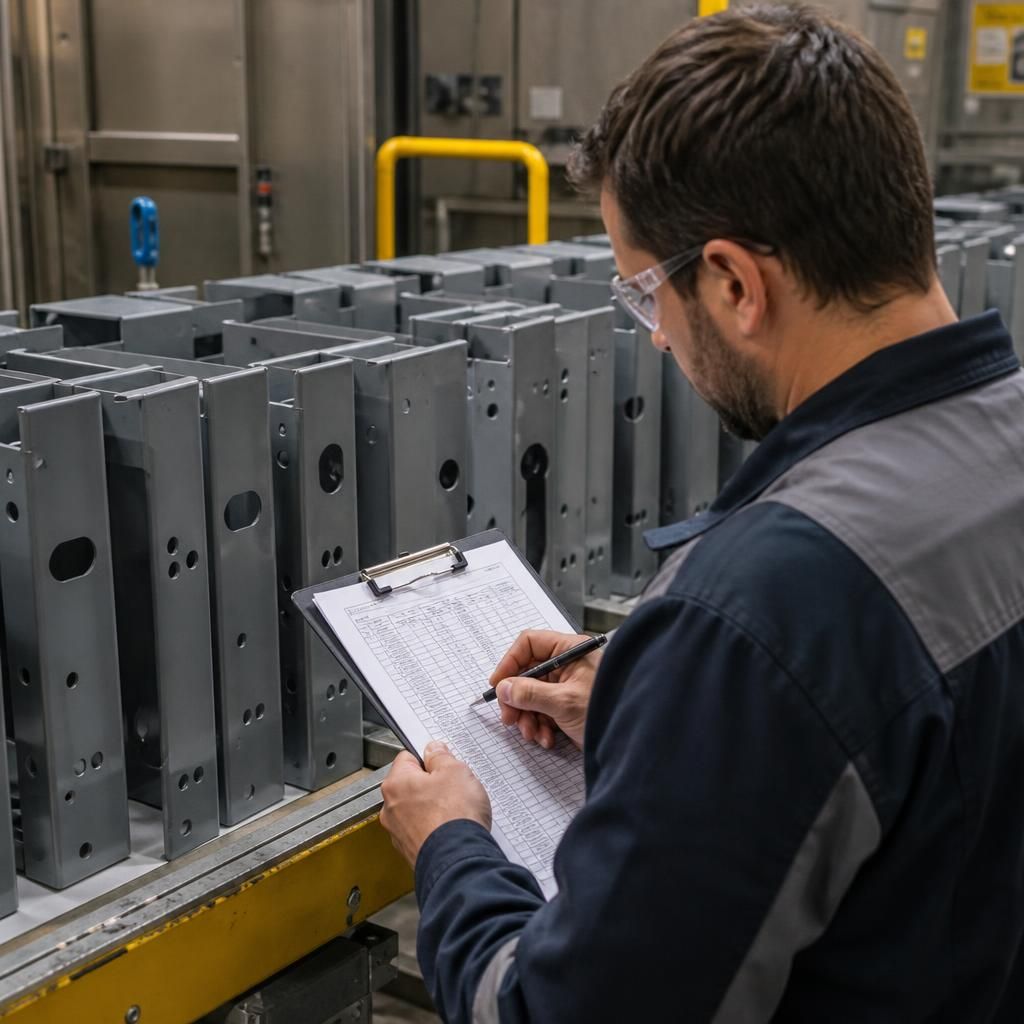
Traceability is an important part of maintaining quality across a large industrial order. Linking each component type to its drawing reference, finish code, revision status and agreed acceptance criteria gives production and inspection teams a consistent point of reference, particularly where visually similar parts require different coatings or masking.
This approach also helps identify the correct requirements if a repeat order includes revised dimensions, a changed finish or additional protection. By controlling these details separately from the physical volume of the work, large-scale production can remain organised without allowing quantity to obscure the specification for each component.