

What maintenance practices are necessary for ensuring the longevity of thermoplastic powder coatings?
Ensuring the longevity of thermoplastic powder coatings requires regular cleaning with mild, non-abrasive products, prompt removal of contaminants and routine inspection for scratches, impact damage or coating separation. Avoid harsh chemicals, abrasive tools and prolonged exposure to damaging substances, and arrange suitable repairs when defects are identified to prevent moisture or corrosion affecting the underlying metal.
The necessary maintenance for thermoplastic powder coatings involves controlling the conditions around the coated component, checking areas subject to mechanical or thermal stress, preserving drainage and ventilation, and carrying out repairs using a compatible process. The correct regime depends on the thermoplastic material, coating thickness, service environment and the component’s exposure to chemicals, ultraviolet light, moisture, heat and abrasion.
Use the coating within its specified service conditions. Maintenance should begin with the coating specification and technical data supplied for the project. Record the thermoplastic type, approved temperature range, chemical limitations and intended application. Components used beyond these conditions may experience softening, distortion, loss of adhesion or changes in appearance even when the surface appears intact. Where operating conditions change, review the coating selection rather than assuming that an existing finish remains suitable.
- Prevent sustained contact with substances that are outside the coating’s chemical-resistance specification.
- Control process temperatures so that the coated part is not exposed to avoidable overheating.
- Protect coated surfaces from repeated impact, dragging or contact with sharp edges during handling.
- Use suitable lifting, racking and packaging materials that will not mark, indent or abrade the finish.
Manage mechanical contact points. Bolted joints, hinges, brackets, clamps and sliding interfaces often receive more stress than the main coated surface. Check that fasteners are not cutting into the coating and that movement does not create repeated friction. If a component is dismantled, prevent tools from levering directly against the coated edge. Any newly exposed metal around a joint should be assessed, because it can become a route for corrosion or allow damage to spread beneath the surrounding coating.
Keep drainage and ventilation effective. Water retained against a coated component can increase the risk of staining, edge deterioration and corrosion at defects or uncoated interfaces. During routine servicing, check that drain holes, channels and ventilation paths remain clear. Pay particular attention to folded sections, hollow fabrications, overlaps and horizontal ledges where moisture or process residue can collect. Coated assemblies should be stored and installed so that water can drain rather than remain trapped between surfaces.
Control storage and installation conditions. Before installation, keep coated components separated to prevent rubbing and avoid stacking arrangements that place concentrated loads on edges or corners. Use non-abrasive separators and do not slide parts across one another. During construction or plant installation, shield finished components from welding spatter, cutting debris, cementitious materials and other site residues. Temporary protection must not trap moisture against the coating or remain in place where heat and sunlight could cause marking.
Assess appearance and performance separately. A change in gloss or colour does not always indicate loss of protective function, while a small edge defect may be more significant than a broad cosmetic change. Maintenance records should distinguish between:
- cosmetic variation, such as fading, gloss change or surface marking;
- mechanical damage, including gouges, dents and wear at contact points;
- loss of adhesion, blistering, lifting or cracking;
- corrosion at exposed metal, edges, joints or under-film locations; and
- changes caused by heat, chemical exposure or dimensional movement.
Photographs, location references and notes on the operating conditions can help establish whether a defect is isolated or recurring. Repeated damage in the same position may indicate excessive loading, poor component design, movement, drainage failure or an incompatible adjacent material rather than a coating problem alone.
Repair damage with a compatible system. Thermoplastic powder coatings are not automatically suitable for repair with ordinary liquid paint or another powder coating. The repair method must be selected for the specific polymer, substrate and service environment. Minor local work may require controlled preparation and a compatible repair material, whereas extensive damage can require removal of the affected coating, substrate treatment and reapplication under controlled conditions. Where the coating has lifted, blistered or exposed corrosion, simply covering the visible area may leave the underlying cause unresolved.
Repairs should restore the protective continuity of the coating without creating a hard step, trapped contamination or an unprotected boundary. After repair, confirm that the replacement material can tolerate the same temperature, chemical exposure and mechanical duty as the original finish. For critical components, record the repair material, preparation method and any limitations placed on subsequent use.
Set a maintenance schedule based on risk. Parts in sheltered indoor service may need less frequent assessment than components exposed to external weather, road debris, industrial chemicals, immersion, high temperatures or frequent handling. The schedule should include checks after installation, following unusual impact or overheating, and during planned equipment inspections. It should also identify who is responsible for recording defects and when a coating specialist or other suitably competent contractor must assess the component.
Good records should link each inspection to the component or asset, its coating specification, operating environment, observed condition and action taken. This approach supports planned intervention before a coating defect affects the metal substrate or the function of the assembly.
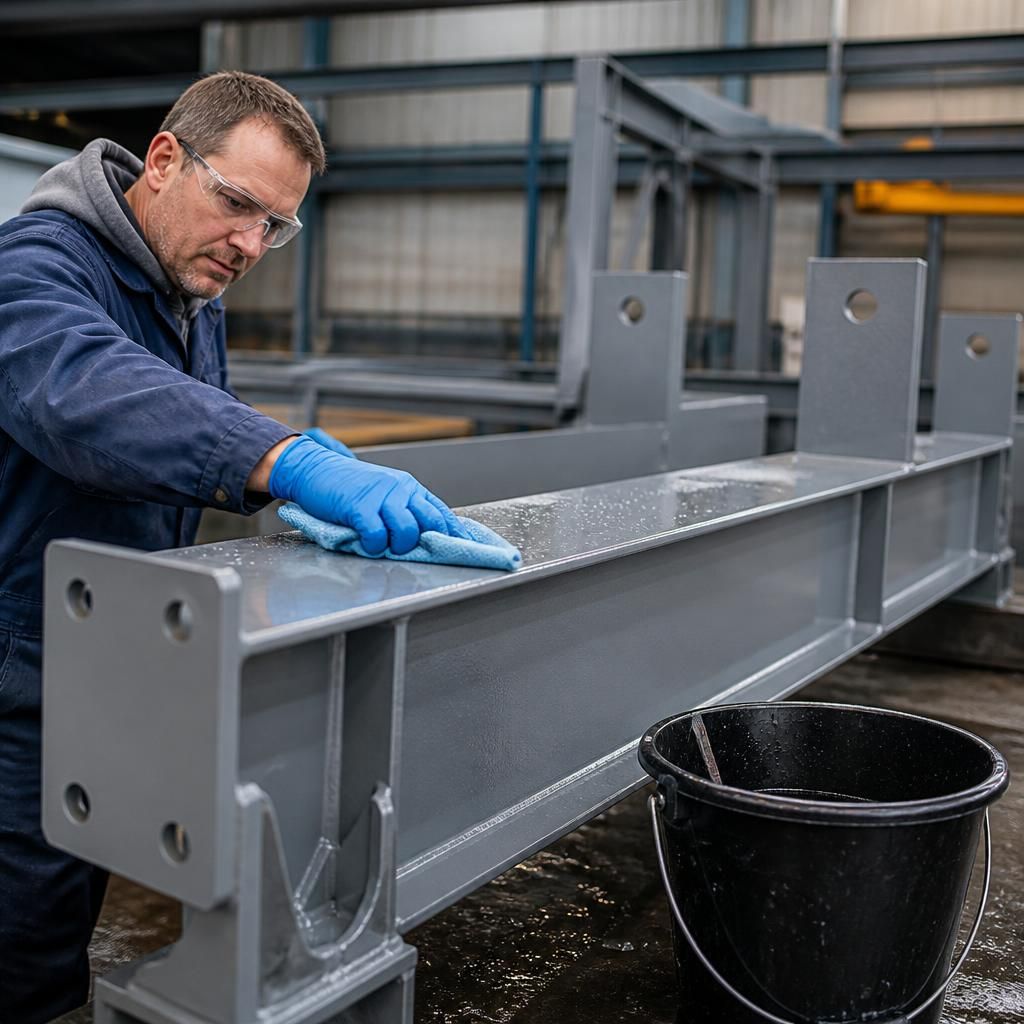
Cleaning should remove deposits without changing the surface of the thermoplastic coating. Use a clean, soft cloth or non-abrasive brush with a mild compatible detergent, working from the least contaminated areas towards heavier deposits. Rinse away detergent and loosened residue thoroughly so it cannot dry onto the finish, then allow the component to drain and dry before inspection.
Pay particular attention to residues that can remain chemically active, including oils, salts, cementitious dust and process deposits. Do not scrape hardened material from the coating; soften and remove it using a method approved for the specific polymer. If a cleaning product, solvent or disinfectant is new to the maintenance regime, check its compatibility with the coating supplier before wider use.
Discuss Maintenance for Your Thermoplastic Powder Coated Components
For guidance on maintaining thermoplastic powder coated components in a specific operating environment, discuss the coating material, service conditions and inspection requirements with the Powder Coatings team before commissioning or repairing the finish.