

What benefits does epoxy primer provide when powder coating stainless steel for industrial use?
Epoxy primer provides a bonding layer between stainless steel and the powder coat, helping the finish adhere more reliably to the metal surface. It can also improve resistance to corrosion and moisture, giving industrial components added protection where exposure, wear or demanding service conditions could otherwise undermine the coating system.
Epoxy primer benefits stainless steel powder-coating systems by adding a controlled intermediate film that improves the overall performance, consistency and durability of the finished coating. This is particularly useful for industrial components exposed to handling, chemicals, abrasion, condensation or variable service conditions. The primer should be selected as part of a complete coating system rather than treated as a separate, universal solution.
Stainless steel forms a passive oxide layer that helps protect the metal, but that relatively stable surface can make coating design and preparation more demanding. An appropriate epoxy primer provides a formulated surface for the powder topcoat to work with, reducing reliance on the natural characteristics of the stainless steel alone. This can make the finish more predictable across batches and across components with different shapes, edges or levels of surface complexity.
Another benefit is improved resistance to industrial contaminants. Epoxy films are generally dense and chemically resistant, so they can help limit the effect of oils, cleaning agents, salts and other substances that may contact the coating during service. The exact level of resistance depends on the primer chemistry, film thickness, curing conditions, powder topcoat and the concentration and duration of exposure. A primer is therefore most valuable when it has been chosen for the actual environment rather than simply specified because it is epoxy-based.
An epoxy primer can also contribute to mechanical protection. As part of a correctly cured system, it may help the coating withstand minor impacts, handling and repeated contact more effectively than a topcoat applied without a suitable intermediate layer. This does not make the surface immune to scratching or impact damage: sharp edges, severe abrasion and poorly supported components can still cause failure. Correct pretreatment, application and curing remain essential.
For fabricated stainless-steel parts, the primer may help produce a more uniform visual finish by providing a consistent base beneath the powder coating. This is useful where the substrate includes weld areas, ground sections, changes in surface texture or areas that have been repaired. It will not conceal major dents, contamination, sharp burrs or poor fabrication, and it should not be used as a substitute for cleaning, degreasing and suitable surface preparation.
The main practical benefits can be summarised as follows:
- More consistent coating-system performance across complex or varied stainless-steel components.
- Additional resistance to selected chemicals and industrial contaminants.
- Greater support for the topcoat where parts are subject to handling, impact or moderate abrasion.
- A more uniform base for the final powder finish, particularly across welds and prepared areas.
- Greater flexibility when specifying a coating system for demanding service conditions.
Epoxy primer also has limitations that should be considered. Many epoxy coatings are not intended to provide long-term resistance to direct ultraviolet exposure and may chalk or lose appearance if left as the exposed finish. For exterior or visually demanding applications, the powder topcoat must be compatible with the primer and suitable for the expected environment. The two layers also need compatible curing requirements; an incorrectly cured primer can affect the appearance, hardness or performance of the complete system.
Before specifying the product, the applicator should assess the stainless-steel grade and condition, the required surface preparation, operating temperature, chemical contact, moisture exposure, expected mechanical loading and the type of powder topcoat to be applied. Application method and film build matter as well: excessive thickness, missed areas or incomplete curing can create weaknesses rather than improving performance.
In short, epoxy primer is most beneficial when stainless steel forms part of a demanding industrial coating system. Its value lies in improving the consistency and resilience of the complete finish, provided the primer, preparation, powder topcoat and curing process have been selected to work together.
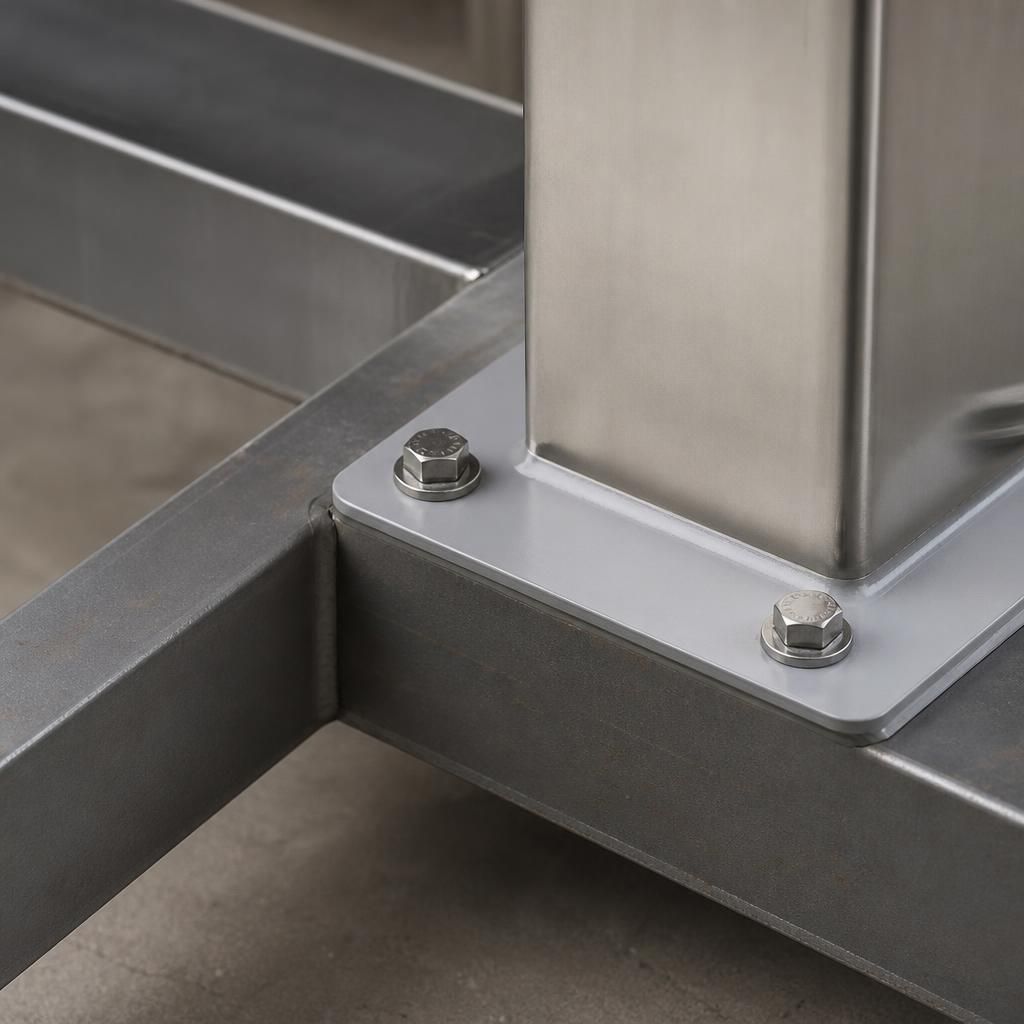
A further benefit of epoxy primer on powder-coated stainless steel is electrical separation between the coated component and dissimilar metals. Where stainless steel is assembled against materials such as carbon steel or aluminium, a continuous cured primer layer can help interrupt direct metallic contact and reduce the conditions that contribute to galvanic corrosion.
This benefit depends on complete coverage and sound preparation. Fixing points, edges, joints and damaged areas can still provide a path for contact, so the coating should support rather than replace suitable material selection and assembly design. Because epoxy is electrically insulating, areas intended for earthing, bonding or electrical continuity may need to remain uncoated or be treated according to the equipment specification.