

What specific pretreatment techniques are most effective for enhancing the adhesion and durability of powder coatings?
The most effective pretreatment combines thorough degreasing, suitable abrasive or chemical cleaning, controlled rinsing and complete drying before powder application. For stronger adhesion and durability, the process should be matched to the metal substrate and service conditions, with a suitable conversion coating used where improved corrosion resistance is required.
The most effective pretreatment is a controlled, substrate-specific process that manages the condition of the metal, the quality of the surface profile, chemical process parameters, component handling and verification. Adhesion and long-term durability depend not only on which pretreatment is selected, but also on whether every stage is applied consistently to the component’s geometry and intended service environment.
Important techniques include:
- Detailed pre-treatment inspection: Identify mill scale, laser-cut oxide, weld spatter, burrs, sharp edges, oil residues, corrosion and previous coatings before processing. These defects can create weak points beneath the powder film. Welds should be sound and free from porous contamination, while enclosed sections need suitable drain and vent holes so that process chemicals cannot remain trapped.
- Controlled abrasive preparation: Where a mechanical key is required, the abrasive type and operating conditions should suit the substrate. The objective is a clean, even surface rather than an unnecessarily aggressive finish. Abrasive contamination, embedded media and uneven treatment can all reduce coating consistency, particularly on aluminium, zinc-coated steel and thin sections.
- Oxide and scale removal: Steel components may require removal of mill scale or corrosion products, while aluminium and galvanised materials need careful treatment of their naturally occurring oxide or surface residues. The method must remove the unwanted layer without excessively attacking the base metal or leaving a chemically unstable surface.
- Substrate-specific chemical conditioning: Cleaning chemistry, activation and surface conditioning should be selected according to the metal being processed. Steel, aluminium, zinc-coated components and mixed-metal assemblies do not respond identically to the same chemistry. Excessive attack can damage dimensions or edges, whereas insufficient activity can leave residues that interfere with powder adhesion.
- Conversion coating control: Phosphate, zirconium, silane and other conversion systems can improve the interface between the metal and powder film when correctly matched to the substrate. Effective control includes monitoring bath condition, temperature, contact time, contamination and replenishment. A conversion layer that is patchy, overdeveloped or poorly rinsed will not provide a reliable foundation.
- Edge and weld preparation: Powder films are naturally more vulnerable at sharp corners, cut edges and inconsistent welds. Removing burrs, reducing excessively sharp profiles and smoothing irregular weld areas helps the coating form a more continuous film. This is particularly important where components will face handling, impact, moisture or corrosive deposits.
- Clean handling and racking: After processing, components should be handled with clean equipment and suitable protective gloves to prevent fingerprints, salts and workshop contamination from returning to the prepared surface. Racking should provide secure contact without damaging the surface or creating areas where treatment residues can collect.
- Moisture and flash-rust control: Prepared steel must be transferred through the process without allowing visible corrosion to develop before powder application. The risk is increased by humid conditions, delays, poor drainage or retained moisture in joints and hollow sections. Components should therefore be positioned so that water can leave completely and should be protected from subsequent contamination.
- Masking and drainage design: Threads, bearing seats, electrical contact points and close-tolerance faces may require masking. Masking materials must withstand the process without shedding particles or leaving adhesive residues. Correct orientation and drainage are equally important for fabricated assemblies, as trapped chemistry can later cause staining, blistering or corrosion beneath the coating.
- Verification before coating: Visual inspection should check for staining, residues, untreated areas, flash rust and inconsistent surface appearance. Depending on the process, checks may also include surface cleanliness, water-break behaviour, surface profile and chemical bath records. Adhesion testing and corrosion-resistance testing can then be used as part of process validation, with the test method selected for the substrate, coating system and required service conditions.
For batch production, the process should be documented with defined acceptance criteria for each stage rather than judged only by the appearance of the finished powder coat. Records of chemical conditions, equipment settings, component orientation and inspection results help identify variation between batches and make it easier to investigate failures such as flaking, blistering, under-film corrosion or poor edge coverage.
The correct combination varies with the component. A mild indoor steel part may need a different preparation route from an exterior structural component, an aluminium enclosure, a galvanised fabrication or a part exposed to road salts and industrial contaminants. Trial panels or representative production pieces can help confirm compatibility before a full batch is processed, particularly where different metals, weld treatments or unusual geometries are present.
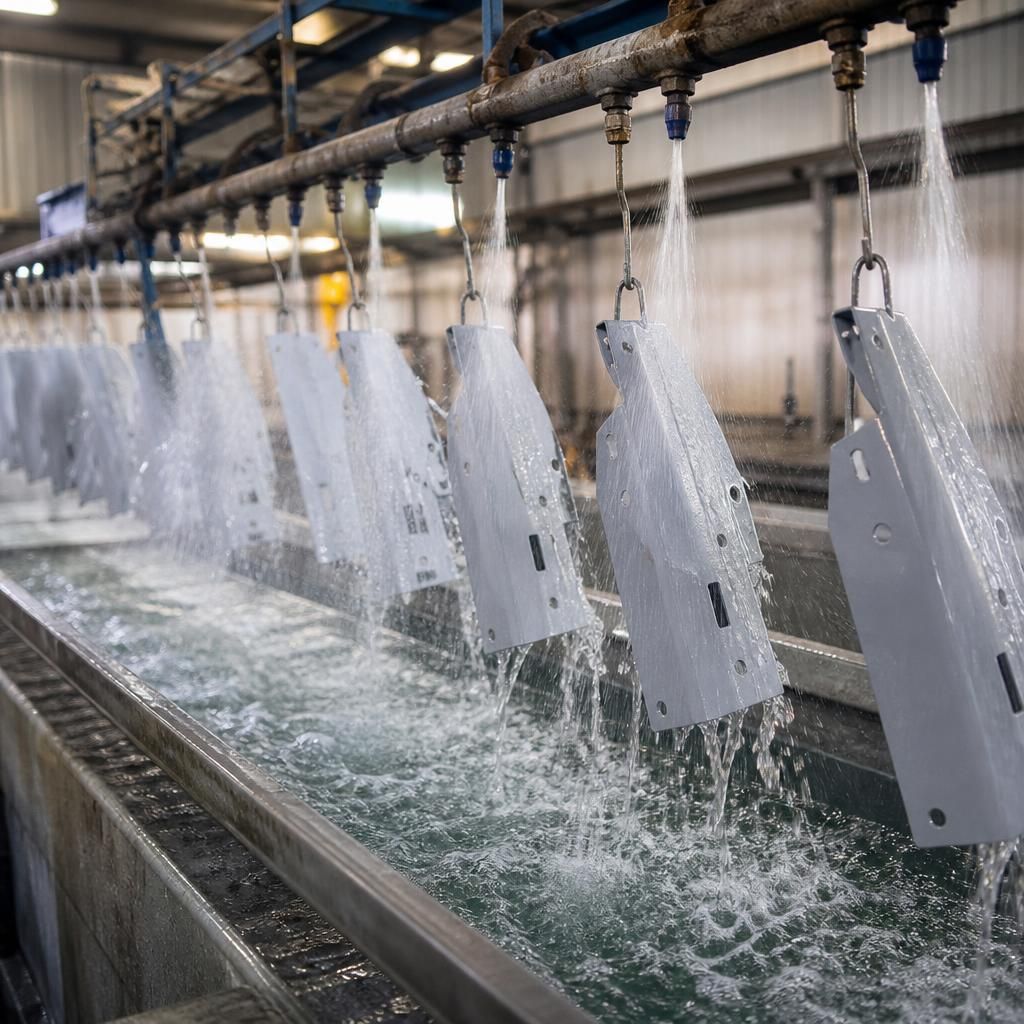
Rinsing is a critical pretreatment technique because it removes cleaner, salts and processing chemicals before the conversion stage and powder application. A suitable sequence normally uses separate rinses between chemical stages, preventing one solution from diluting or contaminating the next. The final rinse is especially important: residual chemicals can interfere with conversion-film formation, promote staining or create an unstable interface beneath the powder coating.
Rinse performance should be checked as part of process control rather than judged only by the finished appearance. Water quality, spray coverage, component orientation and drainage all affect whether residues are removed from joints, recesses and enclosed features. This makes controlled rinsing particularly important for fabricated assemblies and components with complex geometry.